
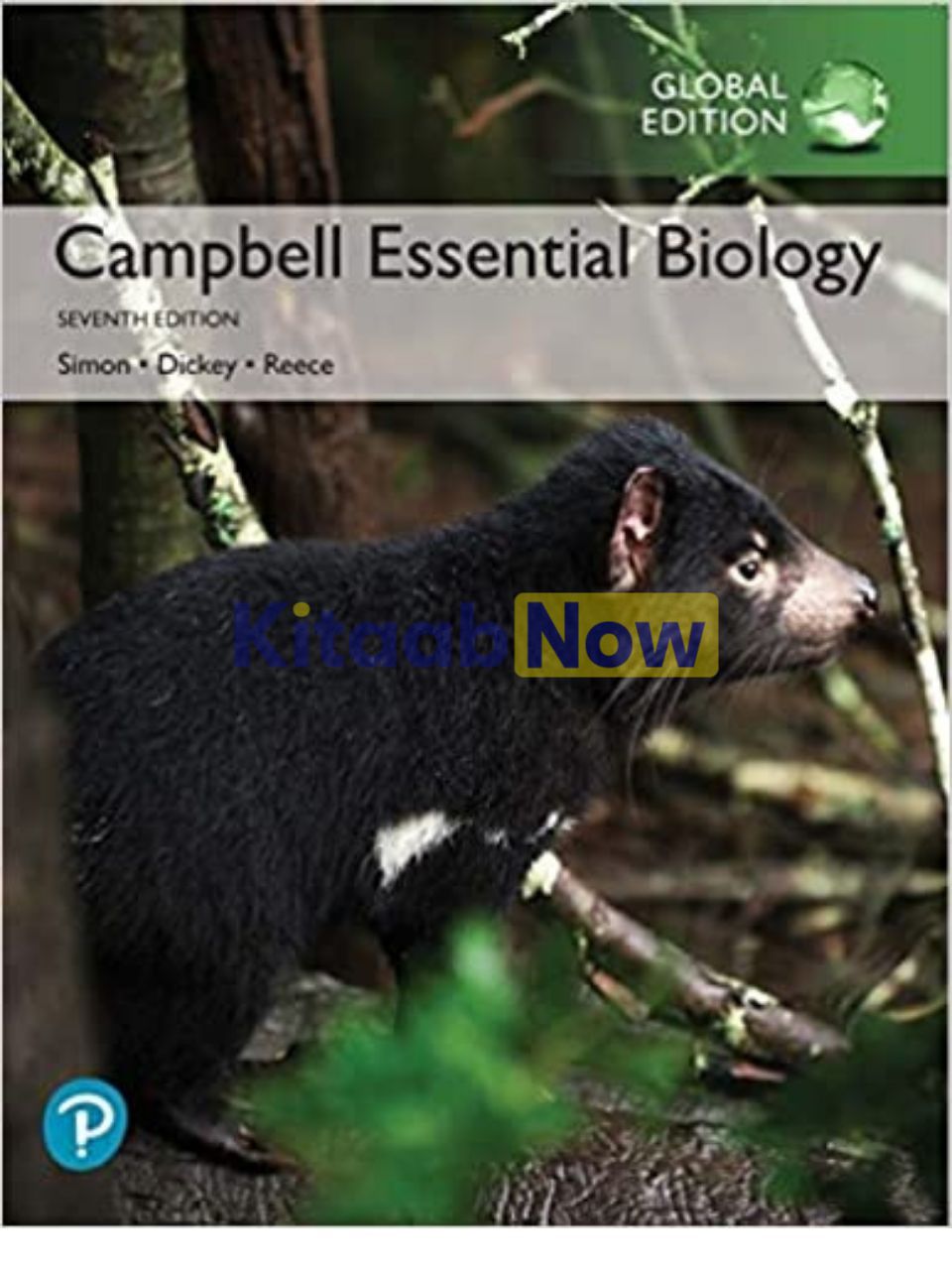
Campbell Essential Biology, Global Edition (7th Edition)
- Authors: Eric Simon, Jean Dickey, Jane Reece, Rebecca Burton
- ISBN: 9781292307091
- Publisher: Pearson Education
- Edition: 7th
- Publication Date: September 03, 2019
- Format: Paperback – 544 pages
- Language: English
Out of stock
Description
Develop and Practice Science Literacy Skills
Teach students to view their world using scientific reasoning with Campbell Essential Biology. The authors’ approach equips your students to become better informed citizens, relate concepts from class to their everyday lives, and understand and apply real data, making biology relevant and meaningful to their world and futures.
The new edition incorporates instructor feedback on what key skills to highlight in new Process of Science essays and uses striking infographic figures in conveying real data to help students see and better understand how science actually works. New author-narrated Figure Walkthrough Videos guide students through key biology concepts and processes.
New topics in Why It Matters inspire curiosity and provide real-world examples to convey why abstract concepts like cell respiration or photosynthesis matter to students. This edition’s unmatched offering of author-created media supports students in the toughest topics with 24/7 access through the enhanced Pearson eText, embedded QR codes in the print text, and Mastering Biology.
New to this Edition
About the Book
Features in the textbook and Mastering Biology work together, creating a seamless learning suite to support student learning. Key concepts in the text are reinforced through assignments in Mastering Biology, bringing learning full circle for students.
Provide students with the opportunity to develop scientific literacy skills
- UPDATED! Process of Science essays present the material in a non-linear and highly visual format, aligning with widely accepted models of how science actually works. Ch 13: Did Natural Selection Shape the Beaks of Darwin’s Finches? Ch 14: Do Human Activities Facilitate Speciation? Ch 16: What Killed the Pines? Ch 20: Does Biodiversity Protect Human Health? Ch 27: Can Botulism Toxin Prevent Headaches?
- Heavily revised Chapter 1 focuses on science literacy skills to introduce students to the process of science right from the start.
- NEW! Visualizing the Data figures illustrate data in an infographic format and provide students with a fresh approach to understanding concepts. These 14 figures appear throughout the text with icons flagging where they appear.
Guide students through complex biological processes with engaging visuals
- NEW! Figure Walkthroughs, written and narrated by the author team, include a QR Code to an accompanying short video that explains the concept or process. The videos are assignable in Mastering Biology.
- UPDATED! “Why It Matters” photo collages have been updated to increase student curiosity about biology and give students real-world examples to convey why abstract concepts like cell respiration or photosynthesis matter. The authors have made improvements and updates based on reviewer feedback.
- Select chapters have new Chapter Threads, and all Chapter Thread essays have been updated for currency and relevancy. Each Chapter Thread weaves a compelling topic throughout the chapter, highlighted in the Biology and Society, The Process of Science, and Evolution Connection essays. New Chapter Threads include: Chapter 13: Evolution in Action Chapter 14: Evolution in the Human Dominated World Chapter 18: Biodiversity in Decline Chapter 20: Importance of Biodiversity Chapter 27: Neurotoxins
Table of Contents
- 1 Learning About Life
- CHAPTER THREAD
- Swimming with the Turtles
- BIOLOGY AND SOCIETY A Passion for Life
- The Scientific Study of Life
- An Overview of the Process of Science
- Hypotheses, Theories, and Facts
- Controlled Experiments
- THE PROCESS OF SCIENCE Do Baby Turtles Swim?
- Evaluating Scientific Claims
- The Properties of Life
- Major Themes in Biology
- The Relationship of Structure to Function
- Information Flow
- Pathways That Transform Energy and Matter
- Interactions within Biological Systems
- Evolution
- EVOLUTION CONNECTION Turtles in the Tree of Life
- UNIT 1 CELLS
- 2 Essential Chemistry for Biology
- CHAPTER THREAD
- Helpful Radiation
- BIOLOGY AND SOCIETY Nuclear Medicine
- Some Basic Chemistry
- Matter: Elements and Compounds
- Atoms
- THE PROCESS OF SCIENCE How Effective Is Radiation in Treating Prostate Cancer?
- Chemical Bonding and Molecules
- Chemical Reactions
- Water and Life
- Water
- Acids, Bases, and pH
- EVOLUTION CONNECTION Radioactivity as an Evolutionary Clock
- 3 The Molecules of Life
- CHAPTER THREAD
- Lactose Intolerance
- BIOLOGY AND SOCIETY Got Lactose?
- Organic Compounds
- Carbon Chemistry
- Giant Molecules from Smaller Building Blocks
- Large Biological Molecules
- Carbohydrates
- Lipids
- Proteins
- Nucleic Acids
- THE PROCESS OF SCIENCE Does Lactose Intolerance Have a Genetic Basis?
- EVOLUTION CONNECTION The Evolution of Lactose Intolerance in Humans
- 4 A Tour of the Cell
- CHAPTER THREAD
- Humans Versus Bacteria
- BIOLOGY AND SOCIETY Antibiotics: Drugs That Target Bacterial Cells
- The Microscopic World of Cells
- The Two Major Categories of Cells
- An Overview of Eukaryotic Cells
- Membrane Structure
- The Plasma Membrane
- Cell Surfaces
- THE PROCESS OF SCIENCE How Was the First 21st-Century Antibiotic Discovered?
- The Nucleus and Ribosomes: Genetic Control of the Cell
- The Nucleus
- Ribosomes
- How DNA Directs Protein Production
- The Endomembrane System: Manufacturing and Distributing Cellular Products
- The Endoplasmic Reticulum
- The Golgi Apparatus
- Lysosomes
- Vacuoles
- Chloroplasts and Mitochondria: Providing Cellular Energy
- Chloroplasts
- Mitochondria
- The Cytoskeleton: Cell Shape and Movement
- Maintaining Cell Shape
- Flagella and Cilia
- EVOLUTION CONNECTION The Evolution of Bacterial Resistance in Humans
- 5 The Working Cell
- CHAPTER THREAD
- Nanotechnology
- BIOLOGY AND SOCIETY Harnessing Cellular Structures
- Some Basic Energy Concepts
- Conservation of Energy
- Heat
- Chemical Energy
- Food Calories
- ATP and Cellular Work
- The Structure of ATP
- Phosphate Transfer
- The ATP Cycle
- Enzymes
- Activation Energy
- THE PROCESS OF SCIENCE Can Enzymes Be Engineered?
- Enzyme Activity
- Enzyme Inhibitors
- Membrane Function
- Passive Transport: Diffusion across Membranes
- Osmosis and Water Balance
- Active Transport: The Pumping of Molecules across Membranes
- Exocytosis and Endocytosis: Traffic of Large Molecules
- EVOLUTION CONNECTION The Origin of Membranes
- 6 Cellular Respiration: Obtaining Energy from Food
- CHAPTER THREAD
- Exercise Science
- BIOLOGY AND SOCIETY Getting the Most Out of Your Muscles
- Energy Flow and Chemical Cycling in the Biosphere
- Producers and Consumers
- Chemical Cycling between Photosynthesis and Cellular Respiration
- Cellular Respiration: Aerobic Harvest of Food Energy
- An Overview of Cellular Respiration
- The Three Stages of Cellular Respiration
- The Results of Cellular Respiration
- Fermentation: Anaerobic Harvest of Food Energy
- Fermentation in Human Muscle Cells
- THE PROCESS OF SCIENCE What Causes Muscle Burn?
- Fermentation in Microorganisms
- EVOLUTION CONNECTION The Importance of Oxygen
- 7 Photosynthesis: Using Light to Make Food
- CHAPTER THREAD
- Solar Energy
- BIOLOGY AND SOCIETY A Solar Revolution
- The Basics of Photosynthesis
- Chloroplasts: Sites of Photosynthesis
- An Overview of Photosynthesis
- The Light Reactions: Converting Solar Energy to Chemical Energy
- The Nature of Sunlight
- THE PROCESS OF SCIENCE What Colors of Light Drive Photosynthesis?
- Chloroplast Pigments
- How Photosystems Harvest Light Energy
- How the Light Reactions Generate ATP and NADPH
- The Calvin Cycle: Making Sugar from Carbon Dioxide
- EVOLUTION CONNECTION Creating a Better Biofuel Factory
- UNIT 2 GENETICS
- 8 Cellular Reproduction: Cells from Cells
- CHAPTER THREAD
- Life with and without Sex
- BIOLOGY AND SOCIETY Virgin Birth of a Shark
- What Cell Reproduction Accomplishes
- The Cell Cycle and Mitosis
- Eukaryotic Chromosomes
- Duplicating Chromosomes
- The Cell Cycle
- Mitosis and Cytokinesis
- Cancer Cells: Dividing Out of Control
- Meiosis, the Basis of Sexual Reproduction
- Homologous Chromosomes
- Gametes and the Life Cycle of a Sexual Organism
- The Process of Meiosis
- Review: Comparing Mitosis and Meiosis
- The Origins of Genetic Variation
- THE PROCESS OF SCIENCE Do All Animals Have Sex?
- When Meiosis Goes Wrong
- EVOLUTION CONNECTION The Advantages of Sex
- 9 Patterns of Inheritance
- CHAPTER THREAD
- Dog Breeding
- BIOLOGY AND SOCIETY Darwin’s Dogs
- Genetics and Heredity
- In an Abbey Garden
- Mendel’s Law of Segregation
- Mendel’s Law of Independent Assortment
- Using a Testcross to Determine an Unknown Genotype
- The Rules of Probability
- Family Pedigrees
- Human Traits Controlled by a Single Gene
- THE PROCESS OF SCIENCE What Is the Genetic Basis of Short Legs in Dogs?
- Variations on Mendel’s Laws
- Incomplete Dominance in Plants and People
- ABO Blood Groups: An Example of Multiple Alleles and Codominance
- Pleiotropy and Sickle-Cell Disease
- Polygenic Inheritance
- Epigenetics and the Role of Environment
- The Chromosomal Basis of Inheritance
- Linked Genes
- Sex Determination in Humans
- Sex-Linked Genes
- EVOLUTION CONNECTION Barking Up the Evolutionary Tree
- 10 The Structure and Function of DNA
- CHAPTER THREAD
- Deadly Viruses
- BIOLOGY AND SOCIETY The Global Threat of Zika Virus
- DNA: Structure and Replication
- DNA and RNA Structure
- Watson and Crick’s Discovery of the Double Helix
- DNA Replication
- From DNA to RNA to Protein
- How an Organism’s Genotype Determines Its Phenotype
- From Nucleotides to Amino Acids: An Overview
- The Genetic Code
- Transcription: From DNA to RNA
- The Processing of Eukaryotic RNA
- Translation: The Players
- Translation: The Process
- Review: DNA S RNA S Protein
- Mutations
- Viruses and Other Noncellular Infectious Agents
- Bacteriophages
- Plant Viruses
- Animal Viruses
- THE PROCESS OF SCIENCE Can DNA and RNA Vaccines Protect Against Viruses?
- HIV, the AIDS Virus
- Prions
- EVOLUTION CONNECTION Emerging Viruses
- 11 How Genes Are Controlled
- CHAPTER THREAD
- Cancer
- BIOLOGY AND SOCIETY Breast Cancer and Chemotherapy
- How and Why Genes Are Regulated
- Gene Regulation in Bacteria
- Gene Regulation in Eukaryotic Cells
- Cell Signaling
- Homeotic Genes
- Visualizing Gene Expression
- Cloning Plants and Animals
- The Genetic Potential of Cells
- Reproductive Cloning of Animals
- Therapeutic Cloning and Stem Cells
- The Genetic Basis of Cancer
- Genes That Cause Cancer
- THE PROCESS OF SCIENCE Can Avatars Improve Cancer Treatment?
- Cancer Risk and Prevention
- EVOLUTION CONNECTION The Evolution of Cancer in the Body
- 12 DNA Technology
- CHAPTER THREAD
- DNA Profiling
- BIOLOGY AND SOCIETY Using DNA to Establish Guilt and Innocence
- Genetic Engineering
- Recombinant DNA Techniques
- Gene Editing
- Medical Applications
- Genetically Modified Organisms in Agriculture
- Human Gene Therapy
- DNA Profiling and Forensic Science
- DNA Profiling Techniques
- Investigating Murder, Paternity, and Ancient DNA
- Bioinformatics
- DNA Sequencing
- Genomics
- Genome-Mapping Techniques
- The Human Genome
- THE PROCESS OF SCIENCE Did Nic Have a Deadly Gene?
- Applied Genomics
- Systems Biology
- Safety and Ethical Issues
- The Controversy over Genetically Modified Foods
- Ethical Questions Raised by Human DNA Technologies
- EVOLUTION CONNECTION The Y Chromosome as a Window on History
- UNIT 3 EVOLUTION AND DIVERSITY
- 13 How Populations Evolve
- CHAPTER THREAD
- Evolution in Action
- BIOLOGY AND SOCIETY Mosquitoes and Evolution
- The Diversity of Life
- Naming and Classifying the Diversity of Life
- Explaining the Diversity of Life
- Charles Darwin and The Origin of Species
- Darwin’s Journey
- Darwin’s Theory
- Evidence of Evolution
- Evidence from Fossils
- Evidence from Homologies
- Evolutionary Trees
- Natural Selection as the Mechanism for Evolution
- Natural Selection in Action
- Key Points about Natural Selection
- The Evolution of Populations
- Sources of Genetic Variation
- Populations as the Units of Evolution
- Analyzing Gene Pools
- Population Genetics and Health Science
- Microevolution as Change in a Gene Pool
- Mechanisms of Evolution
- Natural Selection
- Genetic Drift
- Gene Flow
- Natural Selection: A Closer Look
- THE PROCESS OF SCIENCE Did Natural Selection Shape the Beaks of Darwin’s Finches?
- EVOLUTION CONNECTION The Rising Threat of Antibiotic Resistance
- 14 How Biological Diversity Evolves
- CHAPTER THREAD
- Evolution in the Human-Dominated World
- BIOLOGY AND SOCIETY Humanity’s Footprint
- The Origin of Species
- What Is a Species?
- Reproductive Barriers between Species
- Mechanisms of Speciation
- THE PROCESS OF SCIENCE Do Human Activities Facilitate Speciation?
- Earth History and Macroevolution
- The Fossil Record
- Plate Tectonics and Biogeography
- Mass Extinctions and Explosive Diversifications of Life
- Mechanisms of Macroevolution
- Large Effects from Small Genetic Changes
- The Evolution of Biological Novelty
- Classifying the Diversity of Life
- Classification and Phylogeny
- Classification: A Work in Progress
- EVOLUTION CONNECTION Evolution in the Anthropocene
- 15 The Evolution of Microbial Life
- CHAPTER THREAD
- Human Microbiota
- BIOLOGY AND SOCIETY Our Invisible Inhabitants
- Major Episodes in the History of Life
- The Origin of Life
- A Four-Stage Hypothesis for the Origin of Life
- From Chemical Evolution to Darwinian Evolution
- Prokaryotes
- They’re Everywhere!
- The Structure and Function of Prokaryotes
- The Ecological Impact of Prokaryotes
- The Two Main Branches of Prokaryotic Evolution: Bacteria and Archaea
- THE PROCESS OF SCIENCE Are Intestinal Microbiota to Blame for Obesity?
- Protists
- Protozoans
- Slime Molds
- Unicellular and Colonial Algae
- Seaweeds
- EVOLUTION CONNECTION The Sweet Life of Streptococcus mutans
- 16 The Evolution of Plants and Fungi
- CHAPTER THREAD
- Plant-Fungus Interactions
- BIOLOGY AND SOCIETY The Diamond of the Kitchen
- Colonizing LandTerrestrial Adaptations of Plants
- The Origin of Plants from Green Algae
- Plant Diversity
- Highlights of Plant Evolution
- Bryophytes
- Ferns
- Gymnosperms
- Angiosperms
- Plant Diversity as a Nonrenewable Resource
- Fungi
- Characteristics of Fungi
- THE PROCESS OF SCIENCE What Killed the Pines?
- The Ecological Impact of Fungi
- Commercial Uses of Fungi
- EVOLUTION CONNECTION A Pioneering Partnership17 The Evolution of Animals
- CHAPTER THREAD
- Human Evolution
- BIOLOGY AND SOCIETY Evolving Adaptability
- The Origins of Animal Diversity
- What Is an Animal?
- Early Animals and the Cambrian Explosion
- Animal PhylogenyMajor Invertebrate Phyla
- Sponges
- Cnidarians
- Molluscs
- Flatworms
- Annelids
- Roundworms
- Arthropods
- Echinoderms
- Vertebrate Evolution and Diversity
- Characteristics of Chordates
- Fishes
- Amphibians
- Reptiles
- Mammals
- The Human Ancestry
- The Evolution of Primates
- The Emergence of Humankind
- THE PROCESS OF SCIENCE What Can Lice Tell Us About Ancient Humans?
- EVOLUTION CONNECTION Are We Still Evolving?
- UNIT 4 ECOLOGY
- 18 An Introduction to Ecology and the Biosphere
- CHAPTER THREAD
- Climate Change
- BIOLOGY AND SOCIETY Penguins, Polar Bears, and People in Peril
- An Overview of Ecology
- Ecology and Environmentalism
- A Hierarchy of Interactions
- Living in Earth’s Diverse Environments
- Abiotic Factors of the Biosphere
- The Evolutionary Adaptations of Organisms
- Adjusting to Environmental Variability
- Biomes
- Freshwater Biomes
- Marine Biomes
- How Climate Affects Terrestrial Biome Distribution
- Terrestrial Biomes
- The Water Cycle
- Human Impact on Biomes
- Climate Change
- The Greenhouse Effect and Global Warming
- The Accumulation of Greenhouse Gases
- Effects of Climate Change on Ecosystems
- THE PROCESS OF SCIENCE How Does Climate Change Affect Species Distribution?
- Looking to Our Future
- EVOLUTION CONNECTION Climate Change as an Agent of Natural Selection
- 19 Population Ecology
- CHAPTER THREAD
- Biological Invasions
- BIOLOGY AND SOCIETY Invasion of the Lionfish
- An Overview of Population Ecology
- Population Density
- Population Age Structure
- Life Tables and Survivorship Curves
- Life History Traits as Adaptations
- Population Growth Models
- The Exponential Population Growth Model: The Ideal of an Unlimited Environment
- The Logistic Population Growth Model: The Reality of a Limited Environment
- Regulation of Population Growth
- Applications of Population Ecology
- Conservation of Endangered Species
- Sustainable Resource Management
- Invasive Species
- Biological Control of Pests
- THE PROCESS OF SCIENCE Can Fences Stop Cane Toads?
- Integrated Pest Management
- Human Population Growth
- The History of Human Population Growth
- Age Structures
- Our Ecological Footprint
- EVOLUTION CONNECTION Humans as an Invasive Species
- 20 Communities and Ecosystems
- CHAPTER THREAD
- Importance of Biodiversity
- BIOLOGY AND SOCIETY Why Biodiversity Matters
- Biodiversity
- Genetic Diversity
- Species Diversity
- Ecosystem Diversity
- Causes of Declining Biodiversity
- Community Ecology
- Interspecific Interactions
- Trophic Structure
- Species Diversity in Communities
- Disturbances and Succession in Communities
- Ecological Succession
- Ecosystem Ecology
- Energy Flow in Ecosystems
- Chemical Cycling in Ecosystems
- Conservation and Restoration Biology
- Biodiversity “Hot Spots”
- Conservation at the Ecosystem Level
- THE PROCESS OF SCIENCE Does Biodiversity Protect Human Health?
- Restoring Ecosystems
- The Goal of Sustainable Development
- EVOLUTION CONNECTION Saving the Hot Spots
- Appendices
- A Metric Conversion Table
- B The Periodic Table
- C Credits
- D Selected Answers
Additional information
| Weight | 1.202 kg |
|---|
Only logged in customers who have purchased this product may leave a review.
Related Products



Reviews
There are no reviews yet.