
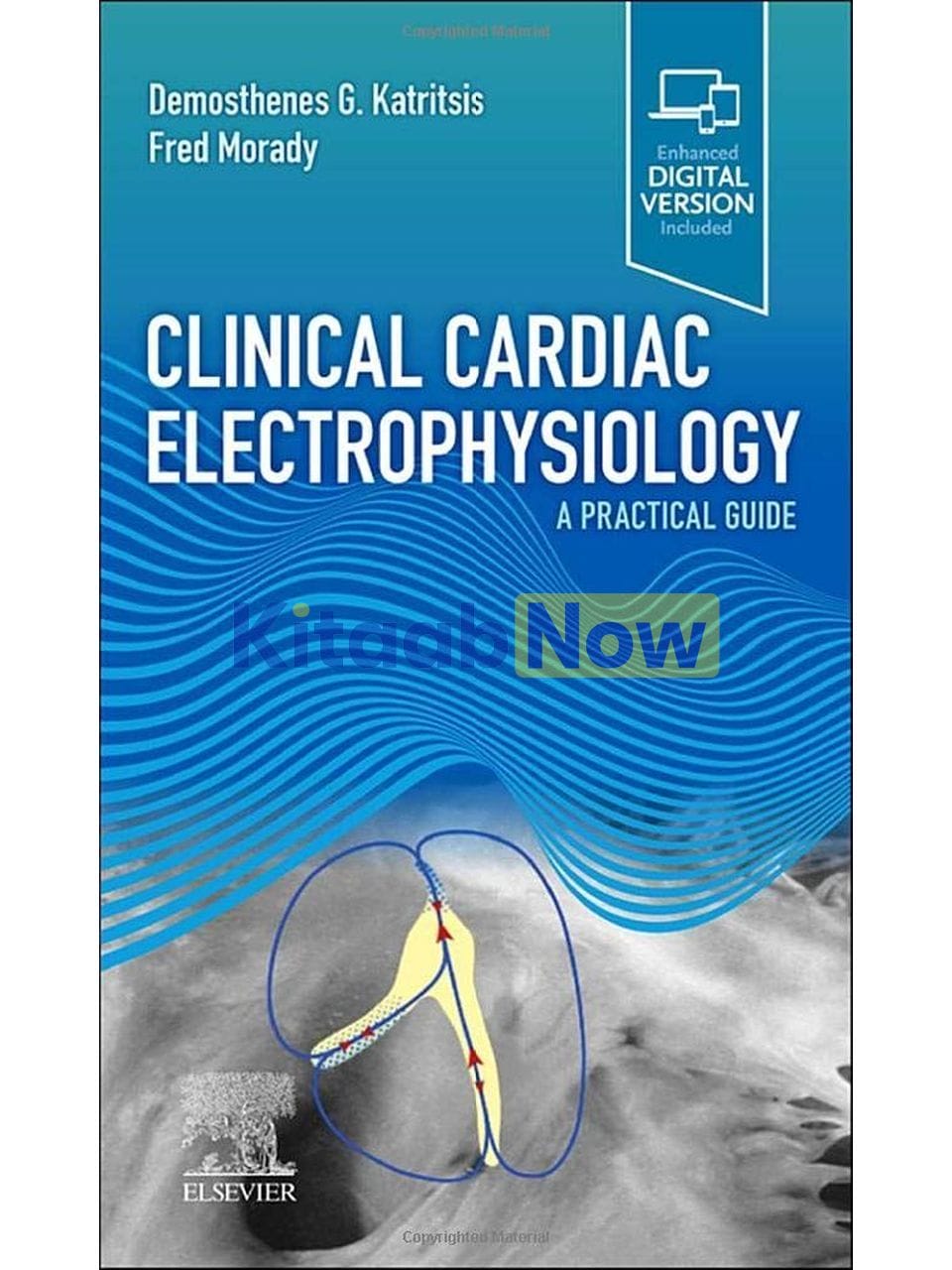
Clinical Cardiac Electrophysiology: A Practical Guide
- Authors: Demosthenes G Katritsis, Fred Morady
- ISBN: 9780323793384
- Publisher: Elsevier Science Publishing
- Publication Date: May 13, 2021
- Format: Paperback – 392 pages
- Language: English
Description
Offering a clear and consistent framework for recognition, diagnosis, and treatment of a wide range of cardiac arrhythmia disturbances, Clinical Cardiac Electrophysiology: A Practical Guide covers the fundamental analytical skills needed in this challenging area. This portable, highly accessible handbook focuses on the basics of clinical electrophysiology— how and when to perform an electrophysiology study as well as principles of ablation and other invasive therapies—all in a succinct and modern format.
Key Features
- Focuses on using an effective, consistent, decision-making process in recognizing, diagnosing, and treating rhythm disturbances of the heart, including supraventricular tachycardias, atrial fibrillation, ventricular tachycardias, and other rapid or irregular heartbeats.
- Covers anatomic fundamentals of cardiac structures, clinical indications for electrophysiology studies, practicalities and methodology of performing an electrophysiology study, and problems encountered during the procedure.
- Includes quick clinical summaries and more than 180 illustrations: electrophysiology recordings, ECGs, cardiac anatomy, radiographic images, and electroanatomic maps.
- Discusses key topics such as mechanisms of arrhythmias, conventional and electroanatomic mapping systems, fundamentals of cardiac mapping, biophysics of catheter ablation, and much more.
- Offers real-world guidance on contemporary practice from leading cardiac electrophysiologists Drs. Demosthenes G Katritsis and Fred Morady, with input from a multinational team of electrophysiology fellows and cardiologists.
- Ideal as a stand-alone resource or used in conjunction with Dr. Douglas Zipes’ renowned textbook, Cardiac Electrophysiology: From Cell to Bedside.
- Enhanced eBook version included with purchase. Your enhanced eBook allows you to access all of the text, figures, and references from the book on a variety of devices.
Table of Contents
- Chapter 1. Classification of Arrhythmias
- Chapter 2. Electrophysiologic Mechanisms of Arrhythmogenesis
- Normal excitation of the heart
- Mechanisms of arrhythmias
- Chapter 3. Cardiac Anatomy for the Electrophysiologist
- Left Atrium
- Right Atrium
- Right and Left Ventricle
- Cardiac Valves
- The Conduction System
- Chapter 4. Vascular Access and Catheters
- Patient Preparation
- Epicardial access
- Catheter Placement
- Exposure to Radiation During EP Procedures
- Chapter 5. Electrophysiology Hardware
- Electrode catheters
- Sheaths
- Electrogram Recording and Processing
- Pacing
- Chapter 6. Basic Intervals and Atrial and Ventricular Conduction Curves
- Basic Intervals
- AV Conduction Curves
- VA conduction Curves
- Chapter 7. Electroanatomic Mapping and Robotic Navigation
- Electroanatomic Mapping Systems
- Robotic Navigation
- Chapter 8. Physics of Ablation
- Radiofrequency ablation
- Cryoablation
- LASER Ablation
- Pulsed Field Ablation
- Stereotactic Cardiac Radioablation
- Chapter 9. Investigation of Bradycardias
- Sinus Bradycardia
- Atrioventricular Block
- Atrioventricular Dissociation
- Intraventricular Block
- Electophysiologic Testing for the Investigation of Bradycardias
- Chapter 10. Differential Diagnosis of Narrow-QRS Tachycardias
- Regular Narrow-QRS (=120 ms) Tachycardias
- Irregular Narrow-QRS (=120 ms) Tachycardias
- Chapter 11. Differential Diagnosis of Wide-QRS Tachycardias
- Regular Wide-QRS (>120 ms) Tachycardias
- Irregular Wide-QRS (>120 ms) Tachycardias
- Chapter 12. Diagnosis and Catheter Ablation of Atrial Tachycardias
- Atrial Premature Beats
- Sinus Tachycardias
- Focal Atrial Tachycardia
- Multifocal Atrial Tachycardia
- Macro-reentrant Atrial Tachycardias
- Chapter 13. Diagnosis and Catheter Ablation of Atrial Fibrillation
- Definitions and Classification
- Electrophysiologic Mechanisms
- Diagnosis
- Catheter Ablation
- Chapter 14. Diagnosis and Catheter Ablation of Atrioventricular Junctional Tachycardias
- Atrioventricular Nodal Reentrant Tachycardia
- Non-reentrant Junctional Tachycardias
- Junctional Ectopic Beats
- Chapter 15. Diagnosis and Catheter Ablation of Wolff-Parkinson-White Syndrome and Atrioventricular Tachycardias
- Definitions
- Electrophysiology and classification of accessory pathways
- Diagnosis
- Risk stratification in patients with asymptomatic preexcitation
- Catheter ablation
- Chapter 16. Diagnosis and Catheter Ablation of Ventricular Tachycardias
- Definitions
- Electrophysiologic Mechanisms
- Diagnosis
- Electrophysiology Testing
- Catheter ablation
- Clinical Forms of Ventricular Arrhythmias
- Short TOC:
- Chapter 1. Classification of Arrhythmias
- Chapter 2. Electrophysiologic Mechanisms of Arrhythmogenesis
- Chapter 3. Cardiac Anatomy for the Electrophysiologist
- Chapter 4. Vascular Access and Catheters
- Chapter 5. Electrophysiology Hardware
- Chapter 6. Basic Intervals and Atrial and Ventricular Conduction Curves
- Chapter 7. Electro-Anatomic Mapping and Robotic Navigation
- Chapter 8. Physics of Ablation
- Chapter 9. Investigation of Bradycardias
- Chapter 10. Differential Diagnosis of Narrow-QRS Tachycardias
- Chapter 11. Differential Diagnosis of Wide-QRS Tachycardias
- Chapter 12. Diagnosis and Catheter Ablation of Atrial Tachycardias
- Chapter 13. Diagnosis and Catheter Ablation of Atrial Fibrillation
- Chapter 14. Diagnosis and Catheter Ablation of Atrioventricular Junctional Tachycardias
- Chapter 15. Diagnosis and Catheter Ablation of Wolff-Parkinson-White Syndrome and Atrioventricular Tachycardias
- Chapter 16. Diagnosis and Catheter Ablation of Ventricular Tachycardias
Authors Biography
Demosthenes G Katritsis, MD, PhD, FRCP, FESC, FACC, Director, Department of Cardiology, Hygeia Hospital, Athens, Greece; Honorary Consultant Cardiologist, St Thomas Hospital London, UK; Adjunct Assistant Professor of Cardiology, Johns Hopkins University School of Medicine, Baltimore, Maryland, USA
Fred Morady, MD, McKay Professor of Cardiovascular Disease, Professor of Medicine, University of Michigan Medical School, Ann Arbor, Michigan
Additional information
| Weight | 1.047 kg |
|---|
Only logged in customers who have purchased this product may leave a review.
Related Products





Reviews
There are no reviews yet.