
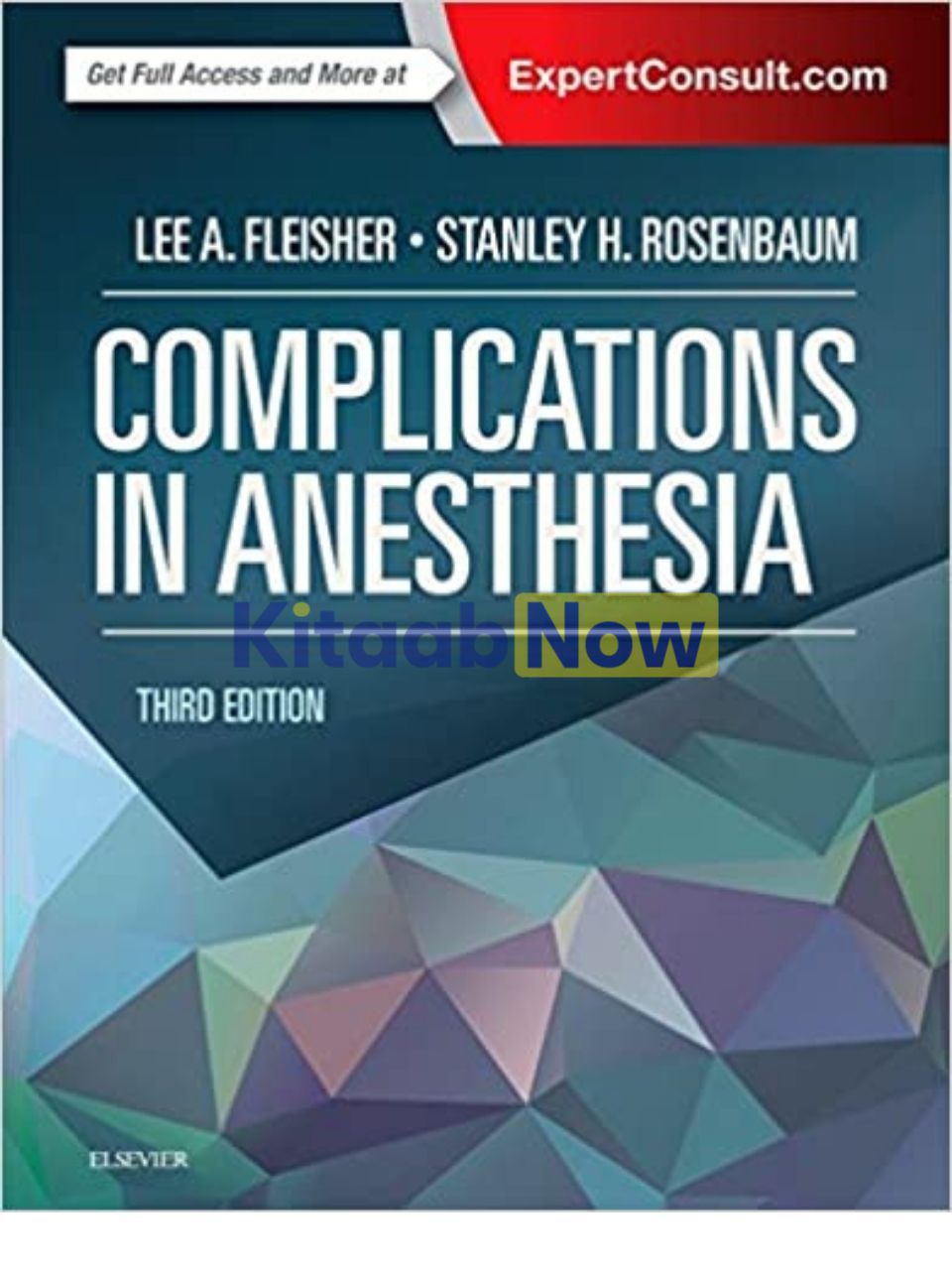
Complications in Anesthesia (3rd Edition)
- Authors: Lee A. Fleisher, Stanley Rosenbaum
- ISBN: 9781455704118
- Publisher: Elsevier Science Publishing
- Edition: 3rd
- Publication Date: December 06, 2017
- Format: Hardback – 848 pages
- Language: English
Out of stock
Description
Using a unique, problem-solving approach, Complications in Anesthesia, 3rd Edition, walks you through effective solutions to common complications in anesthesia and critical care. This practical reference uses a highly structured, clearly illustrated format to bring you up to date with what’s new in the field, help you anticipate potential challenges, and guide you through life-saving solutions.
Key Features
- Presents content in an updated, logical organization covering various types of complications (drugs, testing, intubation, line insertion, surgical procedures, etc.) followed by differential diagnosis and treatment of signs of complications (intraoperative, such as hypoxia or hypotension; and postoperative, such as MI).
- Follows a problem-based, practice-oriented approach throughout; case synopses are followed by concise coverage of recognition, risk assessment, implications, management, and prevention.
- Allows you to review the case reports, contemplate the implications, then check your response against what the experts have to say.
- Includes numerous photographs, diagrams, flow charts, and tables that illustrate key concepts.
- Ideal as a clinical reference and as a study tool when preparing for oral boards.
Table of Contents
- Section 1: Preoperative Conditions
- Adrenal Insufficiency
- Alzheimer’s Disease
- Chemical Dependency: Nonopioids
- Chemical Dependency: Opioids
- Chronic Opioid Use
- Dialysis-Dependent Patients
- Do-Not-Resuscitate Orders in the Operating Room
- Drugs Affecting the Renin-Angiotensin System
- HIV Infection and AIDS
- Hypertensive Disorders of Pregnancy
- Hyperthyroidism: Thyroid Storm
- Hypothyroidism: Myxedema Coma
- Mechanical Assist Devices
- Myasthenic Disorders
- Patient Confidentiality
- Patients with Cardiac Rhythm Management Devices
- Patients with Seizure Disorders
- Perioperative Management of Patients with Muscular Dystrophy
- Porphyrias
- Preanesthetic Evaluation: False-Positive Tests
- Preanesthetic Evaluation: Inadequate or Missing Test Result
- Preoperative Cardiac Interventions
- Sarcoidosis
- Sepsis, Systemic Inflammatory Response Syndrome, and Multiple Organ Dysfunction Syndrome
- Steroids
- The Jehovah’s Witness Patient
- Unstable Cervical Spine, Atlantoaxial Subluxation
- Upper Respiratory Tract Infection
- Section 2: Procedure-Related Complications
- Abdominal Aortic Aneurysm Repair
- Adenotonsillectomy
- Anesthesia for Electroconvulsive Therapy
- Anesthetic Complications of Fetal Surgery: EXIT Procedures
- Antepartum Hemorrhage
- Anterior Mediastinal Mass
- Anticoagulants and Peripheral Nerve Block
- Anticoagulation Initiation and Reversal for Cardiac Surgery
- Arteriovenous Malformation: Normal Perfusion Pressure Breakthrough
- Bleeding After Cardiac Surgery
- Cardiomyopathies
- Cardioversion
- Carotid Endarterectomy
- Chronic NSAID Use
- Complications after Pneumonectomy
- Complications of Adrenal Surgery
- Complications of Carcinoid Tumors
- Complications of Laparoscopic Surgery
- Complications of Lithotripsy
- Complications of Massive Transfusion
- Complications of Radical Urologic Surgery
- Complications of Spinal Surgery
- Complications of Thyroid Surgery
- Complications of Transurethral Surgery
- Complications of Trauma Surgery
- Continuous Nerve Blocks: Perineural Local Anesthetic Infusion
- Extremity Tourniquets
- Fetal Distress
- Foreign Body Aspiration
- Head Injury
- Hemodilution and Blood Conservation
- Intracranial Aneurysms: Rebleeding
- Intracranial Aneurysms: Vasospasm and Other Issues
- Laryngoscopy and Microlaryngoscopy
- Major Organ System Dysfunction after Cardiopulmonary Bypass
- Mediastinal Masses
- Methylmethacrylate
- One-Lung Ventilation
- Open Globe Injury
- Perioperative Psychological Trauma
- Peripheral Vascular Surgery
- Pituitary Tumors: Diabetes Insipidus
- Posterior Fossa Surgery
- Postpartum Hemorrhage
- Preterm Labor
- Pulmonary Hypertension
- Retrobulbar Block
- Sedation of Pediatric Patients
- Spinal Cord Injury
- Thermally Injured Patients
- Thoracic Aortic Aneurysm
- Toxic Ingestion
- Troubleshooting Common Problems During Cardiopulmonary Bypass
- Section 3: Intraoperative Agents and Potential Complications
- Antibiotics
- Antiemetic Drugs
- Antihistamines: H1- and H2-Blockers
- Autonomic Hyperreflexia
- Barbiturates: Porphyrias
- Disorders of Potassium Balance
- Intrathecal Opioids
- Ketamine
- Magnesium
- Magnetic Resonance Imaging
- Muscle Relaxants
- Nitrous Oxide: Neurotoxicity
- Nonbarbiturate Anesthetics
- Nondepolarizing Neuromuscular Block
- Perioperative Fluid Management
- Agents: Naloxone, Flumazenil, and Sugammadex
- Succinylcholine
- Volatile Anesthetics: Organ Toxicity
- Blood and Blood Products: Infections
- Blood and Blood Products: Transfuction Reaction
- Epidural Anesthesia: Unintended Intrathecal Injection
- Local Anesthetic Systemic Toxicity
- Respiration Depression After Spinal Anesthesia
- Section 4: Equipment-Related Complications
- Anesthesia Circuit
- Carbon Dioxide Absorbers
- Central Venous Pressure Monitoring
- Electrical Safety
- Fires in the Operating Room
- Flowmeters
- Intracranial Pressure Monitoring
- Intravenous Drug Delivery Systems
- Laser Complications
- Mechanical Ventilators
- Patient Warming Systems
- Pipeline Source Failure
- Proportioning Systems
- Pulmonary Artery Pressure Monitoring
- Rapid Fluid and Blood Delivery Systems
- Scavenging Systems
- Surgical Diathermy and Electrocautery
- Transesophageal Echocardiography
- Vaporizers
- Section 5: Perioperative Events
- Adverse Neurologic Sequelae: Central Neurologic Impairment
- Adverse Neurologic Sequelae: Peripheral Nerve Injury
- Adverse Outcomes: Withheld Information or Misinformation
- Air Emboli
- Alleged Malpractice
- Anaphylaxis and Anaphylactoid Reactions
- Angioedema and Urticaria
- Autonomic Dysreflexia
- Awareness Under Anesthesia
- Bradyarrythmias
- Bronchospasm
- Celiac Plexus Block: Side Effects and Complications
- Corneal Injury
- Delayed Emergence
- Dental Injuries
- Difficult Airway and Failed Extubation
- Disorders of Water Homeostasis: Hyponatremia and Hypernatremia
- Embolic Events of Pregnancy
- Fat Embolism Syndrome
- Hypercoagulable States: Thrombosis and Embolism
- Hyperglycemia and Diabetic Ketoacidosis
- Hyperthermia
- Hypothermia
- Inadequate Pain Relief
- Infectious Complications of Central Neuraxial Block
- Interscalene Nerve Block: Potential Severe Complications
- Intracranial Hypertension
- Intractable Nausea and Vomiting
- Laryngeal and Tracheal Injury
- Latex Reactions in Health Care Personnel
- Local Anesthetic Neurotoxicity: Cauda Equina Syndrome
- Long QT Syndromes and Torsade de Pointes
- Metabolic Acidosis and Alkalosis
- Misidentification of a Patient
- Perioperative Hypertension
- Perioperative Hypoxia
- Perioperative Myocardial Ischemia and Infarction
- Perioperative Tachyarrhythmias
- Peripartum Neurologic Complications
- Persistent Paresthesia
- Postobstruction Pulmonary Edema
- Postoperative Acute Renal Failure
- Postoperative Delirium
- Postoperative Hemodynamic Instability
- Postoperative Hepatic Dysfunction
- Postoperative Peripheral Neuropathy
- Postoperative Pulmonary Hypertension
- Postoperative Respiratory Failure
- Postoperative Respiratory Insufficiency
- Postoperative Urinary Retention
- Postoperative Visual Loss
- Postpartum Headache other Than Post-Dural Puncture Headache
- Psoas Compartment Block: Potential Complications
- Pulmonary Aspiration
- Pulmonary Aspiration in the Parturient
- Spinal Anesthesia: Post-Dural Puncture Headache
- Spinal Hematoma
- Supraclavicular and Infraclavicular Block: Complications
- Syringe Swaps
- The Hostile-Combative Patient
- Thromboembolic Complications
- Unanticipated Hospital Admission and Readmission
- Uncontrolled Postoperative Pain
- Venous Air Embolism
- Section 6: Pediatric Perioperative Events
- Delayed Emergence in Pediatric Patients
- Difficult Pediatric Airway
- Emergence Agitation
- Hypoglycemia and Hyperglycemia
- Hypothermia in Pediatric Patients
- Hypoxemia in Pediatric Patients
- Intraoperative Cardiac Arrest, Pediatric
- Latex Allergy/Anaphylaxis
- Malignant Hyperthermia
- Ophthalmic Problems and Complications, Pediatric
- Pediatric Hyperthermia
- Pediatric Laryngospasm
- Perioperative Aspiration Pneumonitis, Pediatric
- Postintubation Croup
- Postobstruction Pulmonary Edema in Pediatric Patients
- Postoperative Apnea in Infants
- Postoperative Nausea and Vomiting, Pediatric
Authors Biography
Lee Fleisher
Affiliations and Expertise
Robert Dunning Dripps Professor and Chair of Anesthesiology and Critical Care Medicine, Professor of Medicine, Perelman School of Medicine at the University of Pennsylvania, Philadelphia, Pennsylvania
Stanley Rosenbaum
Affiliations and Expertise
Professor of Anesthesiology, Internal Medicine & Surgery Director, Division of Perioperative & Adult Anesthesia Vice Chairman for Academic Affairs Department of Anesthesiology Yale University School of Medicine, New Haven, Connecticut
Additional information
| Weight | 1.930 kg |
|---|
Only logged in customers who have purchased this product may leave a review.
Related Products


Reviews
There are no reviews yet.