
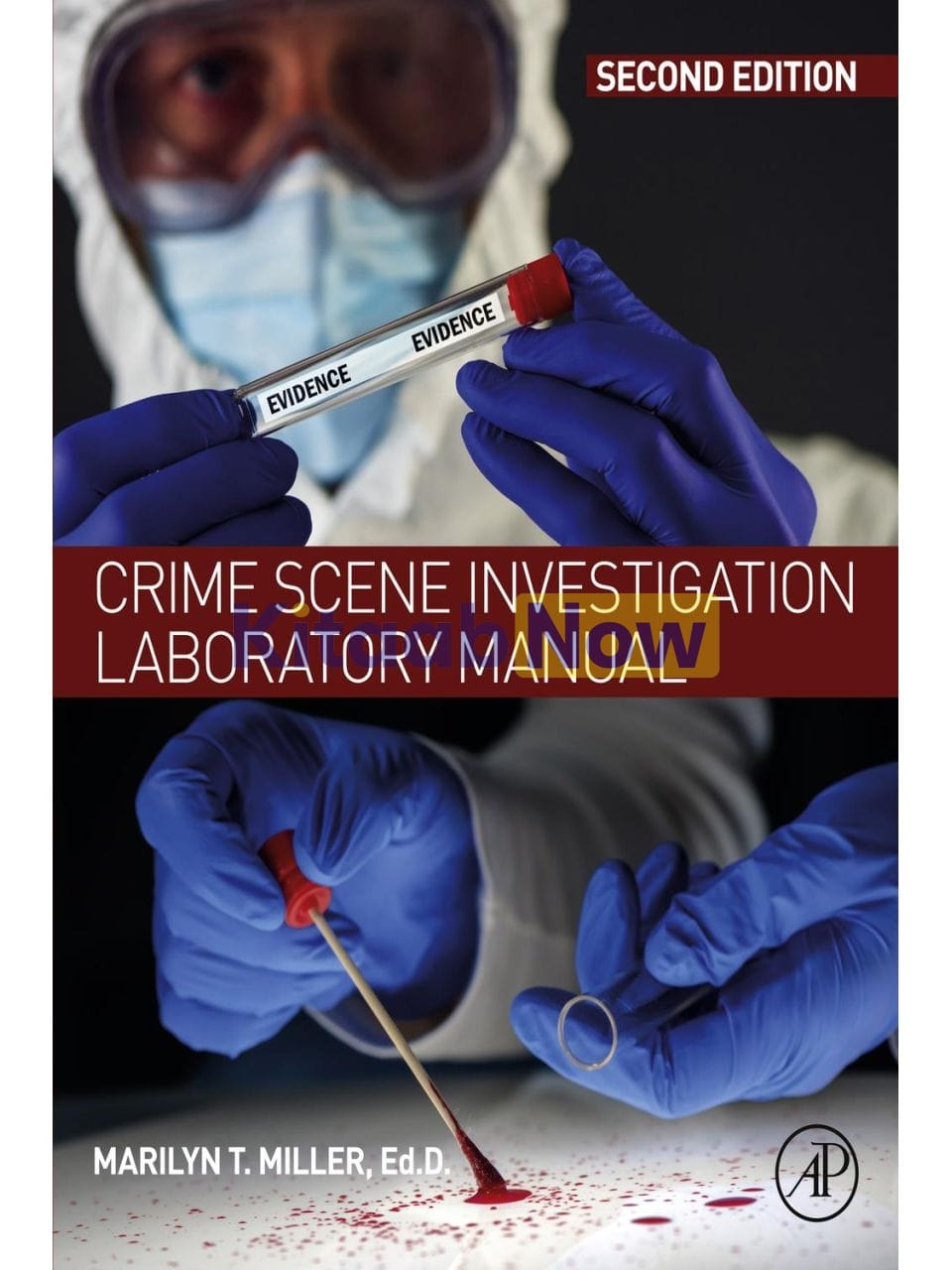
Crime Scene Investigation Laboratory Manual (2nd Edition)
- Author: Marilyn Miller
- ISBN: 9780128128459
- Publisher: Elsevier Science Publishing
- Edition: 2nd
- Publication Date: February 6, 2018
- Format: Paperback – 264 pages
- Language: English
Description
Crime Scene Investigation Laboratory Manual, Second Edition, is written by a former crime scene investigator and forensic scientist who provides practical, straightforward, and immediately applicable best practices. Readers will learn the latest techniques and procedures, including deconstructing first responder contamination, the preliminary walk-through, utilizing associative evidence, enhancing trace, biological and chemical evidence, and reconstructing scenes through wound dynamics, glass fracture patterns, bloodstain patterns, ballistics, and more. This lab manual provides information and examples for all aspects of crime scene investigation.
In addition, included exercises teach the proper techniques for securing, documenting and searing a crime scene, how to visualize or enhance the evidence found, how to package and preserve the evidence, and how to reconstruct what happened at the crime scene. This manual is intended to accompany any crime scene investigation textbook.
Key Features
- Designed to complement any text used in crime scene investigation courses
- Contains over 20+ proven exercises and material from actual crime scenes, providing students with hands-on learning
- Written by an experienced educator and former crime scene investigator/forensic scientist
Table of Contents
- SECTION I
- Exercise A: Defining a Crime Scene
- Laboratory Data Sheet
- Discussion Questions
- Exercise B: Physical Evidence at Crime Scenes
- Laboratory Data Sheet
- Discussion Questions
- Exercise C: Locard Exchange Principle
- Laboratory Data Sheet
- Discussion Questions
- SECTION II
- Exercise D: First Responders at Crime Scenes
- Laboratory Data Sheet
- Discussion Questions
- Exercise E: Crime Scene Security
- Multilevel Crime Scene Security
- Laboratory Data Sheet
- Discussion Questions
- Exercise F: Preliminary Scene Survey
- Laboratory Data Sheet
- Discussion Questions
- SECTION III
- Exercise G: Crime Scene Documentation: Notes
- Laboratory Data Sheet
- Discussion Questions
- Exercise H: Crime Scene Documentation: Videography
- Laboratory Data Sheet
- Discussion Questions
- Exercise I: Crime Scene Documentation: Photography
- Laboratory Data Sheet
- Discussion Questions
- Special Topic: Laser Scanners at Crime Scenes
- Exercise J: Crime Scene Documentation: Sketching
- Laboratory Data Sheet
- Discussion Questions
- SECTION IV
- Exercise K: Physical Searches
- Objectives of a Crime Scene Search
- General Concepts of Crime Scene Searches
- Crime Scene Search Patterns
- Laboratory Data Sheet
- Discussion Questions
- Exercise L: Visualization and Enhancement: Lighting Aids
- Specific Evidence Applications
- Photographic Methods
- Laboratory Data Sheet
- Discussion Questions
- Exercise M: Visualization and Enhancement: Biological Evidence
- Biological Evidence and Pattern Enhancement Reagents
- Field Tests for Biological Evidence
- Laboratory Data Sheet
- Discussion Questions
- Exercise N: Visualization and Enhancement: Chemical Evidence
- Tests for Gunshot Residue (GSR)
- Tests for Explosive Residues
- Tests for Controlled Substances and Drugs
- Laboratory Data Sheet
- Discussion Questions
- Exercise O: Visualization and Enhancement: Combination Methods
- Impression Evidence
- Laboratory Data Sheet
- Discussion Questions
- Exercise P: Packaging, Preservation, and Collection of Evidence
- Laboratory Data Sheet
- Discussion Questions
- SECTION V
- Exercise Q: Final Scene Survey
- Laboratory Data Sheet
- Discussion Questions
- Exercise R: Crime Scene Reconstruction: Wound Dynamics
- Wound Dynamics
- Laboratory Data Sheet
- Discussion Questions
- Exercise S: Crime Scene Reconstruction: Glass Fracture Patterns
- Laboratory Data Sheet
- Discussion Questions
- Exercise T: Crime Scene Reconstruction: Bloodstain Patterns I
- Basic Bloodstain Patterns
- Laboratory Data Sheet
- Discussion Questions
- Exercise U: Crime Scene Reconstruction: Bloodstain Patterns II
- Impacted Bloodstain Spatters Pattern
- Repetitive Dripping Patterns
- Arterial Gushes (Projected Blood)
- Point of Origin of Bloodshed Determinations
- Laboratory Data Sheet
- Discussion Questions
- Exercise V: Crime Scene Reconstruction: Shooting Investigations
- Muzzle-to-Target Distance Determinations
- Methods for Trajectory Determinations
- Experimentation of Trajectories
- Projectiles and Casings
- Laboratory Data Sheet
- Discussion Questions
- Exercise W: Crime Scene Reconstruction: Report Writing and Mock Scene Reconstruction
- Laboratory Data Sheet
- Discussion Questions
- Answer Bank for Discussion Questions
- Appendix I: Solutions and Reagents
- Appendix II: Glossary of Terms
- Index
Author Description
Marilyn Miller is a graduate of Florida Southern College with a bachelor’s degree in chemistry. She earned a master’s degree in forensic chemistry from the University of Pittsburgh and a Doctorate in Education from Johnson & Wales University in post-secondary educational leadership. Miller is a tenured, associate professor in the Department of Forensic Science at Virginia Commonwealth University. As a post-secondary educator for almost twenty years, she teaches a wide variety of forensic science and crime scene investigation classes to both forensic science and criminal justice majors at the undergraduate and graduate levels. She is a Fellow in the Criminalistics section of the American Academy of Forensic Science, the Southern Association of Forensic Scientists and the American Chemical Society.
Additional information
| Weight | 0.700 kg |
|---|
Only logged in customers who have purchased this product may leave a review.


Reviews
There are no reviews yet.