
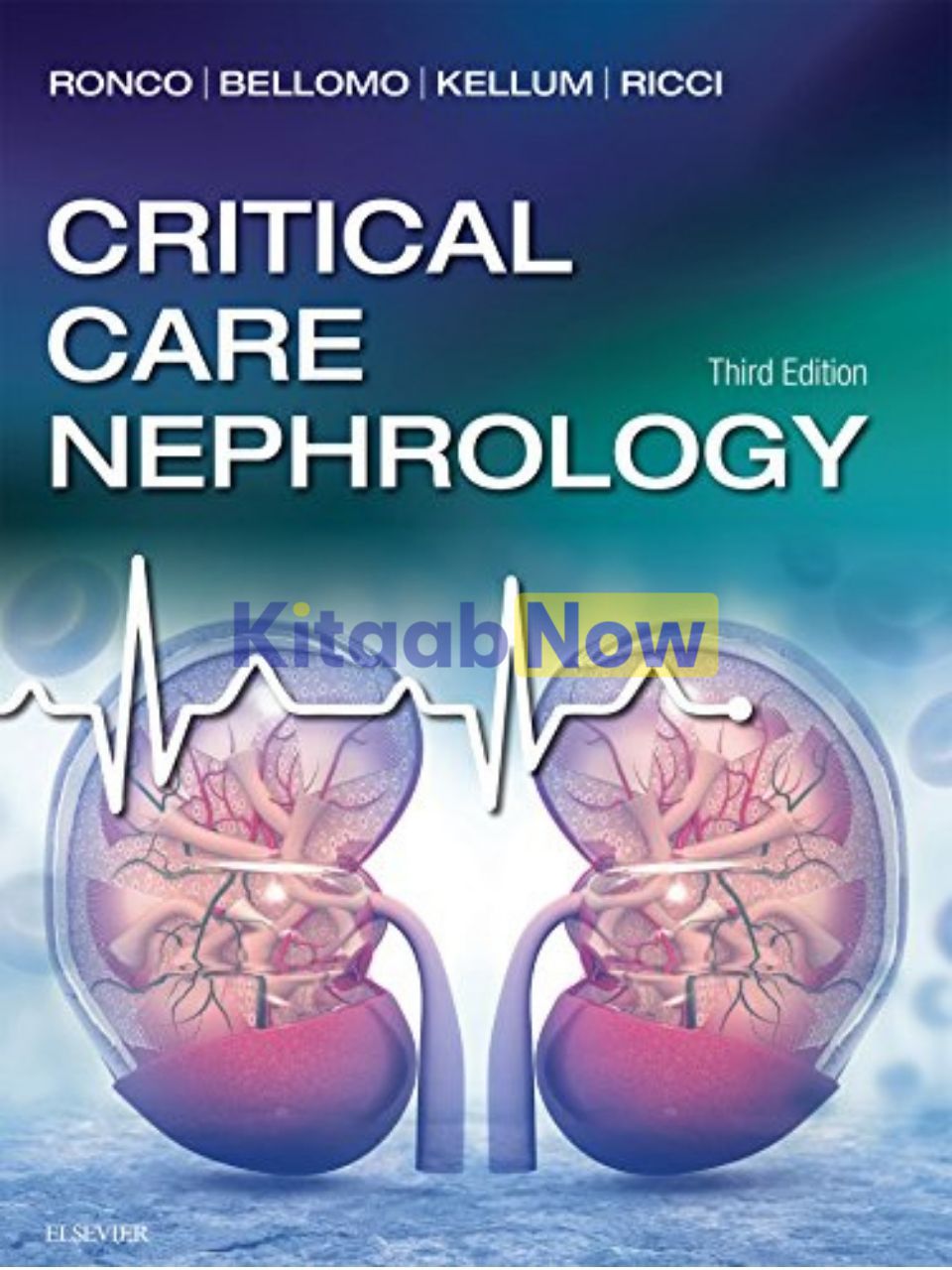
Critical Care Nephrology (3rd Edition)
- Authors: Claudio Ronco, Rinaldo Bellomo, John Kellum, Zaccaria Ricci
- ISBN: 9780323449427
- Publisher: Elsevier Science Publishing
- Edition: 3rd
- Publication Date: January 31, 2018
- Format: Hardback – 1456 pages
- Language: English
Description
Comprehensive and clinically relevant, the 3rd Edition of Critical Care Nephrology provides authoritative coverage of the latest advances in critical care procedures for patients with renal diseases or disorders. Using common guidelines and standardized approaches to critically ill patients, this multidisciplinary reference facilitates better communication among all physicians who care for critically ill patients suffering from kidney disease, electrolyte and metabolic imbalances, poisoning, severe sepsis, major organ dysfunction, and other pathological events.
Key Features
- Offers detailed discussions of different forms of organ support, artificial organs, infections, acute illness occurring in chronic hemodialysis patients, and much more.
- Places a special emphasis on therapeutic interventions and treatment procedures for a hands on clinical reference tool.
- Presents information clearly, in a format designed for easy reference – from basic sciences to clinical syndromes to diagnostic tools.
- Covers special populations such as children, diabetic patients, and the elderly.
- An exceptional resource for nephrologists, intensivists, surgeons, or critical care physicians – anyone who treats critically ill renal patients.
New to this Edition
- Shares a combined commitment to excellence lead by Drs. Claudio Ronco, Rinaldo Bellomo, John Kellum, and Zaccaria Ricci – unparalleled leaders in this field.
- Addresses key topics with expanded coverage of acute kidney injury, stress biomarkers, and sepsis, including the latest developments on mechanisms and management.
- Provides up-to-date information on extracorporeal therapies from new editor Dr. Zaccaria Ricci.
- Expert Consult™ eBook version included with purchase. This enhanced eBook experience allows you to search all of the text, figures, and references from the book on a variety of devices.
Table of Contents
- Section 1: Principles of Critical Care
- Chapter 1 – The Critically Ill Patient
- Chapter 2 – The Pathophysiologic Foundations of Critical Care
- Chapter 3 – Mechanical Ventilation
- Chapter 4 – Hemodynamic Support in the Critically Ill Patient
- Chapter 5 – Monitoring Organ Dysfunction in Critical Care
- Chapter 6 – Kidney-Specific Severity Scores
- Section 2: Principles of Renal Physiology
- Chapter 7 – The Physiology of the Glomerulus
- Chapter 8 – The Physiology of the Loop of Henle
- Chapter 9 – Glomerular Filtration Rate, Renal Functional Reserve, and Kidney Stress Testing
- Chapter 10 – Renal Energy Consumption and Metabolism
- Section 3: Epidemiology of Acute Kidney Injury in Critical Care
- Chapter 11 – Acute Kidney Injury: From Clinical to Molecular Diagnosis
- Chapter 12 – Community- and Hospital-Acquired Acute Kidney Injury
- Chapter 13 – Epidemiology of Acute Kidney Injury in Critically Ill Patients
- Chapter 14 – Acute Kidney Injury in Patients With Chronic Kidney Disease
- Section 4: Exposures and Patient Susceptibility
- Chapter 15 – Genetic Predisposition for Acute Kidney Injury (AKI)
- Chapter 16 – Risk Factors and Risk Assessment in Acute Kidney Injury
- Chapter 17 – Experimental Models of Acute Kidney Injury
- Section 5: Humoral and Cellular Mechanisms of Kidney Damage
- Chapter 18 – Renal Blood Flow and Perfusion Pressure
- Chapter 19 – Humoral Mediators in Sepsis
- Chapter 20 – Cell Death Pathways: Apoptosis and Regulated Necrosis
- Chapter 21 – Pathogen-Associated Molecular Patterns, Damage-Associated Molecular Patterns, and Their Receptors in Acute Kidney Injury
- Section 6: Clinical Course of Acute Kidney Injury and Biomarkers
- Chapter 22 – Acute Kidney Disease
- Chapter 23 – Acute Kidney Disease, Renal Recovery, and Post–Acute Kidney Injury Care
- Chapter 24 – The Role of Biomarkers in the Diagnosis and Management of Acute Kidney Injury
- Chapter 25 – Functional Biomarkers
- Chapter 26 – Damage Biomarkers
- Chapter 27 – Kidney Stress Biomarkers
- Section 7: Mechanisms of Repair or Progression
- Chapter 28 – Renal Repair and Recovery
- Chapter 29 – Maladaptive Repair and Progression to CKD
- Chapter 30 – Biomarkers of Recovery and/or Repair Following Acute Kidney Injury
- Section 8: Renal Histopathology in Acute Kidney Injury
- Chapter 31 – Practical Considerations of Renal Biopsies in Critical Care Patients
- Chapter 32 – Localization of Injury and Repair Pathways
- Section 9: Imaging Techniques in Critical Care Nephrology
- Chapter 33 – Ultrasonography and Doppler Techniques
- Chapter 34 – Contrast-Enhanced Renal Ultrasound
- Chapter 35 – Traditional Radiology, Computed Tomography, and Magnetic Resonance Imaging in Critical Care Nephrology
- Chapter 36 – Radionuclides Diagnostic Techniques
- Section 10: Clinical Syndromes and Acute Kidney Injury
- Chapter 37 – Multiple Organ Dysfunction
- Chapter 38 – Acute Kidney Injury in Burns and Trauma
- Chapter 39 – Drug-Induced Acute Kidney Injury
- Chapter 40 – Acute Kidney Injury in Pregnancy
- Chapter 41 – Acute Kidney Injury in Oncology and Tumor Lysis Syndrome
- Chapter 42 – Acute Kidney Injury in Cardiac Surgery
- Chapter 43 – Acute Kidney Injury in Major Surgery
- Chapter 44 – Acute Kidney Injury in Heart Failure
- Chapter 45 – Acute Kidney Injury in Cirrhosis
- Chapter 46 – Acute Renal Failure in Kidney Transplant Recipients
- Chapter 47 – Acute Glomerulonephritis
- Chapter 48 – Contrast-Induced Acute Kidney Injury
- Chapter 49 – Abdominal Compartment Syndrome
- Chapter 50 – Hemolytic Uremic Syndrome
- Section 11: Prevention and Treatment: General Treatment Concepts
- Chapter 51 – Nonpharmacologic Management of Acute Renal Injury
- Chapter 52 – Novel Drugs for Acute Kidney Injury
- Chapter 53 – Remote Ischemic Preconditioning
- Section 12: Fluid and Electrolytes
- Chapter 54 – Blood Biochemistry: Measuring Major Plasma Electrolytes
- Chapter 55 – Assessment of Urine Biochemistry
- Chapter 56 – Disorders of Sodium and Water Balance
- Chapter 57 – Disorders of Potassium and Magnesium
- Chapter 58 – Calcium and Phosphate Physiology
- Chapter 59 – Principles of Fluid Therapy
- Chapter 60 – Blood Transfusion Therapy
- Chapter 61 – Loop and Thiazide Diuretics
- Chapter 62 – Vaptans and the Treatment of Hyponatremia
- Chapter 63 – Aldosterone Antagonists, Amiloride, and Triamterene
- Section 13: Acid-Base
- Chapter 64 – Laboratory Tests: Blood Gases, Anion Gap, and Strong Ion Gap
- Chapter 65 – Acid-Base Physiology and Diagnosis of Disorders
- Chapter 66 – Metabolic Acidosis
- Chapter 67 – Hyperlactatemia and Lactic Acidosis
- Chapter 68 – Renal Tubular Acidosis
- Chapter 69 – Metabolic Alkalosis
- Chapter 70 – Respiratory Acid-Base Disorders
- Chapter 71 – Iatrogenic and Poison-Derived Acid Base Disorders
- Section 14: Metabolism and Nutrition in Critical Illness and Acute Kidney Injury
- Chapter 72 – Energy Requirement and Consumption in the Critically Ill Patient
- Chapter 73 – Impact of Renal Replacement Therapy on Metabolism and Nutrient Requirements in the Critically Ill Patient
- Chapter 74 – Amino Acid Turnover, Protein Metabolism, and Nitrogen Balance in Acute Kidney Injury
- Chapter 75 – Carbohydrates and Lipids
- Chapter 76 – Endocrinology of the Stress Response During Critical Illness
- Chapter 77 – Anemia of Critical Illness
- Chapter 78 – Management of Nutrition in Acute Kidney Injury and Renal Replacement Therapy
- Chapter 79 – Blood Glucose Control in Critical Care
- Chapter 80 – Enteral Nutrition
- Section 15: Infectious Diseases and Sepsis
- Chapter 81 – Microbiologic Considerations in the Intensive Care Patient
- Chapter 82 – Innate Immunity and the Kidney
- Chapter 83 – Adaptive Immunity and Critical Illness
- Chapter 84 – Spontaneous Bacterial Peritonitis and Hepatorenal Syndrome
- Chapter 85 – Tropical Infections Causing Acute Kidney Injury
- Chapter 86 – Sepsis and Septic Shock
- Chapter 87 – Complement and Its Consequences in Sepsis
- Chapter 88 – Coagulation Abnormalities in Sepsis
- Dysfunction of the Kidney in Sepsis
- Book chapterFull text access
- Chapter 89 – Endothelial Dysfunction of the Kidney in Sepsis
- Chapter 90 – Sepsis-Induced Acute Kidney Injury
- Chapter 91 – Recommendations for Sepsis Management
- Chapter 92 – Principles of Antimicrobial Prescription in Intensive Care Unit Patients With Acute Kidney Injury
- Chapter 93 – Renal Replacement Therapy for Septic Acute Kidney Injury
- Chapter 94 – Blood Purification for Sepsis
- Chapter 95 – Management of Infection in Patients With Kidney Transplant
- Chapter 96 – Critical Care Viral Infections
- Chapter 97 – Principles of Antibiotic Prescription in Intensive Care Unit Patients and Patients With Acute Renal Failure
- Section 16: Acute Intoxication and Poisoning
- Chapter 98 – Drugs and Antidotes in Acute Intoxication
- Chapter 99 – Extracorporeal Therapies in Acute Intoxication and Poisoning
- Chapter 100 – Plasmapheresis in Acute Intoxication and Poisoning
- Chapter 101 – Poisoning: Kinetics to Therapeutics
- Section 17: Acute Kidney Injury and Organ Crosstalk
- Chapter 102 – Bleeding and Hemostasis in Acute Renal Failure
- Chapter 103 – Gastrointestinal Problems in Acute Kidney Injury
- Chapter 104 – Cardiovascular Problems in Acute Kidney Injury
- Chapter 105 – Water and Electrolyte Disturbances in Acute Renal Failure
- Chapter 106 – Neurologic Problems in Acute Renal Failure
- Chapter 107 – Immunologic and Infectious Complications of Acute Kidney Injury
- Chapter 108 – Cellular Response to Acute Kidney Injury
- Section 18: Interaction of the Heart and the Kidney
- Chapter 109 – Heart-Kidney Cross-Talk
- Chapter 110 – Classification of Cardiorenal Syndrome
- Chapter 111 – Cardiorenal Syndrome Type 1
- Chapter 112 – Cardiorenal Syndrome Type 2
- Chapter 113 – Cardiorenal Syndrome Type 3
- Chapter 114 – Cardiorenal Syndrome Type 4
- Chapter 115 – Cardiorenal Syndrome Type 5
- Chapter 116 – Renal Function During Cardiac Mechanical Support and Artificial Heart
- Chapter 117 – The Kidney in Diastolic Dysfunction
- Chapter 118 – Principles of Diuretic Management in Heart Failure
- Chapter 119 – Management of Overhydration in Heart Failure Patients
- Chapter 120 – Recent Advances for Stroke Prevention in Patients With Atrial Fibrillation and Advanced Kidney Disease
- Section 19: Interaction of the Lung and Kidney
- Chapter 121 – Lung-Kidney Cross-Talk
- Chapter 122 – The Kidney During Mechanical Ventilation
- Chapter 123 – Extracorporeal Membrane Oxygenation and Renal Function
- Chapter 124 – Extracorporeal Carbon Dioxide Removal
- Chapter 125 – Extracorporeal Membrane Oxygenation and Continuous Renal Replacement Therapy in Adults and Children
- Chapter 126 – Pulmonary-Renal Syndrome
- Section 20: The Liver and the Kidney
- Chapter 127 – Liver-Kidney Interaction
- Chapter 128 – Pathophysiology and Management of the Hepatorenal Syndrome
- Chapter 129 – Kidney Dysfunction After Liver Transplantation
- Chapter 130 – Extracorporeal Liver Support Devices
- Section 21: Interaction of the Brain and the Kidney
- Chapter 131 – Treatment of Combined Acute Renal Failure and Cerebral Edema
- Chapter 132 – Renal Protection in the Organ Donor
- Chapter 133 – Effect of Extracorporeal Therapies on the Brain
- Section 22: Fluid Balance and its Management in the Critically Ill
- Chapter 134 – Components of Fluid Balance and Monitoring
- Chapter 135 – Noninvasive Methods of Fluid Status Assessment in Critically Ill Patients
- Chapter 136 – Management of Fluid Overload in Cardiorenal Patients: The Five B Approach
- Chapter 137 – Mechanical Fluid Removal
- Section 23: General Principles of Acute Renal Replacement Therapy
- Chapter 138 – Indications for Renal Replacement Therapy in the Critically Ill
- Chapter 139 – Principles of Extracorporeal Circulation and Transport Phenomena
- Chapter 140 – Membranes and Filters for Use in Acute Renal Failure
- Chapter 141 – Continuous Renal Replacement Therapy Machine Technology
- Chapter 142 – Principles of Anticoagulation in Extracorporeal Circuits
- Chapter 143 – Dialysis Solutions and Replacement Fluids
- Chapter 144 – Starting and Stopping Renal Replacement Therapy in the Critically Ill
- Chapter 145 – The Concept of Renal Replacement Therapy Dose and Efficiency
- Chapter 146 – Quantification of Acute Renal Replacement Therapy
- Chapter 147 – Principles of Pharmacodynamics and Pharmacokinetics of Drugs Used in Extracorporeal Therapies
- Chapter 148 – Ethical Considerations in Acute Renal Replacement Therapy
- Section 24: Intermittent Renal Replacement Therapies
- Chapter 149 – Intermittent Techniques for Acute Dialysis
- Chapter 150 – Solute and Water Transport in Hemodialysis: Dialyzers, Flow Distribution, and Cross-Filtration
- Chapter 151 – Biocompatibility of the Dialysis System
- Chapter 152 – Composition of Hemodialysis Fluid
- Chapter 153 – Indications for and Contraindications to Intermittent Hemodialysis in Critically Ill Patients
- Chapter 154 – Technical and Clinical Complications of Intermittent Hemodialysis in the Intensive Care Unit
- Chapter 155 – Correction of Water, Electrolyte, and Acid-Base Derangements by Hemodialysis and Derived Techniques
- Chapter 156 – Urea Kinetics, Efficiency, and Adequacy of Hemodialysis and Other Intermittent Treatments
- Chapter 157 – Assessment of Fluid Status and Body Composition and Control of Fluid Balance With Intermittent Hemodialysis in the Critically Ill Patient
- Chapter 158 – Outcomes of Intermittent Hemodialysis in Critically Ill Patients With Acute Kidney Injury
- Chapter 159 – Hybrid Dialysis Techniques in the Intensive Care Unit
- Chapter 160 – The Role of Plasmapheresis in Critical Illness
- Chapter 161 – Cascade Filtration for ABO Incompatible Transplant
- Chapter 162 – Nursing Issues and Procedures in Continuous Renal Replacement Therapy
- Section 25: Continuous Renal Replacement Therapies (CRRT)
- Chapter 163 – Indications for Continuous Renal Replacement Therapy: Renal Replacement Versus Renal Support
- Chapter 164 – Beginning and Ending Continuous Renal Replacement Therapy in the Intensive Care Unit
- Chapter 165 – Solute and Water Kinetics in Continuous Therapies
- Chapter 166 – Continuous Renal Replacement Therapy: Modalities and Their Selection
- Chapter 167 – Vascular Access for Acute Renal Replacement Therapy
- Chapter 168 – Anticoagulation Strategies for Continuous Renal Replacement Therapy
- Chapter 169 – Nursing Strategies to Prevent Coagulation of the Extracorporeal Circuit
- Chapter 170 – Adequacy of Continuous Renal Replacement Therapy: Prescription and Delivery
- Chapter 171 – High-Volume Hemofiltration in the Intensive Care Unit
- Chapter 172 – Pulse High-Volume Hemofiltration in Management of Critically Ill Patients With Severe Sepsis or Septic Shock
- Chapter 173 – High Cutoff Membranes for Mediators Removal
- Chapter 174 – Clinical Effects of Continuous Renal Replacement Therapies
- Chapter 175 – Antibiotic Adjustment in Continuous Renal Replacement Therapy
- Chapter 176 – Nomenclature: Basic Principles
- Chapter 177 – Nomenclature: Techniques
- Section 26: Peritoneal Dialysis in the Intensive Care Unit
- Chapter 178 – Peritoneal Dialysis System
- Chapter 179 – Indications, Contraindications, and Complications of Peritoneal Dialysis in Acute Renal Failure
- Chapter 180 – Solute and Water Transport Across the Peritoneal Barrier
- Chapter 181 – Choice of Peritoneal Dialysis Technique: Intermittent or Continuous
- Chapter 182 – Correction of Fluid, Electrolyte, and Acid-Base Derangements by Peritoneal Dialysis in Acute Kidney Injury
- Chapter 183 – Feasibility, Efficiency, and Adequacy of Peritoneal Dialysis in Acute Kidney Injury
- Chapter 184 – Clinical Results and Complications of Peritoneal Dialysis in Acute Kidney Injury
- Chapter 185 – Treatment of Peritonitis and Other Clinical Complications of Peritoneal Dialysis in the Critically Ill Patient
- Chapter 186 – Comparison of Peritoneal Dialysis With Other Treatments for Acute Kidney Injury
- Chapter 187 – Continuous-Flow Peritoneal Dialysis as Acute Therapy
- Chapter 188 – Nursing and Procedure Issues in Peritoneal Dialysis
- Section 27: Extracorporeal Blood Purification Techniques Beyond Dialysis
- Chapter 189 – Sorbents: From Basic Structure to Clinical Application
- Chapter 190 – Therapeutic Apheresis in Critically Ill Patients: Indications, Modalities and Techniques, Clinical Results
- Chapter 191 – Extracorporeal Blood Purification Techniques Beyond Dialysis: Coupled Plasmafiltration-Adsorption
- Chapter 192 – Prometheus System
- Chapter 193 – Toraymyxin and Other Endotoxin Adsorption Systems
- Chapter 194 – Plasmafiltration-Adsorption-Dialysis System
- Chapter 195 – Extracorporeal Membrane Oxygenation for Cardiac Support
- Chapter 196 – Extracorporeal Membrane Oxygenation for Pulmonary Support
- Chapter 197 – Cell-Based Therapies
- Section 28: Critical Care Nephrology in Pediatrics
- Chapter 198 – Cellular and Molecular Mechanisms of Acute Kidney Injury
- Chapter 199 – Epidemiology of Pediatric Acute Kidney Injury
- Chapter 200 – Treatment of Acute Kidney Injury in Children: Conservative Management to Renal Replacement Therapy
- Chapter 201 – Technical Aspects of Pediatric Continuous Renal Replacement Therapy
- Chapter 202 – Multiple Organ Dysfunction in the Pediatric Intensive Care Unit
- Chapter 203 – Drug Dosing in Pediatric Acute Kidney Insufficiency and Renal Replacement Therapy
- Chapter 204 – Nutrition of Critically Ill Children With Acute Renal Failure
- Chapter 205 – Outcome of Pediatric Acute Kidney Injury
- Chapter 206 – Renal Replacement Therapy for the Critically Ill Infant
- Chapter 207 – Neonatal Hyperammonemia and Continuous Renal Replacement Therapy
- Chapter 208 – Modified Ultrafiltration in Pediatric Heart Surgery
- Chapter 209 – Techniques and Machines for Pediatric Renal Replacement Therapy
- Chapter 210 – Antibiotics in Critically Ill Newborns and Children: Nephrotoxicity and Management During Renal Replacement Therapy
- Section 29: Kidney Transplantation and Critical Care
- Chapter 211 – Patient Selection and Pretransplantation Care for Kidney Transplant Recipients
- Chapter 212 – Kidney Support and Perioperative Care in Kidney Transplantation
- Chapter 213 – Acute Renal Failure in Kidney Transplant Recipients
- Section 30: Special Kidney Problems in the Intensive Care Unit
- Chapter 214 – Management of Chronic Kidney Disease and End-Stage Kidney Disease Patients in the Intensive Care Unit
- Chapter 215 – Management of Patients with Diabetes in the Intensive Care Unit
- Chapter 216 – Diagnosis and Management of Acute Kidney Injury in the Emergency Department
- Chapter 217 – Anticancer Drugs and the Kidney
- Chapter 218 – Antiinflammatory Drugs and the Kidney
- Chapter 219 – Calcineurin Inhibitors and Other Immunosuppressive Drugs and the Kidney
- Chapter 220 – Alternative Medicine and Chinese Herbs and the Kidney
- Chapter 221 – Environment, Smoking, Obesity, and the Kidney
- Chapter 222 – Lead and Heavy Metals and the Kidney
- Chapter 223 – Statins and the Kidney
- Chapter 224 – Erythropoietin Therapy in Critically Ill and Acute Kidney Injury Patients
- Chapter 225 – Vasoactive Drugs, Renal Function, and Acute Kidney Injury
- Chapter 226 – End Points for Clinical Trials in Acute Kidney Injury
- Chapter 227 – Hypothermia and the Kidney
- Chapter 228 – Renin-Angiotensin System Blockers and Acute Kidney Injury
Authors Biography
Claudio Ronco, MD, Divisione di Nefrologia, Ospedale San Bortolo, Vicenza, Italy;
Rinaldo Bellomo, MBBS(Hons), MD, FRACP, FCCP, Chairman, Australian and New Zealand Intensive Care Society Clinical Trials Group; Director of Intensive Care Research, Department of Intensive Care, Austin & Repatriation Medical Centre, Melbourne, Victoria, Australia;
John A. Kellum, MD, UPMC Presbyterian, Pittsburgh, PA and
Zaccaria Ricci, Pediatric Cardiac Intensive Care Unit, Bambino Gesù Children’s Hospital, Rome, Italy
Additional information
| Weight | 2.850 kg |
|---|
Only logged in customers who have purchased this product may leave a review.
Related Products


Reviews
There are no reviews yet.