

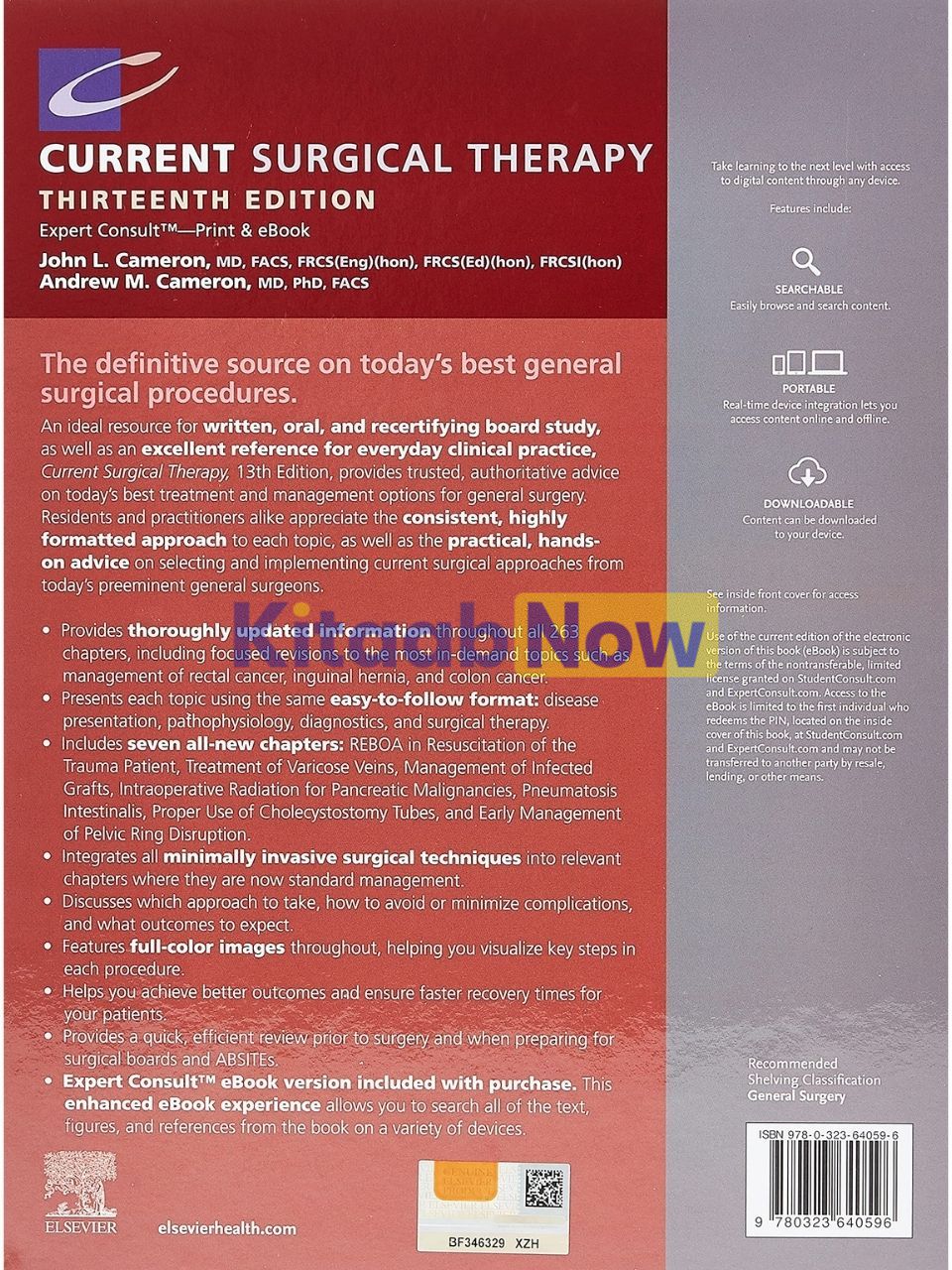
Current Surgical Therapy (13th Edition)
- Author: Andrew M. Cameron
- ISBN: 9780323640596
- Publisher: Elsevier Science Publishing
- Edition: 13th
- Publication Date: January 01, 2020
- Format: Hardback – 1552 pages
- Language: English
Description
An ideal resource for written, oral, and recertifying board study, as well as an excellent reference for everyday clinical practice, Current Surgical Therapy, 13th Edition, provides trusted, authoritative advice on today’s best treatment and management options for general surgery. Residents and practitioners alike appreciate the consistent, highly formatted approach to each topic, as well as the practical, hands-on advice on selecting and implementing current surgical approaches from today’s preeminent general surgeons.
Key Features
- Provides thoroughly updated information throughout all 263 chapters, including focused revisions to the most in-demand topics such as management of rectal cancer, inguinal hernia, and colon cancer.
- Presents each topic using the same easy-to-follow format: disease presentation, pathophysiology, diagnostics, and surgical therapy.
- Includes seven all-new chapters: REBOA in Resuscitation of the Trauma Patient, Treatment of Varicose Veins, Management of Infected Grafts, Radiation for Pancreatic Malignancies, Pneumatosis Intestinalis, Proper Use of Cholecystostomy Tubes, and Pelvic Fractures.
- Integrates all minimally invasive surgical techniques into relevant chapters where they are now standard management.
- Discusses which approach to take, how to avoid or minimize complications, and what outcomes to expect.
- Features full-color images throughout, helping you visualize key steps in each procedure.
- Helps you achieve better outcomes and ensure faster recovery times for your patients.
- Provides a quick, efficient review prior to surgery and when preparing for surgical boards and ABSITEs.
- Enhanced eBook version included with purchase, which allows you to access all of the text, figures, and references from the book on a variety of devices
Table of Contents
- Section 1. Esophagus
- Esophageal Function Tests
- Gastroesophageal Reflux Disease
- New Approaches to Gastroesophageal Reflux Disease (LINX)
- The Management of Barrett’s Esophagus
- The Endoscopic Treatment of Barrett’s Esophagus
- The Management of Paraesophageal Hiatal Hernia
- The Management of Pharyngeal Esophageal (Zenker’s) Diverticula
- The Management of Achalasia of the Esophagus
- The Management of Disorders of Esophageal Motility
- The Management of Esophageal Carcinoma
- Neoadjuvant and Adjuvant Therapy of Esophageal Cancer
- The Use of Esophageal Stents
- The Management of Esophageal Perforation
- Section 2. Stomach
- The Management of Benign Gastric Ulcer
- The Management of Duodenal Ulcers
- The Management of the Zollinger-Ellison Syndrome
- The Management of the Mallory-Weiss Syndrome
- The Management of Gastric Adenocarcinoma
- Familial Gastric Cancer
- The Management of Gastrointestinal Stromal Tumors
- The Management of Morbid Obesity
- Section 3. Small Bowel
- The Management of Small Bowel Obstruction
- The Management of Crohn’s Disease of the Small Bowel
- The Use of Strictureplasty in Crohn’s Disease
- The Management of Small Bowel Tumors
- The Management of Diverticulosis of the Small Bowel
- The Management of Motility Disorders of the Stomach and Small Bowel
- The Management of Short Bowel Syndrome
- The Management of Enterocutaneous Fistulas
- Section 4. Large Bowel
- Preoperative Bowel Preparation: Is it Necessary?
- The Management of Diverticular Disease of the Colon
- The Management of Chronic Ulcerative Colitis
- The Management of Toxic Megacolon
- The Management of Crohn’s Colitis
- The Management of Ischemic Colitis
- The Management of Clostridium Difficile Colitis
- The Management of Large Bowel Obstruction
- Enteral Stents in the Treatment of Colonic Obstruction
- The Management of Acute Colonic Pseudo-Obstruction (Ogilvie’s Syndrome)
- The Management of Colonic Volvulus
- The Management of Rectal Prolapse
- The Management of Solitary Rectal Ulcer Syndrome
- The Surgical Management of Constipation
- The Management of Radiation Injury to the Small and Large Bowel
- Surgical Management of the Polyposis Syndromes
- The Management of Colon Cancer
- The Management of Rectal Cancer
- The Management of Tumors of the Anal Region
- The Use of PET Scanning in The Management of Colorectal Cancer
- Neoadjuvant and Adjuvant Treatment for Colorectal Cancer
- The Management of Colon Polyps
- Management of Peritoneal Surface Malignancies
- The Management of Acute Appendicitis
- The Management of Hemorrhoids
- Diagnosis, Treatment, and Surgical Management of Fissures-in-ano
- The Management of Anorectal Abscess and Fistula
- The Management of Anorectal Stricture
- The Management of Pruritus Ani
- The Management of Fecal Incontinence
- The Management of Rectovaginal Fistula
- The Management of Condyloma Acuminata
- The Management of Pilonidal Disease
- The Management of Lower Gastrointestinal Bleeding
- Enhanced Recovery After Surgery
- Pneumatosis Intestinalis and the Importance for the Surgeon
- Section 5. The Liver
- The Management of Cystic Disease of the Liver
- The Management of Echinococcal Cyst Disease of the Liver
- The Management of Liver Hemangioma
- The Management of Benign Liver Lesions
- The Management of Malignant Liver Tumors
- Hepatic Malignancy: Resection versus Transplantation
- Ablation of Colorectal Liver Metastases
- The Management of Hepatic Abscess
- Transarterial Chemoembolization for Liver Metastases
- Section 6. Portal Hypertension
- Portal Hypertension: The Role of Shunting Procedures
- The Role of Liver Transplantation in Portal Hypertension
- Endoscopic Therapy for Esophageal Variceal Hemorrhage
- Transjugular Intrahepatic Portosystemic Shunt
- The Management of Refractory Ascites
- The Management of Hepatic Encephalopathy
- The Management of Budd-Chiari Syndrome
- Section 7. Gallbladder and Biliary Tree
- The Management of Asymptomatic (Silent) Gallstones
- The Management of Acute Cholecystitis
- Proper Use of Cholecystostomy Tubes
- The Management of Common Bile Duct Stones
- The Management of Acute Cholangitis
- The Management of Benign Biliary Strictures
- The Management of Cystic Disorders of the Bile Ducts
- The Management of Primary Sclerosing Cholangitis
- The Management of Intrahepatic, Hilar, and Distal Cholangiocarcinomas
- The Management of Gallbladder Cancer
- The Management of Gallstone Ileus
- Transhepatic Interventions for Obstructive Jaundice
- Obstructive Jaundice: Endoscopic Therapy
- Section 8. Pancreas
- The Management of Acute Pancreatitis
- The Management of Gallstone Pancreatitis
- Pancreas Divisum and Other Variants of Dominant Dorsal Duct Anatomy
- The Management of Pancreatic Necrosis
- The Management of Pancreatic Pseudocyst
- Pancreatic Ductal Disruptions Leading to Pancreatic Fistula, Pancreatic Ascites, or Pancreatic Pleural Effusion
- The Management of Chronic Pancreatitis
- The Management of Periampullary Cancer
- Vascular Reconstruction During the Whipple Operation
- Palliative Therapy for Pancreatic Cancer
- Neoadjuvant and Adjuvant Therapy for Pancreatic Cancer
- Unusual Pancreatic Tumors
- Intraductal Papillary Mucinous Neoplasms of the Pancreas
- The Management of Pancreatic Islet Cell Tumors Excluding Gastrinoma
- Intraoperative Radiation for Pancreatic Malignancies
- Transplantation of the Pancreas
- Islet Allotransplantation for Diabetes
- Islet Autotransplantation for Chronic Pancreatitis
- Section 9. Spleen
- Splenectomy for Hematologic Diseases
- The Management of Cysts, Tumors, and Abscesses of the Spleen
- Splenic Salvage Procedures: Therapeutic Options
- Section 10. Hernia
- The Management of Inguinal Hernia
- The Management of Recurrent Inguinal Hernia
- Incisional, Epigastric, and Umbilical Hernias
- The Management of Spigelian, Lumbar, and Obturator Herniation
- Athletic Pubalgia: The Sports Hernia
- Abdominal Wall Reconstruction
- Section 11. The Breast
- The Management of Benign Breast Disease
- Screening For Breast Cancer
- The Role of Stereotactic Breast Biopsy in the Management of Breast Disease
- Molecular Targets in Breast Cancer
- Breast Cancer: Surgical Therapy
- Ablative Techniques in the Treatment of Benign and Malignant Breast Disease
- Lymphatic Mapping and Sentinel Lymphadenectomy
- The Management of the Axilla in Breast Cancer
- Inflammatory Breast Cancer
- Ductal and Lobular Carcinoma in Situ of the Breast
- Advances in Neoadjuvant and Adjuvant Therapy for Breast Cancer
- The Management of Recurrent and Disseminated Breast Cancer
- The Management of Male Breast Cancer
- Breast Imaging
- Genetic Counseling and Testing
- Contralateral Prophylactic Mastectomy
- Margins: How To and How Big?
- Breast Reconstruction Following Mastectomy: Indications, Techniques, and Results
- Section 12. Endocrine Glands
- Adrenal Incidentaloma
- The Management of Adrenal Cortical Tumors
- The Management of Pheochromocytoma
- The Management of Thyroid Nodules
- The Management of Nontoxic Goiter
- The Management of Thyroiditis
- The Management of Hyperthyroidism
- Surgical Approach to Thyroid Cancer
- The Management of Primary Hyperparathyroidism
- Persistent or Recurrent Hyperparathyroidism
- Secondary and Tertiary Hyperparathyroidism
- Metabolic Changes Following Bariatric Surgery
- Glycemic Control and Cardiovascular Disease Risk Reduction After Bariatric Surgery
- Section 13. Skin and Soft Tissue
- Nonmelanoma Skin Cancers
- The Management of Cutaneous Melanoma
- The Management of Soft Tissue Sarcoma
- The Management of Solitary Neck Mass
- Hand Infections
- Nerve Injury and Repair
- Gas Gangrene of the Extremity
- Necrotizing Skin and Soft Tissue Infections
- Section 14. Chest Wall, Mediastinum, and Trachea
- The Management of Primary Chest Wall Tumors
- Mediastinal Masses
- Primary Tumors of the Thymus
- The Management of Tracheal Stenosis
- The Management of Acquired Esophageal Respiratory Tract Fistula
- Congenital Chest Wall Deformities
- Section 15. Vascular Surgery
- Open Repair of Abdominal Aortic Aneurysms
- Endovascular Treatment of Abdominal Aortic Aneurysm
- The Management of Ruptured Abdominal Aortic Aneurysm
- Abdominal Aortic Aneurysm and Unexpected Abdominal Pathology
- The Management of Thoracic and Thoracoabdominal Aortic Aneurysms
- The Management of Acute Aortic Dissections
- Carotid Endarterectomy
- The Management of Recurrent Carotid Artery Stenosis
- Balloon Angioplasty and Stents in Carotid Artery Occlusive Disease
- The Management of Aneurysms of the Extracranial Carotid and Vertebral Arteries
- Brachiocephalic Reconstruction
- The Management of Upper Extremity Arterial Occlusive Disease
- The Management of Aortoiliac Occlusive Disease
- The Management of Femoropopliteal Occlusive Disease
- The Management of Tibioperoneal Arterial Occlusive Disease
- Profunda Femoris Reconstruction
- The Management of Femoral and Popliteal Artery Aneurysms
- The Treatment of Claudication
- The Management of Pseudoaneurysms and Arteriovenous Fistulas
- AxilloBiFemoral Bypass Grafting in the 21st Century
- The Management of Peripheral Arterial Embolism
- Acute Peripheral Arterial and Bypass Graft Occlusion: Thrombolytic Therapy
- The Management of Infected Grafts
- Atherosclerotic Renovascular Disease
- Raynaud Syndrome
- Thoracic Outlet Syndromes
- The Diabetic Foot
- Gangrene of the Foot
- Buerger’s Disease (Thromboangiitis Obliterans)
- Acute Mesenteric Ischemia
- Chronic Mesenteric Ischemia
- Hemodialysis Access Surgery
- Venous Thromboembolism: Prevention, Diagnosis, and Treatment
- Vena Cava Filters
- The Treatment of Varicose Veins
- Lymphedema
- The Management of Lower Extremity Amputations
- Section 16. Trauma and Emergency Care
- Initial Assessment and Resuscitation of the Trauma Patient
- Pre-Hospital Management of the Trauma Patient
- The Use of REBOA in Resuscitation of the Trauma Patient
- Airway Management in the Trauma Patient
- The Surgeon’s Use of Ultrasound in Thoracoabdominal Trauma
- Emergency Department Thoracotomy
- The Management of Traumatic Brain Injury
- Chest Wall Trauma, Pneumothorax, and Hemothorax
- Blunt Abdominal Trauma
- Penetrating Abdominal Trauma
- The Management of Diaphragmatic Injuries
- The Management of Liver Injuries
- Pancreatic and Duodenal Injuries
- Injuries to the Small and Large Bowel
- The Management of Rectal Injuries
- Injury to the Spleen
- Retroperitoneal Injuries: Kidney and Ureter
- Damage Control Operation
- Pelvic Fractures
- Urologic Complications of Pelvic Fracture
- Spine and Spinal Cord Injuries
- Evaluation and Management of the Patient with Craniomaxillofacial Trauma
- Penetrating Neck Trauma
- Blunt Cardiac Injury
- Abdominal Compartment Syndrome and Management of the Open Abdomen
- Coagulation Issues and the Trauma Patient
- The Abdomen That Will Not Close
- The Management of Vascular Injuries
- Endovascular Management of Vascular Injuries
- The Management of Extremity Compartment Syndrome
- Burn Wound Management
- Medical Management of the Burn Patient
- The Management of Frostbite, Hypothermia, and Cold Injuries
- Electrical and Lightning Injuries
- Section 17. Preoperative and Postoperative Care
- Fluid and Electrolyte Therapy
- Preoperative Assessment of the Elderly Patient: Frailty
- Preoperative Preparation of the Surgical Patient
- Is a Nasogastric Tube Necessary After Alimentary Tract Surgery?
- Surgical Site Infections
- The Management of Intraabdominal Infections
- Occupational Exposure to Human Immunodeficiency Virus and Other Bloodborne Pathogens
- Antifungal Therapy in the Surgical Patient
- The Use of Narcotics in the Postoperative Period
- Section 18. Surgical Critical Care
- Surgical Palliative Care
- Cardiovascular Pharmacology
- Glucose Control in the Postoperative Period
- Postoperative Respiratory Failure
- Ventilator-Associated Pneumonia
- Extracorporeal Life Support for Respiratory Failure
- Tracheostomy
- Acute Kidney Injury in the Injured and Critically Ill
- Electrolyte Disorders
- Acid-Base Problems
- Catheter Sepsis in the Intensive Care Unit
- The Septic Response
- Multiple Organ Dysfunction and Failure
- Antibiotics for Critically Ill Patients
- Endocrine Changes in Critical Illness
- Nutrition Therapy in Critical Illness
- Coagulopathy in the Critically Ill Patient
Author Biography
Andrew M. Cameron, MD, PhD, FACS, Chief, Division of Transplantation,Surgical Director of Liver Transplantation, Department of Surgery, Baltimore, Maryland, USA
Additional information
| Weight | 3.330 kg |
|---|
Only logged in customers who have purchased this product may leave a review.
Related Products





Reviews
There are no reviews yet.