
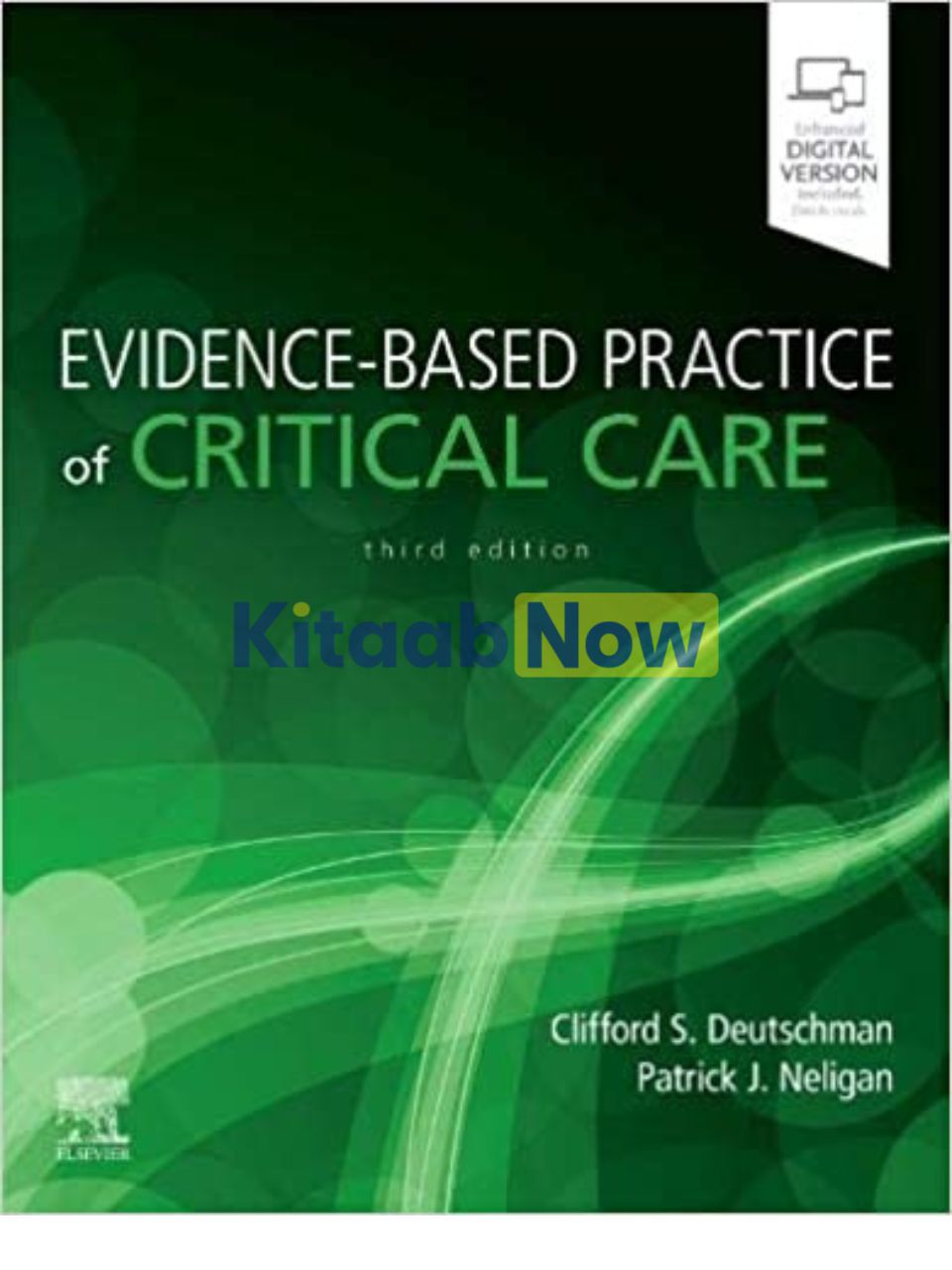
Evidence-Based Practice of Critical Care (3rd Edition)
- Authors: Clifford Deutschman, Patrick Neligan
- ISBN: 9780323640688
- Publisher: Elsevier Science Publishing
- Edition: 3rd
- Publication Date: October 15, 2019
- Format: Paperback – 688 pages
- Language: English
Description
Approach any critical care challenge using a practical, consistent strategy based on best practices with Evidence-Based Practice of Critical Care, 3rd Edition. Unique, question-based chapters cover the wide variety of clinical options in critical care, examine the relevant research, and provide recommendations based on a thorough analysis of available evidence. Drs. Clifford S. Deutschman and Patrick J. Nelligan, along with nearly 200 critical-care experts, provide a comprehensive framework for translating evidence into practice, helping both residents and practitioners obtain the best possible outcomes for critically ill patients.
Table of Contents
- Section 1: Critical Care and Critical Illness
- Has Evidence-Based Medicine Changed the Practice of Critical Care?
- Do Protocols/Guidelines Actually Improve Outcomes?
- What Happens to Critically Ill Patients After They Leave the ICU?
- Can Post-ICU Syndrome (PICS) Be Prevented or Treated?
- How Have Genomics Informed Our Understanding of Critical Illness?
- Section 2: Basic Respiratory Management and Mechanical Ventilation
- Is Oxygen Toxic?
- What is the Role of Noninvasive Respiratory Support and High Flow Nasal Cannula in the Intensive Care Unit?
- What Is the Role of PEEP and Recruitment Maneuvers in ARDS?
- What Is the Best Way to Wean and Liberate Patients from Mechanical Ventilation?
- How Does Mechanical Ventilation Damage Lungs? What Can Be Done to Prevent It?
- Non-ARDS and Non-Infectious Respiratory Disorders
- How Should Exacerbations of COPD Be Managed in the Intensive Care Unit?
- Is Diaphragmatic Dysfunction a Major Problem Following Mechanical Ventilation?
- Section 4: ARDS
- ARDS–Are the Current Definitions Useful?
- What Are the Pathologic and Pathophysiologic Changes That Accompany ARDS?
- What Factors Predispose Patients to Acute Respiratory Distress Syndrome?
- What Is the Best Mechanical Ventilation Strategy in ARDS?
- Is Carbon Dioxide Harmful or Helpful in ARDS?
- Does Patient Positioning Make a Difference in ARDS?
- Do Inhaled Vasodilators in ARDS Make a Difference?
- Does ECMO Work?
- What Lessons Have We Learned from Epidemiologic Studies of ARDS?
- What Are the Long Term Outcomes After ARDS?
- Section 5: General Critical Care Management
- How Do I Approach Fever in ICU and Should Fever Be Treated?
- What Fluids Should be Given to the Critically Ill Patient? What Fluids Should be Avoided?
- Should Blood Glucose Be Tightly Controlled in the Intensive Care Unit?
- Is There a Role for Therapeutic Hypothermia in Critical Care?
- How Do I Manage the Morbidly Obese Critically Ill Patient?
- How Do I Safely Transport the Critically Ill Patient?
- What Are the Causes of, and How Do I Treat, Critical Illness Neuropathy/Myopathy?
- Section 6: Sepsis
- What is Sepsis?
- How Do I Identify the Patient with “Sepsis”?
- Is There Immune Suppression in the Critically Ill Patient – Pro?
- Is There Immune Suppression in the Critically Ill Patient – Con?
- Does the Timing of Antibiotic Administration Matter in Sepsis?
- What Is the Role of Vasopressors and Inotropes in Septic Shock?
- Does Monitoring the Microcirculation Make a Difference in Sepsis? Outcome?
- Are We Getting Any Better at Diagnosing Sepsis?
- Do the Surviving Sepsis Campaign Guidelines Work?
- Has Outcome in Sepsis Improved? What Works? What Does Not?
- Section 7: Persistent Critical Illness
- What Happens to the Autonomic Nervous System in Critical Illness?
- Is Persistent Critical Illness a Syndrome of Ongoing Inflammation/Immunosuppression/Catabolism?
- Section 8: Infection
- How Do I Optimize Antibiotic Use in Critical Illness?
- How Do I Identify Pathologic Organisms in the 21st Century?
- How Do I Diagnose and Manage Catheter-Related Bloodstream Infections?
- Do I Manage Central Nervous System Infections (Meningitis/Encephalitis)?
- How Can Biomarkers Be Used to Differentiate Between Infection and Non-infectious Causes of Inflammation?
- What is Ventilator-Associated Pneumonia? How Do I Diagnose It? How Do I Treat It?
- Section 9: Hemodynamic Management
- What Is the Role of Invasive Hemodynamic Monitoring in Critical Care?
- Does the Use of Echocardiography Aid in the Management of the Critically Ill?
- How Do I Manage Hemodynamic Decompensation in a Critically Ill Patient?
- What are the Best Tools to Optimize the Circulation?
- How Should Cardiogenic Shock Be Managed (Including Assist Devices)?
- Section 10: Cardiovascular Critical Care
- How Do I Manage Acute Heart Failure?
- How Do I Diagnose and Manage Myocardial Ischemia in the ICU?
- How Do I Prevent or Treat Atrial Fibrillation in Postoperative Critically Ill Patients?
- Section 11: Kidney Injury & Critical Illness
- How Do I Rapidly and Correctly Identify Acute Kidney Injury?
- What Is the Role of Renal Replacement Therapy in the Intensive Care Unit?
- What is the Value of Non Dialytic Therapy in Acute Kidney Injury?
- Section 12: Metabolic Abnormalities in Critical Illness
- How Should Acid-Base Disorders Be Diagnosed?
- Is Hyperchloremia Harmful?
- Dysnatremias–What Causes Them and How Should They Be Treated?
- Why Is Lactate Important in Critical Care?
- How Does Critical Illness Alter Metabolism?
- Section 13: Neurological Critical Care
- How Should Traumatic Brain Injury Be Managed?
- How Should Aneurysmal Subarachnoid Hemorrhage Be Managed?
- How Should Acute Ischemic Stroke Be Managed in the Intensive Care Unit?
- How Should Status Epilepticus Be Managed?
- Section 14: Nutrition, Gastrointestinal & Hepatic Critical Care
- When and How Should I Feed the Critically Ill Patient?
- What Does Critical Illness Do to the Liver?
- How Do I Manage a Patient With Acute Liver Failure?
- Section 15: Endocrine Critical Care
- Is There a Place for Anabolic Hormones in Critical Care?
- How Do I Diagnose and Manage Acute Endocrine Emergencies in the ICU?
- What Is the Current Role for Corticosteroids in Critical Care?
- Section 16: Trauma, Surgery, Obstetrics & Environmental Injuries
- How Should Trauma Patients Be Managed in the Intensive Care Unit?
- What Is Abdominal Compartment Syndrome and How Should It Be Managed?
- How Should Patients with Burns Be Managed in the Intensive Care Unit?
- What Is the Best Approach to Resuscitation in Trauma?
- How Do I Diagnose and Treat Major Gastrointestinal Bleeding?
- How Should the Critically Ill Pregnant Patient Be Managed?
- How Do I Diagnose and Manage Patients Admitted to the ICU After Common Poisonings?
- Section 17: Hematology Critical Care
- When Is Transfusion Therapy Indicated in Critical Illness and When Is It Not?
- Is There a Role for GM-CSF and/or Erythropoietin in Critical Illness?
- What Anticoagulants Should be Used in the Critically Ill Patient? How Do I Choose?
- Section 18: Critical Care Resource Use and Management
- Is There a Better Way to Deliver Optimal Critical Care Services?
- How Do Critical Care Pharmacists Contribute to Team Based Care?
- What Is the Role of Advance Practice Nurses and Physician Assistants in the ICU?
- Section 19: Patient Suffering and Other Ethical Issues
- Do the Guidelines for Brain Death Determination Need to Be Revised?
- How Do I Diagnose, Treat, and Reduce Delirium in the Intensive Care Unit?
Author Biography
Clifford Deutschman
Affiliations and Expertise
Patrick Neligan
Affiliations and Expertise
Additional information
| Weight | 1.380 kg |
|---|
Only logged in customers who have purchased this product may leave a review.
Related Products


Reviews
There are no reviews yet.