
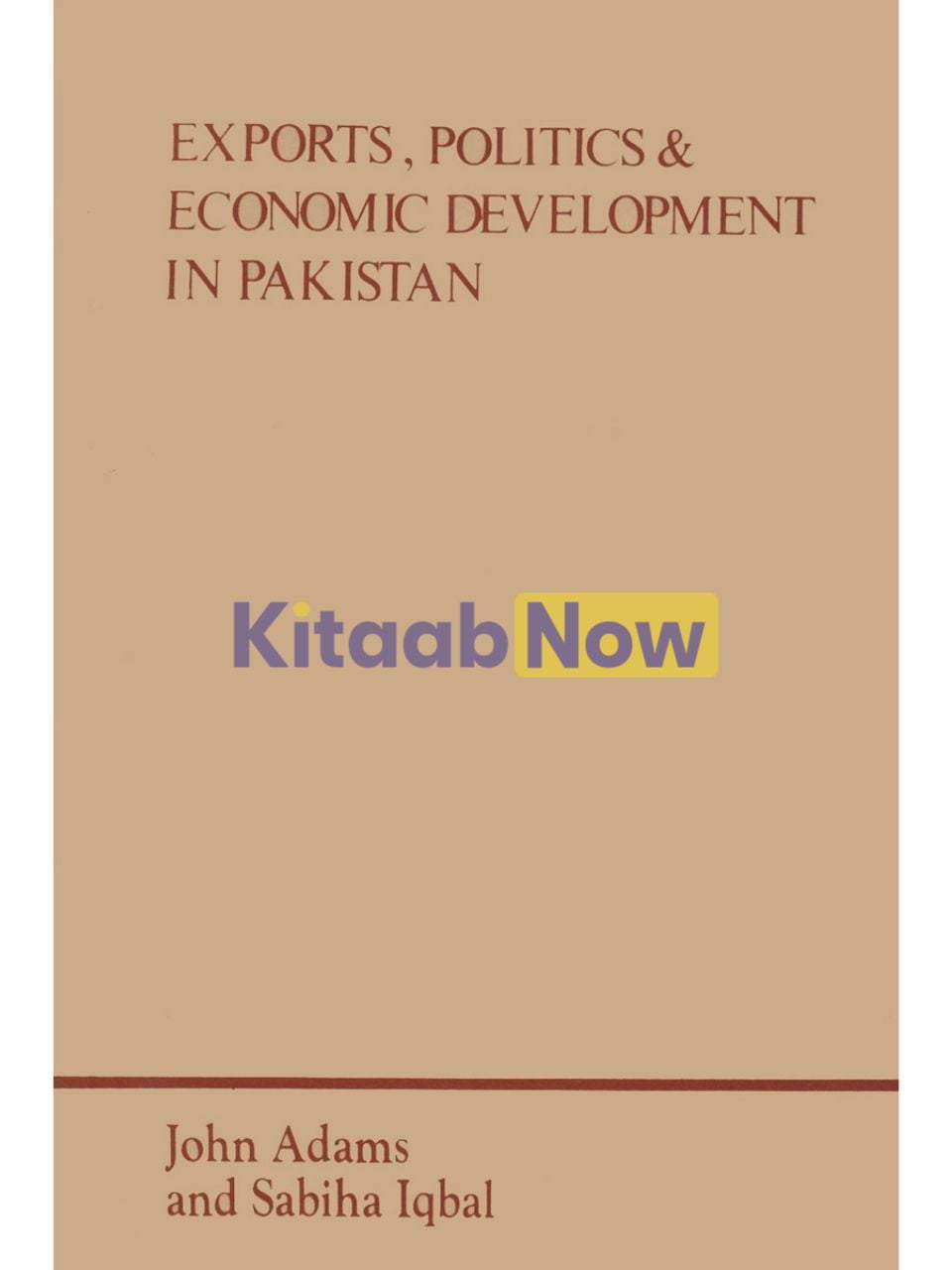
Exports, Politics & Economic Development in Pakistan
- Authors: John Adams, Sabiha Iqbal
- Publisher: Vanguard Publications
- Format: Paperback – 257 Pages
- Language: English
Description
During the 1970s, Pakistan’s export policies went through two major transformations as a result of realignments among its internal interest groups, bringing about significant changes in export composition and performance. As leader of a coalition of labor, small business, and other mass interests, Z.A. Bhutto supported a more equitable distribution of wealth and income, and shifted national policy after 1972 to favor labor, small-scale industry, and portions of the agricultural sector, rather than the large cotton textile manufacturers. Consequently, between 1972 and 1977, Pakistan’s export mix changed and the growth rate of exports was lower. A second major re-formulation of policy occurred in 1977 with Bhutto’s fall from power.
This book documents the role of interest groups in shaping Pakistan’s trade policy during the politically turbulent 1970-1982 period. The authors demonstrate that interest group rivalries, as much as national economic characteristics and external factors, have been major determinants of the country’s export performance. In addition to their analysis of the political economy of Pakistan’s export policies, they examine the behavior of all of the country’s major export components and conclude by assessing the future of Pakistan’s foreign trade.
Author Biography
John Adams, professor of economics at the University of Maryland, is the author of India: The Search for Unity, Democracy, and Progress.
Sabiha Iqbal recently received her Ph.D. in economics from the University of Maryland.
Additional information
| Weight | 0.350 kg |
|---|
Only logged in customers who have purchased this product may leave a review.
Related Products



Reviews
There are no reviews yet.