
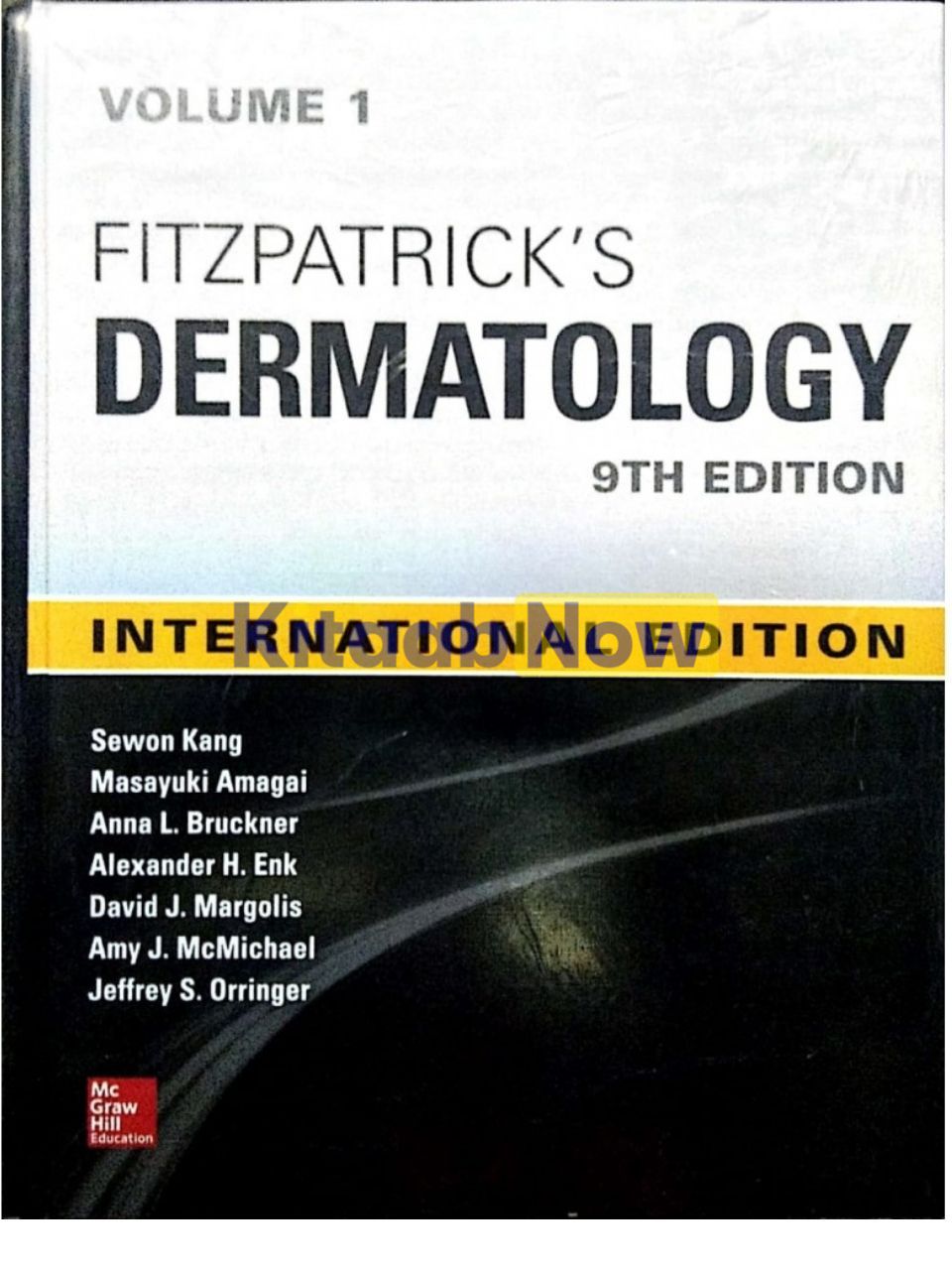
Fitzpatrick’s Dermatology (2 Volume Set)
- Author: Sewon Kang
- ISBN: 9781260441215
- Publisher: McGraw Hill Education
- Publication Date: January 1, 2019
- Format: Hardback
- Language: English
Description
The gold-standard text in dermatology – completely updated for today’s practice by an all-new editorial board
Encyclopedic in scope, yet skillfully edited to make it easy to read and understand, this trusted classic delivers everything clinicians need to know about skin, skin symptoms, and skin diseases. Presented in full color, Fitzpatrick’s covers all the essentials, from the basic science of skin to the day-to-day clinical issues of managing common skin disorders such as acne, skin cancer, and psoriasis. Backed by the expertise of more than 500 world-renowned contributors, and the reference of choice for clinicians, students, and educators, Fitzpatrick’s is enhanced by thousands of full-color photographs and a wealth of newly enhanced tables and diagrams.
The Ninth Edition is bolstered by a new global editorial team; a reorganized table of contents; a more simple, readable, and direct writing style, the incorporation of more genetic, syndromic, and treatment information into each chapter; the addition of first, second, and third line treatment options; and improved table presentation. The reorganized table of contents reflects how disease presents rather than its cause.
Table of Contents
- Volume One
- PART 1: FOUNDATIONS OF CLINICAL DERMATOLOGY
- Fundamentals of Clinical Dermatology: Morphology and Special Clinical Considerations
- Pathology of Skin Lesions
- Epidemiology and Public Health in Dermatology
- PART 2: STRUCTURE AND FUNCTION OF SKIN
- Developmental Biology of the Skin
- Growth and Differentiation of the Epidermis
- Skin Glands: Sebaceous, Eccrine, and Apocrine Glands
- Biology of Hair Follicles
- Nail
- Cutaneous Vasculature
- The Immunological Structure of the Skin
- Cellular Components of the Cutaneous Immune System
- Soluble Mediators of the Cutaneous Immune System
- Basic Principles of Immunologic Diseases in Skin (Pathophysiology of Immunologic/Inflammatory Skin Diseases)
- Skin Barrier
- Epidermal and Dermal Adhesion
- Microbiome of the Skin
- Cutaneous Photobiology
- Genetics in Relation to the Skin
- Carcinogenesis and Skin
- Pigmentation and Melanocyte Biology
- Neurobiology of the Skin
- PART 3: DERMATITIS
- Atopic Dermatitis
- Nummular Eczema, Lichen Simplex Chronicus, and Prurigo Nodularis
- Allergic Contact Dermatitis
- Irritant Dermatitis
- Seborrheic Dermatitis
- Occupational Skin Diseases
- PART 4: PSORIASIFORM DISORDERS
- Psoriasis
- Pityriasis Rubra Pilaris
- Parapsoriasis and Pityriasis Lichenoides
- Pityriasis Rosea
- PART 5: LICHENOID AND GRANULOMATOUS DISORDERS
- Lichen Planus
- Lichen Nitidus and Lichen Striatus
- Granuloma Annulare
- Sarcoidosis
- PART 6: NEUTROPHILIC, EOSINOPHILIC, AND MAST CELL DISORDERS
- Sweet Syndrome
- Pyoderma Gangrenosum
- Subcorneal Pustular Dermatosis (Sneddon-Wilkinson Disease)
- Autoinflammatory Disorders
- Eosinophilic Diseases
- Urticaria and Angioedema
- Mastocytosis
- PART 7: REACTIVE ERYTHEMAS
- Erythema Multiforme
- Epidermal Necrolysis (Stevens-Johnson Syndrome and Toxic Epidermal Necrolysis)
- Cutaneous Reactions to Drugs
- Erythema Annulare Centrifugum and Other Figurate Erythemas
- PART 8: DISORDERS OF CORNIFICATION
- The Ichthyoses
- Inherited Palmoplantar Keratodermas
- Keratosis Pilaris and Other Follicular Keratotic Disorders
- Acantholytic Disorders of the Skin
- Porokeratosis
- PART 9: VESICULOBULLOUS DISORDERS
- Pemphigus
- Paraneoplastic Pemphigus
- Bullous Pemphigoid
- Mucous Membrane Pemphigoid
- Epidermolysis Bullosa Acquisita
- Intercellular Immunoglobulin (Ig) A Dermatosis (IgA Pemphigus)
- Linear Immunoglobulin A Dermatosis and Chronic Bullous Disease of Childhood
- Dermatitis Herpetiformis
- Inherited Epidermolysis Bullosa
- PART 10: AUTOIMMUNE CONNECTIVE TISSUE AND RHEUMATOLOGIC DISORDERS
- Lupus Erythematosus
- Dermatomyositis
- Systemic Sclerosis
- Morphea and Lichen Sclerosus
- Psoriatic Arthritis and Reactive Arthritis
- Rheumatoid Arthritis, Juvenile Idiopathic Arthritis, Adult-Onset Still Disease, and Rheumatic Fever
- Scleredema and Scleromyxedema
- Sjögren Syndrome
- Relapsing Polychondritis
- PART 11: DERMAL CONNECTIVE TISSUE DISORDERS
- Anetoderma and Other Atrophic Disorders of the Skin
- Acquired Perforating Disorders
- Genetic Disorders Affecting Dermal Connective Tissue
- PART 12: SUBCUTANEOUS TISSUE DISORDERS
- Panniculitis
- Lipodystrophy
- PART 13: MELANOCYTIC DISORDERS
- Albinism and Other Genetic Disorders of Pigmentation
- Vitiligo
- Hypermelanoses
- PART 14: ACNEIFORM DISORDERS
- Acne Vulgaris
- Rosacea
- Acne Variants and Acneiform Eruptions
- PART 15: DISORDERS OF ECCRINE AND APOCRINE SWEAT GLANDS
- Hyperhidrosis and Anhidrosis
- Bromhidrosis and Chromhidrosis
- Fox-Fordyce Disease
- Hidradenitis Suppurativa
- PART 16: DISORDERS OF THE HAIR AND NAILS
- Androgenetic Alopecia
- Telogen Effluvium
- Alopecia Areata
- Cicatricial Alopecias
- Hair Shaft Disorders
- Hirsutism and Hypertrichosis
- Nail Disorders
- PART 17: DISORDERS DUE TO THE ENVIRONMENT
- Polymorphic Light Eruption
- Actinic Prurigo
- Hydroa Vacciniforme
- Actinic Dermatitis
- Solar Urticaria
- Phototoxicity and Photoallergy
- Cold Injuries
- Burns
- PART 18: PSYCHOSOCIAL SKIN DISEASE
- Delusional, Obsessive-Compulsive, and Factitious Skin Diseases
- Drug Abuse
- Physical Abuse
- PART 19: SKIN CHANGES ACROSS THE SPAN OF LIFE
- Neonatal Dermatology
- Pediatric and Adolescent Dermatology
- Skin Changes and Diseases in Pregnancy
- Skin Aging
- Caring for LGBT Persons in Dermatology
- PART 20: NEOPLASIA
- Benign Epithelial Tumors, Hamartomas, and Hyperplasias
- Appendage Tumors of the Skin
- Epithelial Precancerous Lesions
- Basal Cell Carcinoma and Basal Cell Nevus Syndrome
- Squamous Cell Carcinoma and Keratoacanthoma
- Merkel Cell Carcinoma
- Paget’s Disease
- Melanocytic Nevi
- Melanoma
- Histiocytosis
- Vascular Tumors
- Cutaneous Lymphoma
- Cutaneous Pseudolymphoma
- Neoplasias and Hyperplasias of Muscular and Neural Origin
- Lipogenic Neoplasms
- PART 1: FOUNDATIONS OF CLINICAL DERMATOLOGY
- Volume Two
- PART 21: METABOLIC, GENETIC, AND SYSTEMIC DISEASES
- Cutaneous Changes in Nutritional Disease
- The Porphyrias
- Amyloidosis
- Xanthomas and Lipoprotein Disorders
- Fabry Disease
- Calcium and Other Mineral Deposition Disorders
- Graft-Versus-Host Disease
- Hereditary Disorders of Genome Instability and DNA Repair
- Ectodermal Dysplasias
- Genetic Immunodeficiency Diseases
- Skin Manifestations of Internal Organ Disorders
- Cutaneous Paraneoplastic Syndromes
- The Neurofibromatoses
- Tuberous Sclerosis Complex
- Diabetes and Other Endocrine Diseases
- PART 22: VASCULAR DISEASES
- Cutaneous Necrotizing Venulitis
- Systemic Necrotizing Arteritis
- Erythema Elevatum Diutinum
- Adamantiades–Behçet Disease
- Kawasaki Disease
- Pigmented Purpuric Dermatoses
- Cryoglobulinemia and Cryofibrinogenemia
- Raynaud Phenomenon
- Malignant Atrophic Papulosis (Degos Disease)
- Vascular Malformations
- Cutaneous Changes in Arterial, Venous, and Lymphatic Dysfunction
- Wound Healing
- PART 23: BACTERIAL DISEASES
- Superficial Cutaneous Infections and Pyodermas
- Cellulitis and Erysipelas
- Gram-Positive Infections Associated with Toxin Production
- Necrotizing Fasciitis, Necrotizing Cellulitis, and Myonecrosis
- Gram-Negative Coccal and Bacillary Infections
- The Skin in Infective Endocarditis, Sepsis, Septic Shock, and Disseminated Intravascular Coagulation
- Miscellaneous Bacterial Infections with Cutaneous Manifestations
- Tuberculosis and Infections with Atypical Mycobacteria
- Actinomycosis, Nocardiosis, and Actinomycetoma
- Leprosy
- PART 24: FUNGAL DISEASES
- Superficial Fungal Infection
- Yeast Infections
- Deep Fungal Infections
- PART 25: VIRAL DISEASES
- Exanthematous Viral Diseases
- Herpes Simplex
- Varicella and Herpes Zoster
- Poxvirus Infections
- Human Papillomavirus Infections
- Cutaneous Manifestations of HIV and Human T-Lymphotropic Virus
- Mosquito-Borne Viral Diseases
- PART 26: SEXUALLY TRANSMITTED DISEASES
- Syphilis
- Endemic (Nonvenereal) Treponematoses
- Chancroid
- Lymphogranuloma Venereum
- Granuloma Inguinale
- Gonorrhea, Mycoplasma, and Vaginosis
- PART 27: INFESTATIONS, BITES, AND STINGS
- Leishmaniasis and Other Protozoan Infections
- Helminthic Infections
- Scabies, Other Mites, and Pediculosis
- Lyme Borreliosis
- The Rickettsioses, Ehrlichioses, and Anaplasmoses
- Arthropod Bites and Stings
- Bites and Stings of Terrestrial and Aquatic Life
- PART 28: TOPICAL AND SYSTEMIC TREATMENTS
- Principles of Topical Therapy
- Glucocorticoids
- Retinoids
- Systemic and Topical Antibiotics
- Dapsone
- Antifungals
- Antihistamines
- Cytotoxic and Antimetabolic Agents
- Antiviral Drugs
- Immunosuppressive and Immunomodulatory Drugs
- Immunobiologics: Targeted Therapy Against Cytokines, Cytokine Receptors, and Growth Factors in Dermatology
- Molecular Targeted Therapies
- Antiangiogenic Agents
- Other Topical Medications
- Photoprotection
- PART 29: PHYSICAL TREATMENTS
- Phototherapy
- Photochemotherapy and Photodynamic Therapy
- Radiotherapy
- PART 30: DERMATOLOGIC SURGERY
- Cutaneous Surgical Anatomy
- Perioperative Considerations in Dermatologic Surgery
- Excisional Surgery and Repair, Flaps, and Grafts
- Mohs Micrographic Surgery
- Nail Surgery
- Cryosurgery and Electrosurgery
- PART 31: COSMETIC DERMATOLOGY
- Cosmeceuticals and Skin Care in Dermatology
- Fundamentals of Laser and Light-Based Treatments
- Laser Skin Resurfacing: Cosmetic and Medical Applications
- Nonablative Laser and Light-Based Therapy: Cosmetic and Medical Indications
- Noninvasive Body Contouring
- Treatment of Varicose Veins and Telangiectatic Lower-Extremity Vessels
- Chemical Peels and Dermabrasion
- Liposuction Using Tumescent Local Anesthesia
- Soft-Tissue Augmentation
- Botulinum Toxin
- Hair Transplantation
- PART 21: METABOLIC, GENETIC, AND SYSTEMIC DISEASES
- Index
Authors Biography
Sewon Kang, MD is Noxell Professor & Chairman, Department of Dermatology, Johns Hopkins School of Medicine.
Masayuki Amagai, MD, PhD, Professor and Chairman, Department of Dermatology, Keio University School of Medicine, Tokyo, Japan.
Anna Bruckner, MD Associate Professor of Dermatology and Pediatrics, University of Colorado School of Medicine, Director, Pediatric Dermatology and Pediatric Dermatology Fellowshp, Aurora, Colorado.
Alexander H. Enk, MD, Professor and Chairman, President of the German Dermatological Society, Department of Dermatology, University of Heidelberg, Heidelberg, Germany.
Amy McMichael, MD, Professor and Chair, Department of Dermatology, Wake Forest Baptist Medical Center, Winston-Salem, North Carolina.
Jeffrey S. Orringer, MD, Professor and Chief, Division of Cosmetic Dermatology, University of Michigan, Ann Arbor, Michigan.
David J. Margolis, MD, PhD, Chair, Committee on Appointments and Promotions, Professor of Dermatology, Professor of Epidemiology, Perelman School of Medicine, University of Pennsylvania. Philadelphia, Pennsylvania.
Additional information
| Weight | 10.380 kg |
|---|
Only logged in customers who have purchased this product may leave a review.
Related Products


Reviews
There are no reviews yet.