
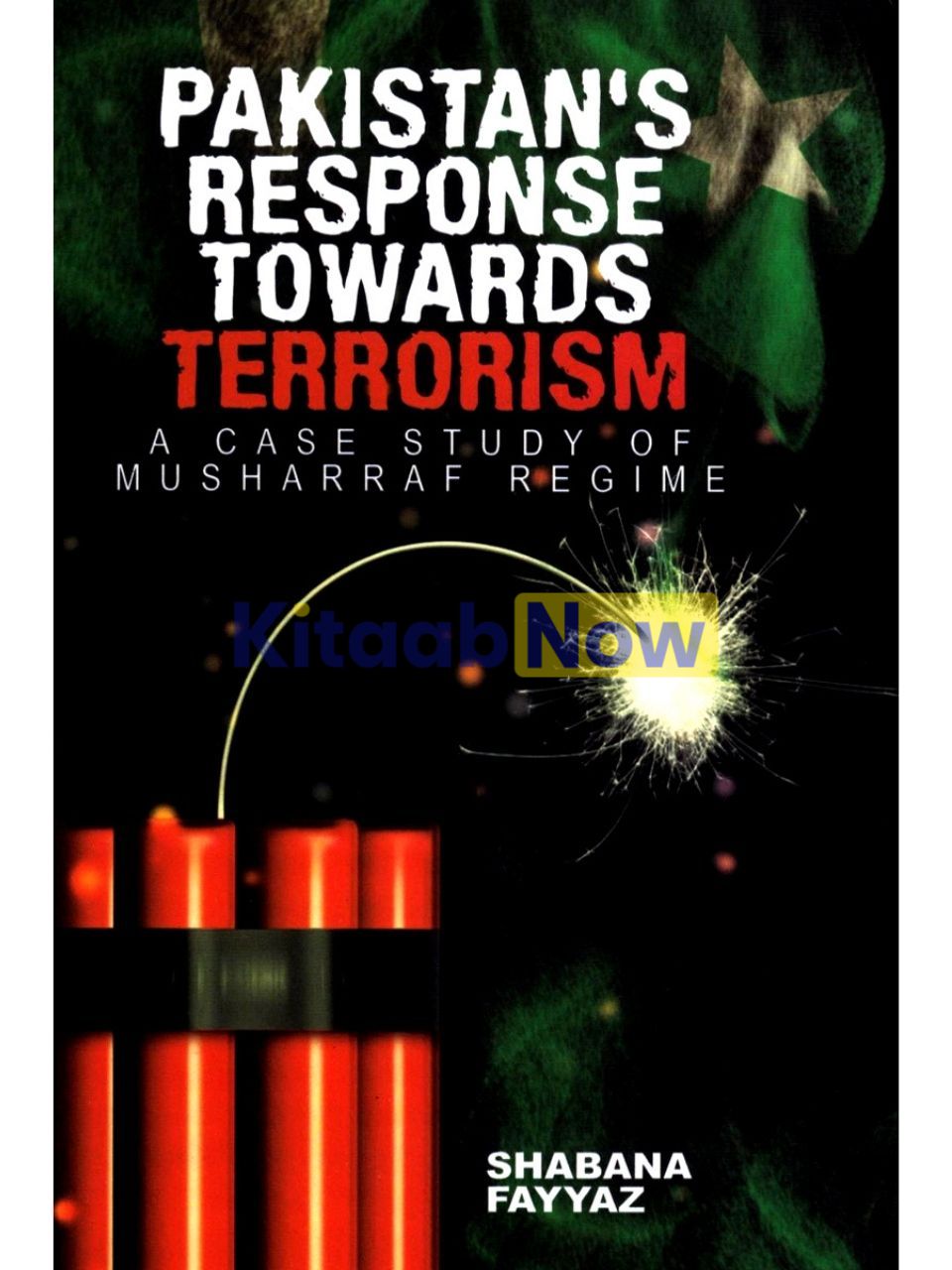
Pakistan’s Response Towards Terrorism: A Case Study of Musharraf Regime
- Author: Shabana Fayyaz
- ISBN: 9789694026107
- Publisher: Vanguard Publications
- Format: Hardback – 272 pages
- Language: English
Description
This book provides an extensive overview of Pakistan’s response towards terrorism under the General Pervez Musharraf-led military regime from 2001 to 2008.
With the changing geo-political environment, the study argues Pakistan cannot deal with terrorism by piecemeal steps. An effective response necessitates a holistic, multi-dimensional and sustainable counter-terrorism policy that may entail redefining the role of the state as a facilitator of both traditional and non-traditional security concerns of the people of Pakistan.
The central question addressed is, “How did the Musharraf government respond to terrorism in post 9/11 Pakistan, and did its response amount to the continuity of or a change in the country’s traditional national security policy?” What military, political, social, economic and cultural reforms were introduced by the Musharraf regime as part of his internal security policy and reform agenda? Was there congruence between Pakistan’s external security policy and internal security policy contrived to fight the threat of terrorism? What specific steps did the Musharraf government take to ensure citizen security, to combat terrorism within the state and do remodel foreign policy? And finally, did 9/11 and the emergence of threats to international peace perceived by the international order from non-state actors inform and change Pakistan’s traditional national security doctrine?
The book aims to fill this gap by deconstructing and analysing the actual steps taken by the Musharraf regime to combat the evolving menace of terrorism. In doing this, it aims to provide a vantage point for assessing and planning future policy on countering terrorism. The conceptual framework proposed by this study is based on the critical analysis of the existing literature on the subject of security at the international, regional and national levels, while staying within the Westphalian system of Weberian states. Thus, state remains the unit of analysis and referent object of security and in starting out to understand the behaviour of the Pakistani state. The book conceives an integrated framework of security with an added emphasis on the citizen as the prime consumer and beneficiary of the state’s national security framework. Hence, aiming to go beyond Pakistan’s traditional national security policy framework.
Author Biography
Dr. Shabana Fayyaz with more than two decades of teaching experience at the Defense & Strategic Studies Department, Quaid-l-Azam University, Islamabad, Dr Shabana Fayyaz, has contributed greatly to the field of terrorism, violent extremism, and non-traditional security issues. She holds a PhD from the University of Birmingham, UK, and is currently serving on the board of Paiman Alumni Trust and Pakistan House. Dr Shabana Fayyaz is an alumni of the “Women and Security Program” program at Harvard Kennedy School and has also participated in the Annual Colloquium of Institute of Inclusive Security, Massachusetts (Harvard) and Washington D C. USA. Previously, Ms. Fayyaz has served as the coordinator of the Pakistan chapter of Women without Borders. She has also lectured on visiting basis at Fatima Jinnah University, National University of Science and Technology (NUST) and National Defense University.
Additional information
| Weight | 0.490 kg |
|---|
Only logged in customers who have purchased this product may leave a review.
Related Products





Reviews
There are no reviews yet.