
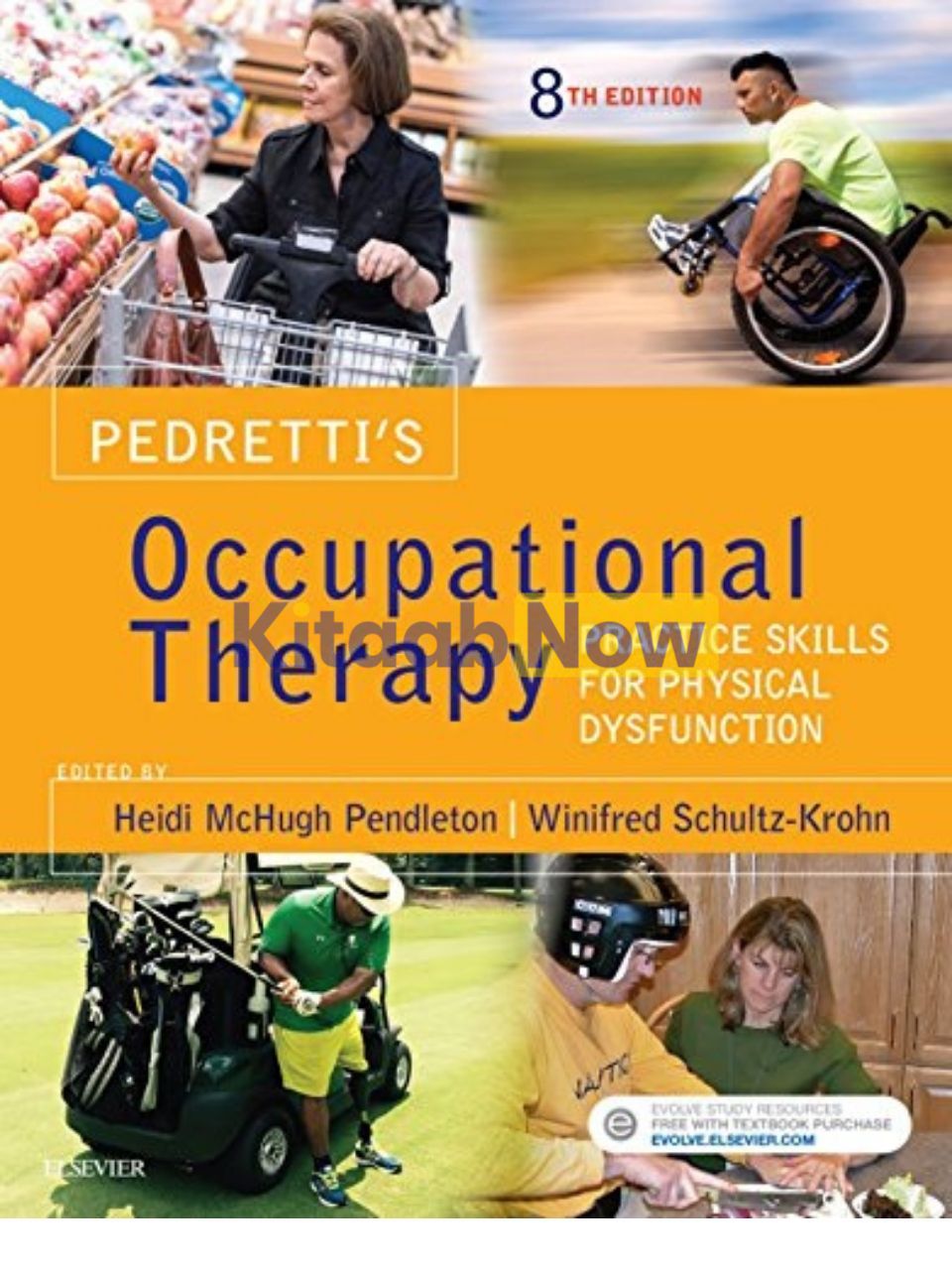
Pedretti’s Occupational Therapy: Practice Skills for Physical Dysfunction (8th Edition)
- Authors: Heidi McHugh Pendleton, Winifred Schultz-Krohn
- ISBN: 9780323569088
- Publisher: Elsevier Science Publishing
- Edition: 8th
- Publication Date: July 05, 2017
- Format: Hardback
- Language: English
Description
Pedretti’s Occupational Therapy: Practice Skills for Physical Dysfunction, 8th Edition prepares you for occupational therapy practice with adults who have physical disabilities. This cornerstone text provides a foundation for the development of clinical reasoning skills in a comprehensive, case-based learning approach to physical dysfunction. New full color photos and helpful pedagogy, including threaded case studies, OT Practice Notes, ethical considerations, and end-of-chapter review questions, reinforce learning, enhance retention, and prompt you to apply principles in a clinical setting.
Key Features
- UNIQUE! Threaded case studies, woven throughout each chapter, help you apply concepts to real-life clinical practice.
- UNIQUE! Ethical Considerations boxes highlight the key ethical concerns of treatment options so you can practice ethically.
- UNIQUE! OT Practice Notes convey important considerations for professional practice.
- Focuses on the occupational therapist’s role in health and wellness, which the OTA has identified as a key practice area in the 21st century.
- Information on prevention, rather than simply intervention or treatment, shows how OTs can take a proactive role in patient care.
- Evidence-based content included throughout, especially in regards to evaluation and intervention.
- Content on occupational therapy’s commitment to considering cultural and ethnic diversity in every chapter.
- Key terms, chapter outlines, chapter objectives lay out the information you can expect to learn from each chapter.
Table of Contents
- Part 1: Overview: Occupational Therapy Foundations for Physical Dysfunction
- The Occupational Therapy Practice Framework and the Practice of Occupational Therapy for Persons with Physical Disabilities
- History and Practice Trends in the Treatment of Physical Dysfunction
- Part 2: Occupational Therapy Process and Practice
- Application of the Occupational Therapy Practice Framework to Physical Dysfunction
- Systematic OT Practice: A Model of Evidence-Based Practice for OT
- Health Promotion and Wellness for People with Physical Disabilities
- Personal and Social Contexts of Disability: Implications for Occupational Therapists
- Teaching Activities and Therapeutic Use of Self-Employing Mindfulness in Occupational Therapy
- Documentation of Occupational Therapy Services
- Infection Control and Safety Issues in the Clinic
- Part 3: Occupational Performance and the Performance Areas: Evaluation and Intervention
- Activities of Daily Living
- Mobility
- Section 1: Functional Ambulation
- Section 2: Wheelchairs
- Section 3: Community Mobility
- Sexuality and Physical Dysfunction
- Sleep and Rest
- Work Evaluation and Work Programs
- Americans with Disabilities Act and Related Laws that Promote Participation in Work, Leisure, and Activities of Daily Living
- Leisure Occupations
- Assistive Technology
- Part 4: Performance Skills and Client Factors: Evaluation and Intervention
- Performance Skills: Definitions and Evaluation in the Context of the Occupational Therapy Practice Framework
- Evaluation of Motor Control
- Occupation-Based Functional Motion Assessment
- Evaluation of Joint Range of Motion
- Evaluation of Muscle Strength
- Evaluation of Sensation and Intervention for Sensory Dysfunction
- Evaluation and Treatment of Visual Deficits Following Brain Injury
- Evaluation and Intervention of Perceptual Dysfunction
- Evaluation and Intervention of Cognitive Dysfunction
- Eating and Swallowing
- Evaluation and Pain Management
- Part 5: The Occupational Therapy Process: Implementation of Intervention
- Therapeutic Occupations and Modalities
- Orthotics
- Section 1: Hand Splinting: Principles, Practice, and Decision Making
- Section 2: Suspension Arm Devices and Mobile Arm Supports
- Traditional Sensorimotor Approaches to Intervention
- Section 1: Proprioceptive Neuromuscular Facilitation Approach
- Section 2: Principles of Neuro-Developmental Treatment Approach
- Motor Learning
- Part 6: Intervention Applications
- Cerebral Vascular Accident/Stroke
- Traumatic Brain Injury
- Degenerative Diseases of the Central Nervous System
- Section 1: Amyotrophic Lateral Sclerosis
- Section 2: Alzheimer’s Disease
- Section 3: Huntington’s Disease
- Section 4: Multiple Sclerosis
- Section 5: Parkinson’s Disease
- Spinal Cord Injury
- Neurogenic and Myopathic Dysfunction
- Arthritis
- Hand and Upper Extremity Injuries
- Hip Fractures and Lower Extremity Joint Replacement
- Low Back Pain
- Burns and Burn Rehabilitation
- Amputations and Prosthetics
- Section 1: General Considerations of Upper and Lower Extremity Amputations
- Section 2: Upper Extremity Amputations
- Section 3: Lower Extremity Amputations
- Cardiac and Pulmonary Diseases
- Oncology
- Special Needs of the Older Adult
- HIV Infection and AIDS
- Polytrauma and the War on Terror
- NEW! Hospice and Palliative Care in Occupational Therapy for Persons with Physical Disabilities
Authors Biography
Heidi Pendleton
Affiliations and Expertise
Professor, Department of Occupational Therapy, San Jose State University, San Jose, CA, USA
Winifred Schultz-Krohn
Affiliations and Expertise
Professor, Department of Occupational Therapy, San Jose State University, San Jose, CA, USA
Additional information
| Weight | 2.810 kg |
|---|
Only logged in customers who have purchased this product may leave a review.
Related Products






Reviews
There are no reviews yet.