
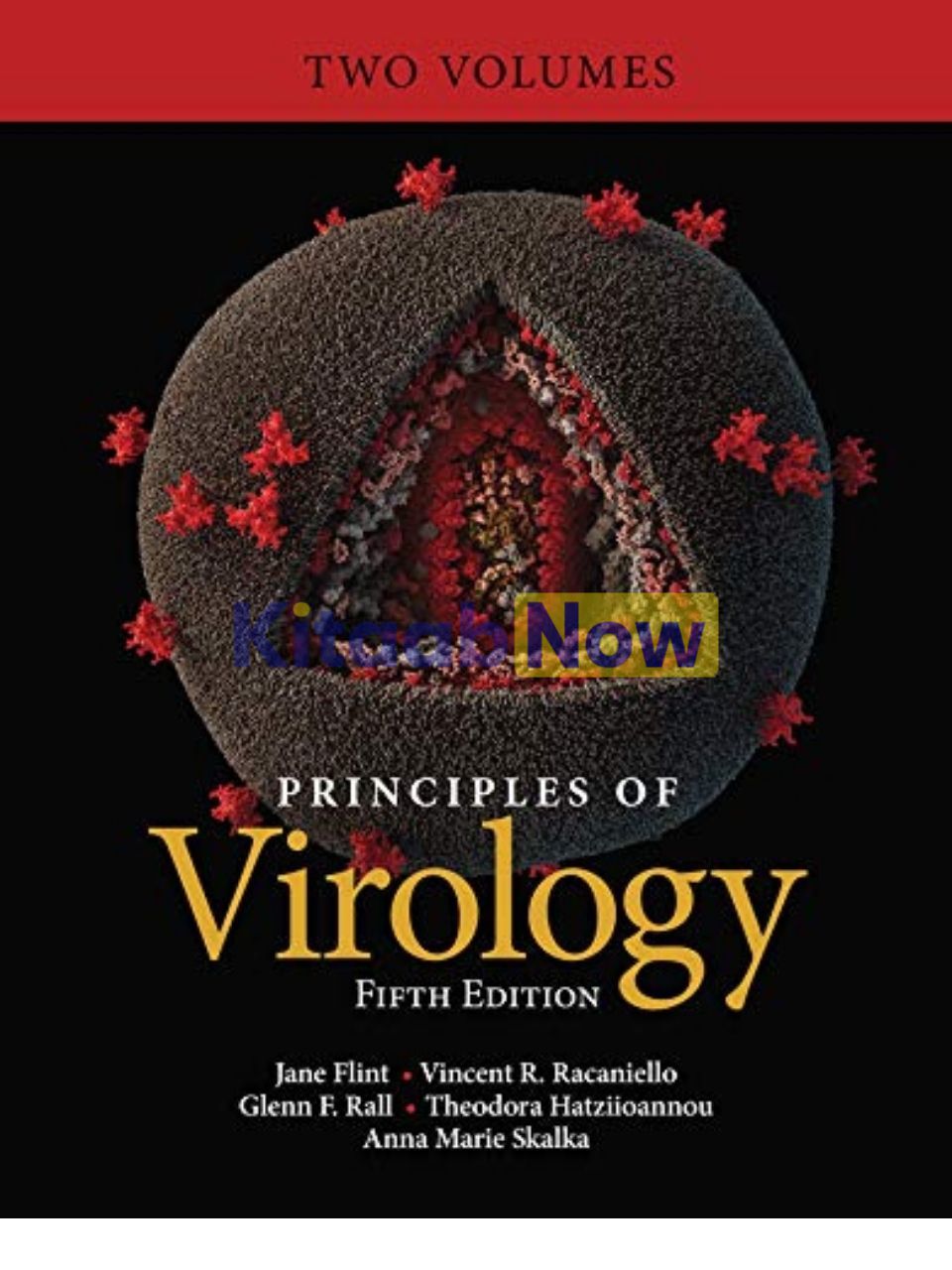
Principles of Virology: Multi-Volume (5th Edition)
- Authors: Jane Flint, Vincent R. Racaniello, Glenn F. Rall, Theodora Hatziioannou, Anna Marie Skalka
- ISBN: 9781683670322
- Publisher: American Society for Microbiology
- Edition: 5th
- Publication Date: November 03, 2020
- Format: Paperback – 1136 pages
- Language: English
Out of stock
Description
Principles of Virology, the leading virology textbook in use, is an extremely valuable and highly informative presentation of virology at the interface of modern cell biology and immunology. This text utilizes a uniquely rational approach by highlighting common principles and processes across all viruses. Using a set of representative viruses to illustrate the breadth of viral complexity, students are able to under-stand viral reproduction and pathogenesis and are equipped with the necessary tools for future encounters with new or understudied viruses.
This fifth edition was updated to keep pace with the ever-changing field of virology. In addition to the beloved full-color illustrations, video interviews with leading scientists, movies, and links to exciting blogposts on relevant topics, this edition includes study questions and active learning puzzles in each chapter, as well as short descriptions regarding the key messages of references of special interest.
Volume I: Molecular Biology focuses on the molecular processes of viral reproduction, from entry through release. Volume II: Pathogenesis and Control addresses the interplay between viruses and their host organisms, on both the micro- and macroscale, including chapters on public health, the immune response, vaccines and other antiviral strategies, viral evolution, and a brand new chapter on the therapeutic uses of viruses. These two volumes can be used for separate courses or together in a single course. Each includes a unique appendix, glossary, and links to internet resources.
Principles of Virology, Fifth Edition, is ideal for teaching the strategies by which all viruses reproduce, spread within a host, and are maintained within populations. This edition carefully reflects the results of extensive vetting and feedback received from course instructors and students, making this renowned textbook even more appropriate for undergraduate and graduate courses in virology, microbiology, and infectious diseases.
Table of Contents
- Volume 1
- Preface
- Acknowledgments
- About the Authors
- PART I: The Science of Virology
- 1 Foundations
- Luria’s Credo
- Viruses Defined
- Why We Study Viruses
- Viruses Are Everywhere
- Viruses Infect All Living Things
- Viruses Can Cause Human Disease
- Viruses Can Be Beneficial
- Viruses “R” Us
- Viruses Can Cross Species Boundaries
- Viruses Are Unique Tools To Study Biology
- Virus Prehistory
- Viral Infections in Antiquity
- The First Vaccines Microorganisms as Pathogenic Agents
- Discovery of Viruses
- The Defining Properties of Viruses
- The Structural Simplicity of Virus Particles
- The Intracellular Parasitism of Viruses
- Cataloging Animal Viruses
- The Classical System
- Classification by Genome Type: the Baltimore System
- A Common Strategy for Viral Propagation
- Perspectives
- References
- Study Questions
- 2 The Infectious Cycle
- Introduction
- The Infectious Cycle
- The Cell
- Entering Cells
- Viral RNA Synthesis
- Viral Protein Synthesis
- Viral Genome Replication
- Assembly of Progeny Virus Particles
- Viral Pathogenesis
- Overcoming Host Defenses
- Cultivation of Viruses
- Cell Culture
- Embryonated Eggs
- Laboratory Animals
- Assay of Viruses
- Measurement of Infectious Units
- Efficiency of Plating
- Measurement of Virus Particles
- Viral Reproduction: the Burst Concept
- The One-Step Growth Cycle
- One-Step Growth Analysis: a Valuable Tool for Studying Animal Viruses
- Global Analysis
- DNA Microarrays
- Mass Spectrometry
- Protein-Protein Interactions
- Single-Cell Virology
- Perspectives
- References
- Study Questions
- PART II: Molecular Biology
- 3 Genomes and Genetics
- Introduction
- Genome Principles and the Baltimore System
- Structure and Complexity of Viral Genomes
- DNA Genomes
- RNA Genomes
- What Do Viral Genomes Look Like?
- Coding Strategies
- What Can Viral Sequences Tell Us?
- The “Big and Small” of Viral Genomes: Does Size Matter?
- The Origin of Viral Genomes
- Genetic Analysis of Viruses
- Classical Genetic Methods
- Engineering Mutations into Viral Genomes
- Engineering Viral Genomes: Viral Vectors
- Perspectives
- References
- Study Questions
- 4 Structure
- Introduction
- Functions of the Virion
- Nomenclature
- Methods for Studying Virus Structure
- Building a Protective Coat
- Helical Structures
- Capsids with Icosahedral Symmetry
- Other Capsid Architectures
- Packaging the Nucleic Acid Genome
- Direct Contact of the Genome with a Protein Shell
- Packaging by Specialized Viral Proteins
- Packaging by Cellular Proteins
- Viruses with Envelopes
- Viral Envelope Components
- Simple Enveloped Viruses: Direct Contact of External Proteins with the Capsid or Nucleocapsid
- Enveloped Viruses with an Additional Protein Layer
- Large Viruses with Multiple
- Structural Elements Particles with Helical or Icosahedral Parts Alternative Architectures
- Other Components of Virions
- Enzymes
- Other Viral Proteins
- Cellular Macromolecules
- Mechanical Properties of Virus Particles
- Investigation of Mechanical Properties of Virus Particles
- Stabilization and Destabilization of Virus Particles
- Perspectives
- References
- Study Questions
- 5 Attachment and Entry
- Introduction
- Attachment of Virus Particles to Cells
- General Principles
- Identification of Receptors for Virus Particles
- Virus-Receptor Interactions
- Entry into Cells
- Virus-induced Signaling via Cell Receptors
- Routes of entry
- Membrane Fusion
- Intracellular Trafficking and Uncoating
- Movement of Viral and Subviral Particles within Cells
- Uncoating of enveloped viruses
- Uncoating of non-enveloped viruses
- Import of Viral Genomes into the Nucleus
- The Nuclear Pore Complex
- Nuclear Localization Signals
- Import of RNA Genomes
- Import of DNA Genomes
- Import of Retroviral Genomes
- Perspectives
- References
- Study Questions
- 6 Synthesis of RNA from RNA Templates
- Introduction
- The Nature of the RNA Template
- Secondary Structures in Viral RNA
- Naked or Nucleocapsid RNA
- The RNA Synthesis Machinery
- Identification of RNA-Dependent RNA Polymerases
- Three-Dimensional Structures of RNA-Dependent RNA Polymerases
- Mechanisms of RNA Synthesis
- Initiation
- Capping
- Elongation
- Functions of Additional Polymerase Domains
- RNA polymerase Oligomerization
- Template Specificity
- Unwinding the RNA Template
- Role of Cellular Proteins
- Paradigms for Viral RNA Synthesis
- (+) Strand RNA
- Synthesis of Nested Subgenomic mRNAs
- (−) Strand RNA
- Ambisense RNA
- Double-Stranded RNA
- Unique Mechanisms of mRNA and Genome Synthesis of Hepatitis Delta Satellite Virus
- Do Ribosomes and RNA Polymerases Collide?
- Origins of Diversity in RNA Virus Genomes
- Misincorporation of Nucleotides
- Segment Reassortment and RNA Recombination
- RNA Editing
- Perspectives
- References
- Study Questions
- 7 Synthesis of RNA from DNA Templates
- Introduction
- Properties of Cellular RNA Polymerases That Transcribe Viral DNA
- Some Viral Genomes Must Be Converted to Templates Suitable for Transcription
- Transcription by RNA Polymerase II
- Regulation of RNA Polymerase II Transcription
- Common Properties of Proteins That Regulate Transcription
- Transcription of Viral DNA Templates by the Cellular Machinery Alone
- Viral Proteins That Govern Transcription of DNA Templates
- Patterns of Regulation
- The Human Immunodeficiency Virus Type 1 Tat Protein Autoregulates Transcription
- The Transcriptional Cascades of DNA Viruses
- Entry into One of Two Alternative Transcriptional Programs
- Transcription of Viral Genes by RNA Polymerase III
- The VA-RNA I Promoter
- Inhibition of the Cellular Transcriptional Machinery
- Unusual Functions of Cellular Transcription Components in Virus-Infected Cells
- Viral DNA-Dependent RNA Polymerases
- Perspectives
- References
- Study Questions
- 8 Processing
- Introduction
- Covalent Modification during Viral Pre-mRNA Processing
- Capping the 5′ Ends of Viral mRNA
- Synthesis of 3′ Poly(A) Segments of Viral mRNA
- Internal Methylation of Adenosine Residues
- Splicing of Viral Pre-mRNA
- Regulated Processing of Viral Pre-mRNA
- Editing of Viral mRNAs
- Export of RNAs from the Nucleus
- The Cellular Export Machinery Export of Viral mRNA
- Posttranscriptional Regulation of Viral or Cellular Gene Expression by Viral Proteins
- Temporal Control of Viral Gene Expression
- Viral Proteins Can Inhibit Cellular mRNA Production
- Regulation of Turnover of Viral and Cellular mRNAs in the Cytoplasm
- Intrinsic Turnover
- Regulation of mRNA Stability by Viral Proteins
- mRNA Stabilization Can Facilitate Transformation
- Nonsense-Mediated mRNA Decay
- Noncoding RNAs
- Small Interfering RNAs and Micro-RNAs
- Long Noncoding RNAs
- Circular RNAs
- Perspectives
- References
- Study Questions
- 9 Replication of DNA Genomes
- Introduction
- DNA Synthesis by the Cellular Replication Machinery
- Eukaryotic Replicons
- Cellular Replication Proteins
- Mechanisms of Viral DNA Synthesis
- Lessons from Simian Virus 40
- Replication of Other Viral DNA Genomes
- Properties of Viral Replication Origins
- Recognition of Viral Replication Origins
- Viral DNA Synthesis Machines
- Resolution and Processing of Viral Replication Products
- Exponential Accumulation of Viral Genomes
- Viral Proteins Can Induce Synthesis of Cellular Replication Proteins
- Synthesis of Viral Replication Machines and Accessory Enzymes
- Viral DNA Replication Independent of Cellular Proteins
- Delayed Synthesis of Structural Proteins Prevents Premature Packaging of DNA Templates
- Inhibition of Cellular DNA Synthesis
- Synthesis of Viral DNA in Specialized Intracellular Compartments
- Limited Replication of Viral DNA Genomes
- Integrated Parvoviral DNA Can Be Replicated as Part of the Cellular Genome
- Different Viral Origins Regulate Replication of Epstein-Barr Virus
- Limited and Amplifying Replication from a Single Origin: the Papillomaviruses
- Origins of Genetic Diversity in DNA Viruses
- Fidelity of Replication by Viral DNA Polymerases
- Modulation of the DNA Damage Response
- Recombination of Viral Genomes
- Perspectives
- References
- Study Questions
- 10 Reverse Transcription and Integration
- Retroviral Reverse Transcription
- Discovery
- Impact
- The Process of Reverse Transcription
- General Properties and Structure of Retroviral Reverse Transcriptases
- Other Examples of Reverse Transcription
- Retroviral DNA Integration
- The Pathway of Integration: Integrase-Catalyzed Steps
- Integrase Structure and Mechanism
- Hepadnaviral Reverse Transcription
- A DNA Virus with Reverse Transcriptase
- The Process of Hepadnaviral Reverse Transcription
- Perspectives
- References
- Study Questions
- 11 Protein Synthesis
- Introduction
- Mechanisms of Eukaryotic Protein Synthesis
- General Structure of Eukaryotic mRNA
- The Translation Machinery
- Initiation
- Elongation and Termination
- The Diversity of Viral Translation Strategies
- Polyprotein Synthesis
- Leaky Scanning
- Reinitiation
- StopGo Translation
- Suppression of Termination
- Ribosomal Frameshifting
- Bicistronic mRNAs
- Regulation of Translation during Viral Infection
- Inhibition of Translation Initiation after Viral Infection
- Regulation of eIF4F
- Regulation of Poly(A)-Binding Protein Activity
- Regulation of eIF3
- Interfering with RNA
- Stress-Associated RNA Granules
- Perspectives
- References
- Study Questions
- 12 Intracellular Trafficking
- Introduction
- Assembly within the Nucleus
- Import of Viral Proteins for Assembly
- Assembly at the Plasma Membrane
- Transport of Viral Membrane Proteins to the Plasma Membrane
- Sorting of Viral Proteins in Polarized Cells
- Disruption of the Secretory Pathway in Virus-Infected Cells
- Signal Sequence-Independent Transport of Viral Proteins to the Plasma Membrane
- Interactions with Internal Cellular Membranes
- Localization of Viral Proteins to Compartments of the Secretory Pathway
- Localization of Viral Proteins to the Nuclear Membrane
- Transport of Viral Genomes to Assembly Sites
- Transport of Genomic and Pregenomic RNA from the Nucleus to the Cytoplasm
- Transport of Genomes from the Cytoplasm to the Plasma Membrane
- Perspectives
- References
- Study Questions
- 13 Assembly, Release, and Maturation
- Introduction
- Methods of Studying Virus Assembly and Egress
- Structural Studies of Virus Particles
- Visualization of Assembly and Exit by Microscopy
- Biochemical and Genetic Analyses of Assembly Intermediates
- Methods Based on Recombinant DNA Technology
- Assembly of Protein Shells
- Formation of Structural Units
- Capsid and Nucleocapsid Assembly
- Self-Assembly and Assisted Assembly Reactions
- Selective Packaging of the Viral Genome and Other Components of Virus Particles
- Concerted or Sequential Assembly
- Recognition and Packaging of the Nucleic Acid Genome
- Incorporation of Enzymes and Other Nonstructural Proteins
- Acquisition of an Envelope
- Sequential Assembly of Internal Components and Budding from a Cellular Membrane
- Coordination of the Assembly of Internal Structures with Acquisition of the Envelope
- Release of Virus Particles
- Assembly and Budding at the Plasma Membrane
- Assembly at Internal Membranes: the Problem of Exocytosis
- Release of Nonenveloped Virus Particles
- Maturation of Progeny Virus Particles
- Proteolytic Processing of Structural Proteins
- Other Maturation Reactions
- Cell-to-Cell Spread
- Perspectives
- References
- Study Questions
- 14 The Infected Cell
- Introduction
- Signal Transduction
- Signaling Pathways
- Signaling in Virus-Infected Cells
- Gene Expression
- Inhibition of Cellular Gene Expression
- Differential Regulation of Cellular Gene Expression
- Metabolism
- Methods To Study Metabolism
- Glucose Metabolism
- The Citric Acid Cycle
- Electron Transport and Oxidative Phosphorylation
- Lipid Metabolism
- Remodeling of Cellular Organelles
- The Nucleus
- The Cytoplasm
- Perspectives
- References
- Study Questions
- APPENDIX Structure, Genome Organization, and Infectious Cycles of Viruses Featured in this Book
- Glossary
- Index
- Volume 2
- Preface
- Acknowledgments
- About the Authors
- 1 Infections of Populations: History and Epidemiology
- Introduction to Viral Pathogenesis
- A Brief History of Viral Pathogenesis
- The Relationships among Microbes and the Diseases They Cause
- The First Human Viruses Identified and the Role of Serendipity
- New Methods Facilitate the Study of Viruses as Causes of Disease
- Viral Epidemics in History
- Epidemics Shaped History: the 1793 Yellow Fever Epidemic in Philadelphia
- Tracking Epidemics by Sequencing: West Nile Virus Spread to the Western Hemisphere
- Zoonotic Infections and Epidemics Caused by “New” Viruses
- The Economic Toll of Viral Epidemics in Livestock
- Population Density and World Travel Are Accelerators of Viral Transmission
- Focus on Frontline Health Care: Ebolavirus in Africa
- Emergence of a Birth Defect Associated with Infection: Zika Virus in Brazil
- Epidemiology
- Fundamental Concepts
- Methods Used by Epidemiologists
- Surveillance
- Network Theory and Practical Applications
- Parameters That Govern the Ability of a Virus to Infect a Population
- Geography and Population Density
- Climate
- Perspectives
- References
- Study Questions
- 2 Barriers to Infection
- Introduction
- An Overview of Infection and Immunity
- A Game of Chess Played by Masters
- Initiating an Infection
- Successful Infections Must Modulate or Bypass Host Defenses
- Skin
- Respiratory Tract
- Alimentary Tract
- Eyes
- Urogenital Tract
- Placenta
- Viral Tropism
- Accessibility of Viral Receptors
- Other Host-Virus Interactions That Regulate the Infectious Cycle
- Spread throughout the Host
- Hematogenous Spread
- Neural Spread
- Organ Invasion
- Entry into Organs with Sinusoids
- Entry into Organs That Lack Sinusoids
- Organs with Dense Basement Membranes
- Skin
- Shedding of Virus Particles
- Respiratory Secretions
- Saliva
- Feces
- Blood
- Urine
- Semen
- Milk
- Skin Lesions
- Tears
- Perspectives
- References
- Study Questions
- 3 The Early Host Response: Cell Autonomous and Innate Immunity
- Introduction
- The First Critical Moments: How Do Individual Cells Detect a Virus Infection?
- Cell Signaling Induced by Viral Entry Receptor Engagement
- Receptor-Mediated Recognition of Microbe-Associated Molecular Patterns
- Cell Intrinsic Defenses
- Apoptosis (Programmed Cell Death)
- Necroptosis and Other Cell Death Pathways
- Autophagy
- Epigenetic Silencing
- Cellular Restriction Factors
- RNA Interference
- CRISPR
- The Continuum Between Intrinsic and Innate Immunity
- Secreted Immune Mediators of the Innate Immune Response
- Overview of Cytokine Functions
- Interferons, Cytokines of Early Warning and Action
- Chemokines
- The Innate Immune Response
- Monocytes/macrophages
- Complement
- Natural Killer Cells
- Innate Lymphoid Cells
- Other Innate Immune Cells of Relevance to Viral Infections
- Perspectives
- References
- Study Questions
- 4 Adaptive Immunity and the Establishment of Memory
- Introduction
- Attributes of the Host Response
- Speed
- Diversity and Specificity
- Memory
- Self-Control
- Lymphocyte Development, Diversity, and Activation
- The Hematopoietic Stem Cell Lineage
- The Two Arms of Adaptive Immunity
- The Major Effectors of the Adaptive Response: B and T Cells
- Diverse Receptors Impart Antigen Specificity to B and T Cells
- Events at the Site of Infection Set the Stage for the Adaptive Response
- Acquisition of Viral Proteins by Professional Antigen-Presenting Cells Enables Production of Proinflammatory Cytokines and Establishment of Inflammation
- Activated Antigen-Presenting Cells Leave the Site of Infection and Migrate to Lymph Nodes
- Antigen Processing and Presentation
- Professional Antigen-Presenting Cells Induce Activation via Costimulation
- Presentation of Antigens by Class I and Class II MHC Proteins
- Lymphocyte Activation Triggers Massive Cell Proliferation
- The CTL (Cell-Mediated) Response
- CTLs Lyse Virus-Infected Cells
- Control of CTL Proliferation
- Control of Infection by T Cells without Killing
- Rashes and Poxes
- The Humoral (Antibody) Response
- Antibodies Are Made by Plasma Cells
- Types and Functions of Antibodies
- Virus Neutralization by Antibodies
- Antibody-Dependent Cell-Mediated Cytotoxicity: Specific Killing by Nonspecific Cells
- Immunological Memory
- Perspectives
- References
- Study Questions
- 5 Patterns and Pathogenesis
- Introduction
- Animal Models of Human Diseases
- Patterns of Infection
- Incubation Periods
- Mathematics of Growth Correlate with Patterns of Infection
- Acute Infections
- Persistent Infections
- Latent Infections
- Abortive Infections
- Transforming Infections
- Viral Virulence
- Measuring Viral Virulence
- Alteration of Viral Virulence
- Viral Virulence Genes
- Pathogenesis
- Infected Cell Lysis
- Immunopathology
- Immunosuppression Induced by Viral Infection
- Oncogenesis
- Molecular Mimicry
- Perspectives
- References
- Study Questions
- 6 Cellular Transformation and Oncogenesis
- Introduction
- Properties of Transformed Cells
- Control of Cell Proliferation
- Oncogenic Viruses
- Discovery of Oncogenic Viruses
- Viral Genetic Information in Transformed Cells
- The Origin and Nature of Viral Transforming Genes
- Functions of Viral Transforming Proteins
- Activation of Cellular Signal Transduction Pathways by Viral Transforming Proteins
- Viral Signaling Molecules Acquired from the Cell
- Alteration of the Production or Activity of Cellular Signal Transduction Proteins
- Disruption of Cell Cycle Control Pathways by Viral Transforming Proteins
- Abrogation of Restriction Point Control Exerted by the RB Protein
- Production of Virus-Specific Cyclins
- Inactivation of Cyclin-Dependent Kinase Inhibitors
- Transformed Cells Increase in Size and Survive
- Mechanisms That Permit Survival of Transformed Cells
- Tumorigenesis Requires Additional Changes in the Properties of Transformed Cells
- Inhibition of Immune Defenses
- Other Mechanisms of Transformation and Oncogenesis by Human Tumor Viruses
- Nontransducing Oncogenic Retroviruses: Tumorigenesis with Very Long Latency
- Oncogenesis by Hepatitis Viruses
- Perspectives
- References
- Study Questions
- 7 Vaccines
- Introduction
- The Origins of Vaccination
- Smallpox: a Historical Perspective
- Worldwide Vaccination Programs Can Be Dramatically Effective
- Vaccine Basics
- Immunization Can Be Active or Passive
- Active Vaccination Strategies Stimulate Immune Memory
- The Fundamental Challenge
- The Science and Art of Making Vaccines
- Inactivated Virus Vaccines
- Attenuated Virus Vaccines
- Subunit Vaccines
- Virus-Like Particles
- Nucleic Acid Vaccines
- Vaccine Technology: Delivery and Improving Antigenicity
- Adjuvants Stimulate an Immune Response
- Delivery and Formulation
- Immunotherapy
- The Ongoing Quest for an AIDS Vaccine
- Perspectives
- References
- Study Question Puzzle
- 8 Antiviral Drugs
- Introduction
- A Brief History of Antiviral Drug Discovery
- Discovering Antiviral Compounds
- The Lexicon of Antiviral Discovery
- Screening for Antiviral Compounds
- Computational Approaches to Drug Discovery
- The Difference between “R” and “D”
- Drug Resistance
- Examples of Antiviral Drugs
- Inhibitors of Virus Attachment and Entry
- Inhibitors of Viral Nucleic Acid Synthesis
- Inhibition of Viral Polyprotein Processing and Assembly
- Inhibition of Virus Particle Release
- Expanding Targets for Antiviral Drug Development
- Attachment and Entry Inhibitors
- Nucleic Acid-Based Approaches
- Proteases and Nucleic Acid Synthesis and Processing Enzymes
- Virus Particle Assembly
- Microbicides
- Two Stories of Antiviral Success
- Combination Therapy
- Challenges Remaining
- Perspectives
- References
- Study Questions
- 9 Therapeutic Viruses
- Introduction
- Phage Therapy
- History
- Some Advantages and Limitations of Phage Therapy
- Applications in the Clinic and for Disease Prevention
- Future Prospects
- Oncolytic Animal Viruses
- From Anecdotal Reports to Controlled Clinical Trials
- Rational Design of Oncolytic Viruses
- Two Clinically Approved Oncolytic Viruses
- Future Directions
- Gene Therapy
- Introduction
- Retroviral Vectors
- Adenovirus-Associated Virus Vectors
- Future Prospects
- Vaccine Vectors
- DNA Viruses
- RNA Viruses
- Perspectives
- References
- Study Questions
- 10 Virus Evolution
- Virus Evolution
- How Do Virus Populations Evolve?
- Two General Virus Survival Strategies Can Be Distinguished
- Large Numbers of Viral Progeny and Mutants Are Produced in Infected Cells
- The Quasispecies Concept
- Genetic Shift and Genetic Drift
- Fundamental Properties of Viruses That Constrain Evolution
- Two General Pathways for Virus Evolution
- Evolution of Virulence
- The Origin of Viruses
- When and How Did They Arise?
- Evolution of Contemporary Eukaryotic Viruses
- Host-Virus Relationships Drive Evolution
- DNA Virus-Host Relationships
- RNA Virus-Host Relationships
- The Host-Virus “Arms Race”
- Lessons from Paleovirology
- Endogenous Retroviruses
- DNA Fossils Derived from Other RNA Viral Genomes
- Endogenous Sequences from DNA Viruses
- Short- versus Long-Term Rates of Viral Evolution
- Perspectives
- References
- Study Questions
- 11 Emergence
- The Spectrum of Host-Virus Interactions
- Stable Interactions
- The Evolving Host-Virus Interaction
- The Dead-End Interaction
- The Resistant Host
- Encountering New Hosts: Humans Constantly Provide New Venues for Infection
- Common Sources for Animal-to-Human Transmission
- Viral Diseases That Illustrate the Drivers of Emergence
- Poliomyelitis: Unexpected Consequences of Modern Sanitation
- Introduction of Viruses into Naïve Populations
- Hantavirus Pulmonary Syndrome: Changing Animal Populations
- Severe Acute and Middle East Respiratory Syndromes (SARS and MERS): Zoonotic Coronavirus Infections
- The Contribution to Emergence of Mutation, Recombination, or Reassortment
- Canine Parvoviruses: Cat-to-Dog Host Range Switch by Two Amino Acid Changes
- Influenza Epidemics and Pandemics: Escaping the Immune Response by Reassortment
- New Technologies Uncover Previously Unrecognized Viruses
- Hepatitis Viruses in the Human Blood Supply
- A Revolution in Virus Discovery
- Perceptions and Possibilities
- Virus Names Can Be Misleading
- All Viruses Are Important
- Can We Predict the Next Viral Pandemic?
- Preventing Emerging Virus Infections
- Perspectives
- References
- Study Questions
- 12 Human Immunodeficiency Virus Type I Pathogenesis
- Introduction
- Worldwide Impact of AIDS
- HIV-1 Is a Lentivirus
- Discovery and Characterization
- Distinctive Features of the HIV-1 Reproduction Cycle and the Functions of HIV-1 Proteins
- The Viral Capsid Counters Intrinsic Defense Mechanisms
- Entry and Transmission
- Entry in the Cell
- Entry into the Body
- Transmissions in Human Populations
- The Course of Infection
- The Acute Phase
- The Asymptomatic Phase
- The Symptomatic Phase and AIDS
- Effects of HIV-1 on Other Tissues and Organs
- Virus Reproduction
- Dynamics in the Absence of Treatment
- Dynamics of Virus Reproduction during Treatment
- Latency
- Immune Responses to HIV-1
- Innate Response
- Humoral Responses
- HIV-1 and Cancer
- Kaposi’s Sarcoma
- B-Cell Lymphomas
- Anogenital Carcinomas
- Prospects for Treatment and Prevention
- Antiviral Drugs
- Confronting the Problems of Persistence and Latency
- Gene Therapy Approaches
- Immune System-Based Therapies
- Antiviral Drug Prophylaxis
- Perspectives
- References
- 13 Unusual Infectious Agents
- Introduction
- Viroids
- Replication
- Sequence Diversity
- Movement
- Pathogenesis
- Satellite Viruses and RNAs
- Replication
- Pathogenesis
- Hepatitis Delta Virus
- Prions and Transmissible Spongiform Encephalopathies
- Scrapie
- Physical Properties of the Scrapie Agent
- Human TSEs
- Hallmarks of TSE Pathogenesis
- Prions and the prnp Gene
- Prion Strains
- Bovine Spongiform Encephalopathy
- Chronic Wasting Disease
- Treatment of Prion Diseases
- Perspectives
- References
- Study Questions
- APPENDIX Epidemiology and Pathogenesis of Selected Human Viruses
- Glossary
- Index
Author Biography
Jane Flint is Professor Emerita of Molecular Biology at Princeton University. Dr. Flint’s research focused on investigation of the mechanisms by which viral gene products modulate host pathways and antiviral defenses to allow efficient reproduction in normal human cells of adenoviruses, viruses that are used in such therapeutic applications as gene transfer and cancer treatment.
Vincent R. Racaniello is Higgins Professor of Microbiology & Immunology at Columbia University Vagelos College of Physicians & Surgeons. Dr. Racaniello has been studying viruses for over 40 years, including polio- virus, rhinovirus, enteroviruses, hepatitis C virus, and Zika virus. He blogs about virus-es at virology.ws and is host of This Week in Virology.
Glenn F. Rall is a Professor and the Chief Academic Officer at the Fox Chase Cancer Center, and is an Adjunct Professor in the Microbiology and Immunology departments at the University of Pennsylvania, as well as Thomas Jefferson, Drexel, and Temple Universities. Dr. Rall studies viral infections of the brain and the immune responses to those infections, with the goal of defining how viruses contribute to disease.
Theodora Hatziioannou is a Research Associate Professor at Rockefeller University and is actively involved in teaching programs at Albert Einstein College of Medicine. Dr. Hatziioannou has worked on multiple viruses with a focus on retroviruses and the molecular mechanisms that govern virus tropism and on the improvement of animal models for human disease.
Anna Marie Skalka is a Professor Emerita and former Senior Vice President for Basic Research at the Fox Chase Cancer Center. Dr. Skalka is internationally recognized for her contributions to the understanding of the biochemical mechanisms by which retroviruses replicate and insert their genetic material into the host genome, as well as her research into other molecular aspects of retrovirus biology.
Additional information
| Weight | 3.166 kg |
|---|
Only logged in customers who have purchased this product may leave a review.
Related Products




Reviews
There are no reviews yet.