
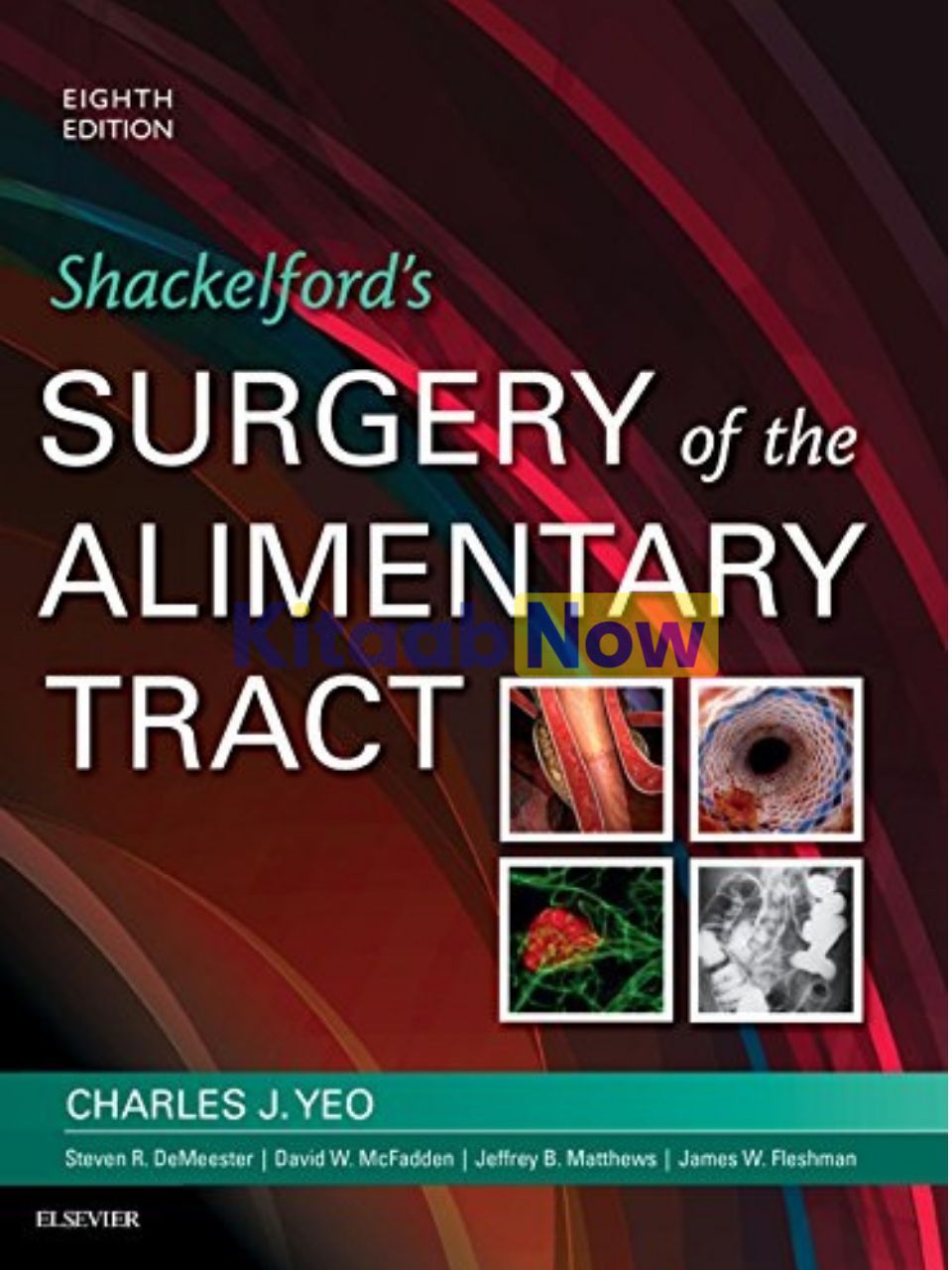
Shackelford’s Surgery of the Alimentary Tract, 2 Volume Set (8th Edition)
- Author: Charles J. Yeo
- ISBN: 9780323402323
- Publisher: Elsevier Science Publishing
- Edition: 8th
- Publication Date: February 27, 2018
- Format: Hardback – 2408 pages
- Language: English
Description
For more than 60 years, Shackelford’s Surgery of the Alimentary Tract has served as the cornerstone reference in this fast-moving field. With comprehensive coverage of all aspects of GI surgery, the 8th Edition, by Drs. Charles J. Yeo, Steven R. DeMeester, David W. McFadden, Jeffrey B. Matthews, and James W. Fleshman, offers lavishly illustrated, authoritative guidance on endoscopic, robotic, and minimally invasive procedures, as well as current medical therapies. Each section is edited by a premier authority in GI surgery; chapters reflect key topics and are written by a “who’s who” of international experts in the field. It’s your one-stop resource for proven, systematic approaches to all relevant adult and pediatric GI disorders and operations
Key Features
- Features an abundance of beautifully detailed intraoperative and laparoscopic photographs, as well as radiographs and line drawings, to enhance and clarify the text.
- Presents essential information, such as lists of differential diagnoses, in tabular format for quick reference.
New to this Edition
- Discusses recent, major advances in minimally invasive surgery and robotic surgery, personalized therapy based on genomics and proteomics, and new pharmacologic treatments of various GI diseases.
- Includes all-new information on laparoscopy for rectal cancer, sacral nerve stimulation for incontinence and constipation, management of Crohn’s disease and ulcerative colitis, advances in immunosuppression for transplant patients, and new therapies for inflammatory bowel disease.
- Expert Consult™ eBook version included with purchase. This enhanced eBook experience allows you to search all of the text, figures, and references from the book on a variety of devices.
Table of Contents
- VOLUME 1
- SECTION I
- Esophagus and Hernia
- PART ONE
- Anatomy and Physiology of the Esophagus
- Esophageal Sphincters in Health and Disease
- Esophageal Body in Health and Disease
- Esophageal Mucosa in Health and Disease
- Relevant Anatomic Relations of the Esophagus
- PART TWO
- Diagnostic Evaluation of the Esophagus
- Esophageal Symptoms and Selection of Diagnostic Tests
- Radiology of the Esophagus:Barium, Computed Tomography Scan, Positron Emission Tomography Scan, Magnetic Resonance Imaging
- Endoscopic Evaluation of the Esophagus and Endoscopic Ultrasonography of the Esophagus
- High-Resolution Esophageal Motility: Techniques and Use in the Diagnosis of Esophageal Motility Disorders and for Surgical Decision Making
- pH and Impedance Evaluation of the Esophagus
- Novel Diagnostic Technologies: Mucosal Impedance, Optical Coherence Tomography, Endomicroscopy
- PART THREE
- Esophageal Motility Disorders and Diverticula
- Cricopharyngeal Dysfunction and Zenker Diverticulum
- Surgical Management of Mid- and Distal Esophageal Diverticula
- Epidemiology, Diagnosis, and Medical Management of Achalasia
- Endoscopic and Surgical Therapies for Achalasia
- PART FOUR
- Gastroesophageal Reflux Disease
- Gastroesophageal Reflux Disease: Definition and Scope of the Problem in the United States of America and Worldwide
- Etiology and Natural History of Gastroesophageal Reflux Disease and Predictors of Progressive Disease
- Respiratory Complications of Gastroesophageal Reflux Disease
- Acid-Suppression Therapy for Gastroesophageal Reflux Disease and the Therapeutic Gap
- Fundoplication for Gastroesophageal Reflux Disease
- Magnetic Sphincter Augmentation for Gastroesophageal Reflux Disease
- Endoscopic Management of Gastroesophageal Reflux Disease
- Options to Address Delayed Gastric Emptying in Gastroesophageal Reflux Disease
- Management of Failed Fundoplications, End-Stage Gastroesophageal Reflux Disease, and Scleroderma
- Esophageal Complications of Bariatric Procedures
- PART FIVE
- Paraesophageal Hernia
- Paraesophageal Hernia: Etiology, Presentation, and Indications for Repair
- Laparoscopic Paraesophageal Hernia Repair: Technique, Outcomes, and Management of Complications
- Open Paraesophageal Hernia Repair
- Diaphragmatic Relaxing Incisions for Crural Tension During Hiatal Hernia Repair
- Collis Gastroplasty for a Foreshortened Esophagus
- Mesh at the Hiatus
- PART SIX
- Barrett Esophagus
- Controversies in the Definition of Barrett Esophagus
- Epidemiology of Barrett Esophagus and Risk Factors for Progression
- Medical and Surgical Therapy for Gastroesophageal Reflux Disease and Barrett Esophagus
- Ablation for Patients with Barrett Esophagus or Dysplasia
- PART SEVEN
- Esophageal Cancer
- Epidemiology, Risk Factors, and Clinical Manifestations of Esophageal Cancer
- Esophageal Cancer Diagnosis and Staging
- Endoscopic Management of High-Grade Dysplasia and Superficial Esophageal Carcinoma
- Neoadjuvant and Definitive Therapy for Esophageal Cancer
- A Surgical Approaches to Remove the Esophagus: Open
- B Surgical Approaches to Remove the Esophagus: Minimally Invasive
- C Surgical Approaches to Remove the Esophagus: Vagal-Sparing
- D Surgical Approaches to Remove the Esophagus: Robotic
- Extent of Lymphadenectomy for Esophageal Cancer
- Options for Esophageal Replacement
- Palliative Therapy for Esophageal Cancer
- Anastomotic Complications After Esophagectomy: Frequency, Prevention, and Management
- PART EIGHT
- Miscellaneous Esophageal Conditions
- Nonreflux Esophagitis
- Esophageal Duplication Cyst
- Submucosal Tumors in the Esophagus and Gastroesophageal Junction
- Caustic Esophageal Injury
- Etiology and Surgical Management of Esophageal Perforation
- Management of Esophageal Perforations and Leaks
- PART NINE
- Hernia
- Basic Concepts and Factors Associated with Ventral Hernia Recurrence
- Congenital Diaphragmatic Hernia
- Ventral Hernia and Abdominal Release Procedures
- A Inguinal Hernia Repair: Laparoscopic
- B Inguinal Hernia Repair: Open
- Lumbar, Pelvic, and Uncommon Hernias
- Mesh: Material Science of Hernia Repair
- SECTION II
- Stomach and Small Intestine
- Anatomy and Physiology of the Stomach
- Diagnostic and Therapeutic Endoscopy of the Stomach and Small Bowel
- Access and Intubation of the Stomach and Small Intestine
- Surgery for Peptic Ulcer Disease
- Zollinger-Ellison Syndrome
- Gastric Adenocarcinoma
- Postgastrectomy Syndromes
- Operations for Morbid Obesity
- Foreign Bodies and Bezoars of the Stomach and Small Intestine
- Motility Disorders of the Stomach and Small Intestine
- Miscellaneous Benign Lesions and Conditions of the Stomach, Duodenum, and Small Intestine
- Surgical Diseases of the Stomach and Duodenum in Infants and Children
- Anatomy and Physiology of the Duodenum
- Adenocarcinoma of the Small Intestine
- Reoperations on the Stomach and Duodenum
- Anatomy and Physiology of the Small Intestine
- Small Bowel Obstruction
- Volvulus of the Stomach and Small Bowel
- Internal Hernias: Congenital and Acquired
- Crohn Disease and Its Surgical Management
- Gastric, Duodenal, and Small Intestinal Fistulas
- Small Bowel Diverticula
- Radiation Enteritis
- Short Bowel Syndrome
- Gastrointestinal Carcinoid Tumors
- Gastrointestinal Stromal Tumors
- Gastrointestinal Lymphomas
- Surgical Conditions of the Small Intestine in Infants and Children
- Ileostomy
- Suturing, Stapling, and Tissue Adhesion
- Anatomy and Physiology of the Mesenteric Circulation
- Mesenteric Ischemia
- Aortoenteric Fistula and Visceral Artery Aneurysms
- Mesenteric Arterial Trauma
- SECTION I
- VOLUME 2
- SECTION III
- Pancreas, Biliary Tract, Liver, and Spleen
- PART ONE
- Pancreas
- Anatomy, Physiology, and Embryology of the Pancreas
- Acute Pancreatitis
- Chronic Pancreatitis 000
- Pseudocysts and Other Complications of Pancreatitis
- Endoscopic and Minimally Invasive Therapy for Complications of Pancreatitis
- Imaging and Radiologic Intervention in the Pancreas
- Pancreatic and Periampullary Cancer
- Neuroendocrine Tumors of the Pancreas
- Primary Pancreatic Cystic Neoplasms
- Unusual Pancreatic Tumors
- Techniques of Pancreatic Resection for Cancer
- Minimally Invasive Pancreas Surgery
- Pancreatic Trauma
- Pancreatic Problems in Infants and Children
- Pancreas and Islet Allotransplantation
- Prevention and Management of Complications of Pancreatic Surgery
- PART TWO
- Biliary Tract
- Anatomy, Embryology, Anomalies, and Physiology of the Biliary Tract
- Imaging and Radiologic Intervention in the Biliary Tract
- Operative Management of Cholecystitis and Cholelithiasis
- Management of Common Bile Duct Stones
- Biliary Dyskinesia and Sphincter of Oddi Dysfunction
- Endoscopic Evaluation and Management of Pancreaticobiliary Disease
- Biliary Tract Tumors
- Prevention and Management of Bile Duct Injury
- Operative Management of Bile Duct Strictures
- Biliary Atresia and Biliary Hypoplasia
- Cystic Disorders of the Bile Ducts
- Surgical Treatment of Primary Sclerosing Cholangitis
- PART THREE
- Liver
- Anatomy and Physiology of the Liver
- Laboratory Measurement of Hepatic Function
- Perioperative Management and Nutritional Support in Patients with Liver and Biliary Tract Disease
- Hepatic Cysts
- Liver Abscess
- Management of Hepatobiliary Trauma
- Diagnostic Operation of the Liver and Techniques of Hepatic Resection
- Minimally Invasive Techniques of Hepatic Resection
- Ablative Therapies for Hepatic Neoplasms
- Hepatic Transplantation
- Acute Liver Failure and Bioartificial Liver Support
- Vascular Diseases of the Liver
- Drug-Induced Liver Injury
- Benign Hepatic Neoplasms
- Hepatocellular Cancer
- Management of Primary Malignant Hepatic Neoplasms Other Than Hepatocellular Cancer
- Management of Secondary Hepatic Neoplasms
- Management of Portal Hypertension
- PART FOUR
- Spleen
- Splenic Anatomy and Physiology
- Technique of Splenectomy
- Minimally Invasive and Image-Guided Interventional Approaches to the Spleen
- Management of Splenic Trauma in Adults
- Splenic Trauma in Children
- Splenectomy for Conditions Other Than Trauma
- Cysts and Tumors of the Spleen
- SECTION IV
- Colon, Rectum, and Anus
- PART ONE
- Anatomy, Physiology, and Diagnosis of Colorectal and Anal Diseases
- Operative Anatomy of the Colon, Rectum, and Anus
- Physiology of the Colon and Its Measurement
- Diagnostic and Therapeutic Colonoscopy
- Magnetic Resonance Imaging Staging of Rectal Cancer
- Ultrasonographic Diagnosis of Anorectal Disease
- PART TWO
- Benign Colon, Rectal, and Anal Conditions
- Diagnosis and Management of Fecal Incontinence
- Surgical Treatment of Dysmotility Disorders of the Colon
- Pelvic Floor Dysfunction
- Rectovaginal and Rectourethral Fistulas
- Current Approaches to Complete Rectal Prolapse and Internal Intussusception
- Pilonidal Disease and Perianal Hidradenitis
- Emergent Care of the Victim of Colorectal Trauma
- Colonic Intussusception and Volvulus
- Colonic Bleeding and Ischemia
- Diverticular Disease Management
- Hemorrhoids and Rectoceles
- Fissure-in-Ano
- Anal Fistula Management
- PART THREE
- Inflammatory Diseases
- Concepts in Inflammatory Bowel Disease Management
- Operative Therapy for Ulcerative Colitis: A Minimally Invasive Approach
- Surgery for Crohn Disease: Personalizing the Operation
- Appendix
- PART FOUR
- Neoplastic Disease
- Inherited Colorectal Cancer and the Genetics of Colorectal Cancer
- Basic Principles of the Operative Treatment of Colorectal Cancer
- A Transanal Approaches to Early Rectal Cancer: Transanal Minimally Invasive Surgery
- B Transanal Approaches to Early Rectal Cancer: Transanal Endoscopic Microsurgery and Conventional Transanal Excision
- xxxii CONTENTS
- Operations for Rectal Cancer: Low Anterior Resection—Open, Laparoscopic or Robotic, taTME, Coloanal Anastomosis
- Abdominoperineal Resection for Rectal Cancer
- Minimally Invasive Approaches to Colon Cancer
- Recurrent and Metastatic Colorectal Cancer
- Management of Metastatic Colorectal Cancer to the Liver
- Neoplasms of the Anus: High-Grade Squamous Intraepithelial Lesions and Cancer
- Retrorectal Tumors
- Rare Colorectal Malignancies
- Adjuvant and Neoadjuvant Therapy for Colorectal Cancer: Molecular-Based Therapy
- PART FIVE
- Techniques and Pearls
- Prevention, Diagnosis, and Management of Anastomotic Leak
- Ostomy Construction and Management: Personalizing the Stoma for the Patient
- Reducing the Risk of Infection in the Elective and Emergent Colectomy Patient
- Reoperative Pelvic Surgery
- Evidence-Based Decision Making in Colon and Rectal Surgery
- Index
- SECTION III
Author Biography
Charles J. Yeo, MD, FACS, Samuel D. Gross Professor and Chairman, Department of Surgery, Sidney Kimmel Medical College at Thomas Jefferson Universityy, Philadelphia, PA
Additional information
| Weight | 5.460 kg |
|---|
Only logged in customers who have purchased this product may leave a review.
Related Products



Reviews
There are no reviews yet.