
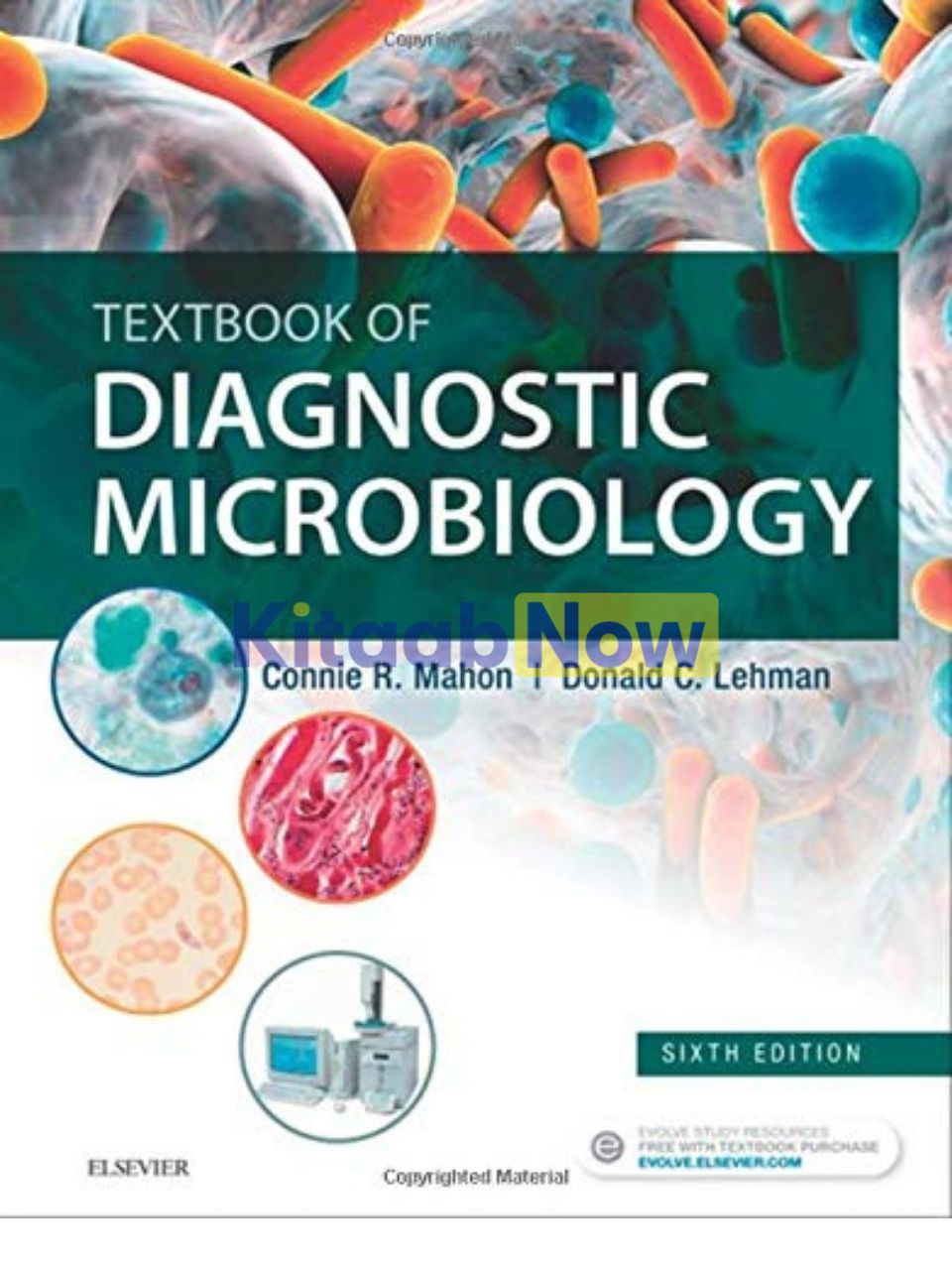
Textbook of Diagnostic Microbiology (6th Revised Edition)
- Authors: Connie R. Mahon, Donald C. Lehman
- ISBN: 9780323482189
- Publisher: Elsevier Science Publishing
- Edition: 6th
- Publication Date: April 02, 2018
- Format: Hardback – 1088 pages
- Language: English
Description
Learn to develop the problem-solving skills necessary for success in the clinical setting! The Textbook of Diagnostic Microbiology, 6th Edition uses a reader-friendly “building-block” approach to the essentials of diagnostic microbiology. This updated edition has new content on viruses like Zika, an expanded molecular chapter, and the latest information on prevention, treatment modalities, and CDC guidelines. Updated photos offer clear examples of automated lab instruments, while case studies, review questions, and learning objectives present information in an easy-to-understand, accessible manner for students at every level.
Key Features
- A building-block approach encourages you to use previously learned information to sharpen critical-thinking and problem-solving skills.
- Full-color design, with many full-color photomicrographs, prepares you for the reality of diagnostic microbiology.
- A case study at the beginning of each chapter provides you with the opportunity to form your own questions and answers through discussion points.
- Hands-on procedures describe exactly what takes place in the micro lab, making content more practical and relevant.
- Agents of bioterrorism chapter furnishes you with the most current information about this hot topic.
- Issues to Consider boxes encourages you to analyze important points.
- Case Checks throughout each chapter tie content to case studies for improved understanding.
- Bolded key terms at the beginning of each chapter equip you with a list of the most important and relevant terms in each chapter.
- Learning objectives at the beginning of each chapter supply you with a measurable outcome to achieve by completing the material.
- Review questions for each learning objective help you think critically about the information in each chapter, enhancing your comprehension and retention of material.
- Learning assessment questions at the conclusion of each chapter allow you to evaluate how well you have mastered the material.
- Points to Remember sections at the end of each chapter identify key concepts in a quick-reference, bulleted format.
- An editable and printable lab manual provides you with additional opportunities to learn course content using real-life scenarios with questions to reinforce concepts.
- Glossary of key terms at the end of the book supplies you with a quick reference for looking up definitions.
Table of Contents
- Part 1: Introduction to Clinical Microbiology
- Bacterial Cell Structure, Physiology, Metabolism, and Genetics
- Host-Parasite Interaction
- The Laboratory Role in Infection Control
- Control of Microorganisms: Disinfection, Sterilization, and Microbiology Safety
- Performance Improvement in the Microbiology Laboratory
- Specimen Collection and Processing
- Microscopic Examination of Materials from Infected Sites
- Use of Colony Morphology for the Presumptive Identification of Microorganisms
- Biochemical Identification of Gram-Negative Bacteria
- Immunodiagnosis of Infectious Diseases
- Applications of Molecular Diagnostics
- Antibacterial Mechanisms of Action and Bacterial Resistance Mechanisms
- Antimicrobial Susceptibility Testing
- Part 2: Laboratory Identification of Significant Isolates
- Staphylococci
- Streptococcus, Enterococcus, and Other Catalase-Negative, Gram-Positive Cocci
- Aerobic Gram-Positive Bacilli
- Neisseria Species and Moraxella catarrhalis
- Haemophilus, HACEK, Legionella and Other Fastidious Gram-Negative Bacilli
- Enterobacteriaceae
- Vibrio, Aeromonas, and Campylobacter Species
- Nonfermenting and Miscellaneous Gram-Negative Bacilli
- Anaerobes of Clinical Importance
- The Spirochetes
- Chlamydia, Rickettsia, and Similar Organisms
- Mycoplasma and Ureaplasma
- Mycobacterium tuberculosis and Nontuberculous Mycobacteria
- Medically Significant Fungi
- Diagnostic Parasitology
- Clinical Virology
- Agents of Bioterror and Forensic Microbiology
- Biofilms: Architects of Disease
- Part 3: Laboratory Diagnosis of Infectious Diseases: and Organ System Approach to Diagnostic Microbiology
- Upper and Lower Respiratory Tract Infections
- Skin and Soft Tissue Infections
- Gastrointestinal Infections and Food Poisoning
- Infections of the Central Nervous System
- Bacteremia and Sepsis
- Urinary Tract Infections
- Genital Infections and Sexually Transmitted Infections
- Infections in Special Populations
- Zoonotic Diseases
- Ocular Infections
- Appendix A: Selected Bacteriologic Culture Media
- Appendix B: Selected Mycology Media, Fluids, and Stains
- Appendix C: Selected Procedures
- Appendix D: Answers to Learning Assessment Questions
- Glossary
- Index
Author Biography
Connie Mahon
Affiliations and Expertise
Director, Organization Development (Retired), Health Resources and Services Administration, Learning Institute, Rockville, Maryland; Adjunct Assistant Professor, Medical Laboratory Sciences, Integrative Health Sciences Department, School of Medicine and Health Sciences, The George Washington University, Washington, DC
Donald Lehman
Affiliations and Expertise
Associate Professor, Department of Medical Technology, University of Delaware, Newark, DE, USA
Additional information
| Weight | 2.964 kg |
|---|
Only logged in customers who have purchased this product may leave a review.
Related Products


Reviews
There are no reviews yet.