
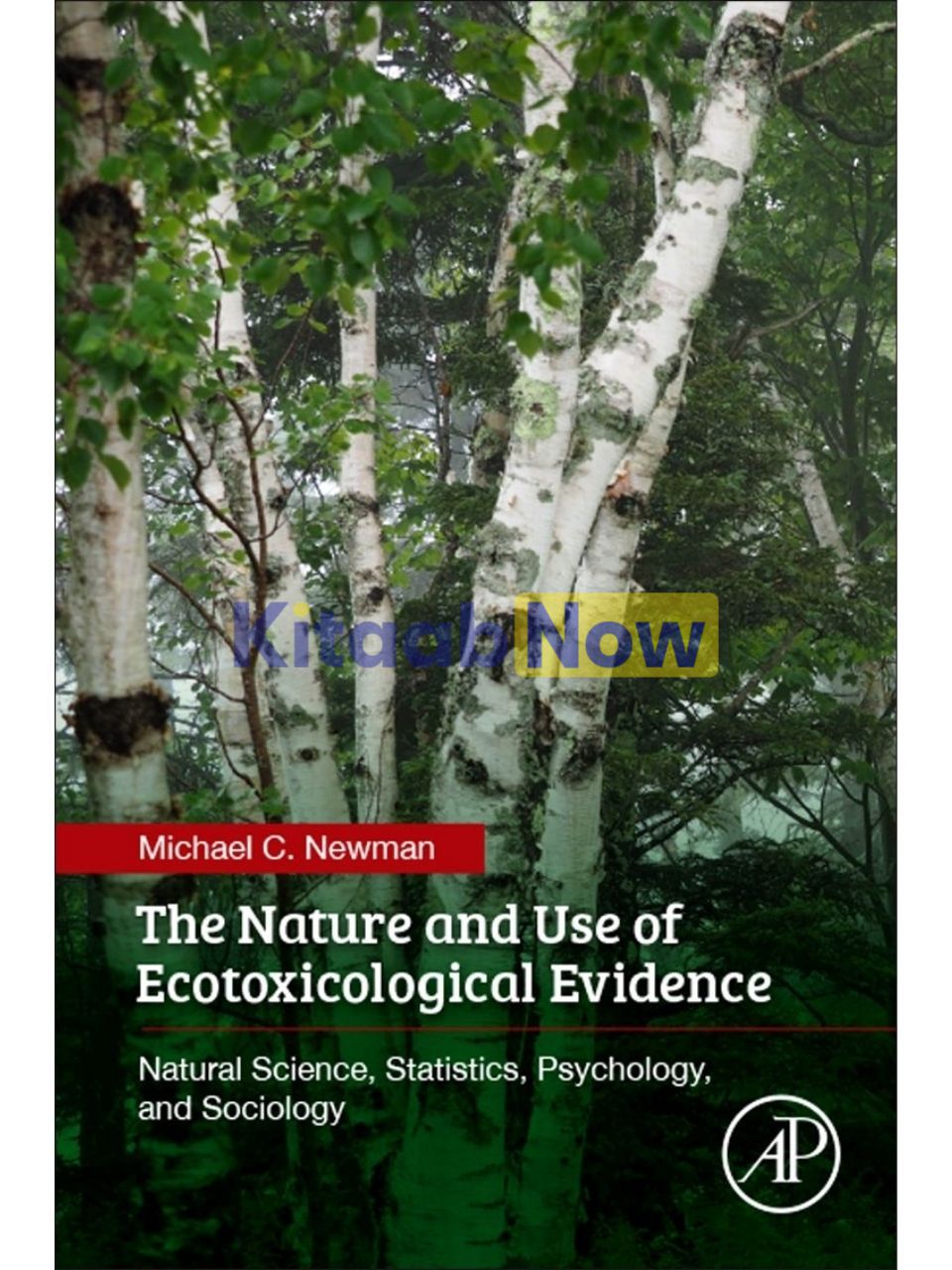
The Nature and Use of Ecotoxicological Evidence
Natural Science, Statistics, Psychology, and Sociology
- Author: Michael Newman
- ISBN: 9780128096420
- Publisher: Elsevier Science Publishing
- Edition: 1st
- Publication Date: January 20, 2018
- Format: Paperback – 298 pages
- Language: English
Description
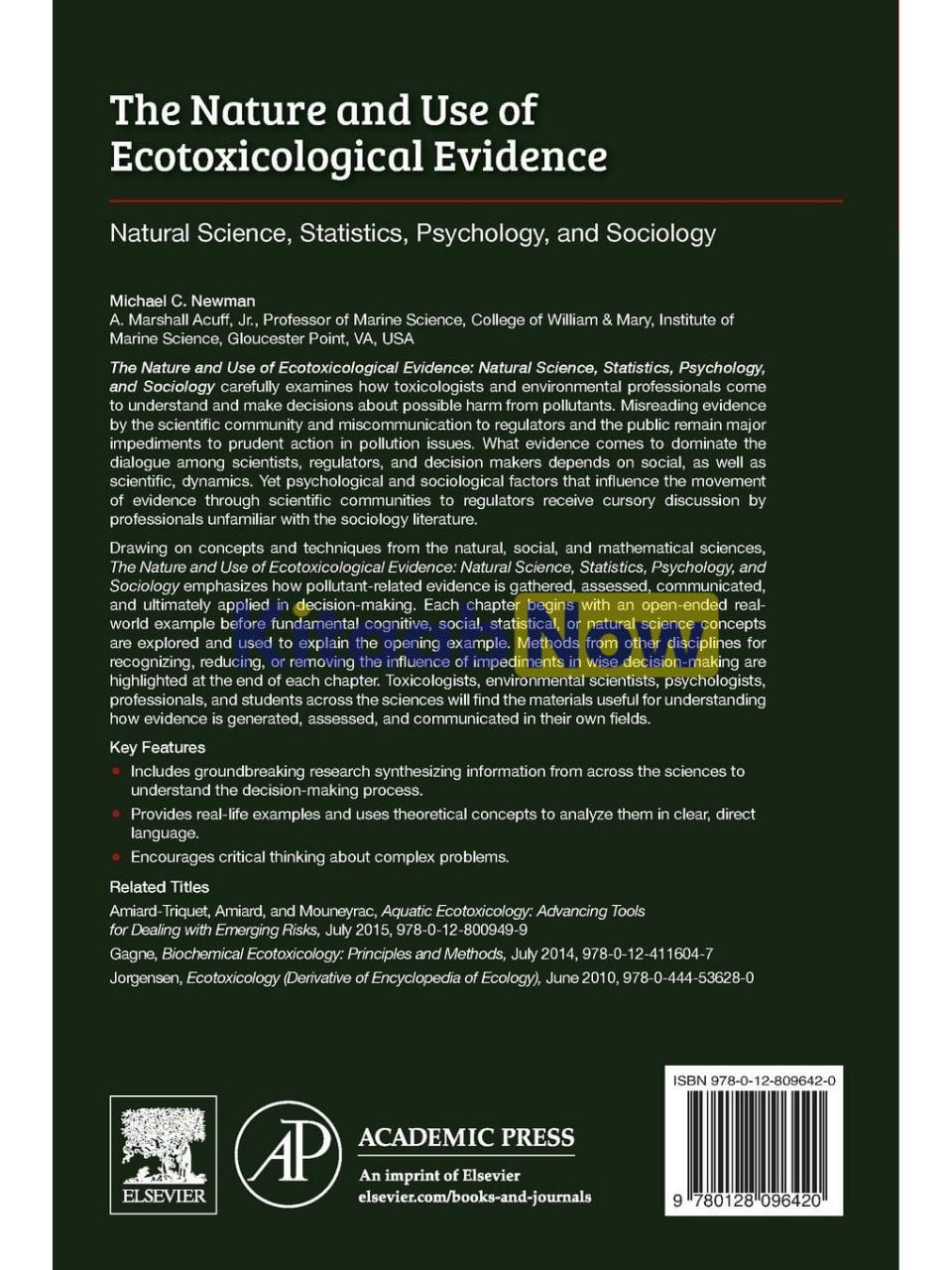
The Nature and Use of Ecotoxicological Evidence: Natural Science, Statistics, Psychology, and Sociology examines how toxicologists and environmental professionals come to understand and make decisions about possible harm from pollutants. Drawing on concepts and techniques from the natural, social and mathematical sciences, the book emphasizes how pollutant-related evidence is gathered, assessed, communicated and applied in decision-making. Each chapter begins with a real-world example before exploring fundamental cognitive, social, statistical or natural science concepts to explain the opening example. Methods from other disciplines for recognizing, reducing or removing the influence of impediments in wise decision-making are highlighted in each chapter.
Misreading evidence by the scientific community, and miscommunication to regulators and the public, remain major impediments to wise action in pollution issues. Which evidence comes to dominate the dialogue among scientists, regulators and decision makers depends on social and scientific dynamics. Yet psychological and sociological factors that influence the movement of evidence through scientific communities to regulators receive cursory discussion by professionals unfamiliar with the sociology literature. Toxicologists, environmental scientists, psychologists and professionals and students across the sciences will find the book useful for understanding how evidence is generated, assessed and communicated in their own fields.
Key Features
- Includes groundbreaking research synthesizing information from across the sciences to understand the decision-making process
- Provides real life examples and uses theoretical concepts to analyze them in clear, direct language
- Encourages critical thinking about complex problems
Readership
Toxicologists, environmental scientists, psychologists, sociologists, and advanced students. Professionals across the sciences wanting to evaluate and communicate findings in a clear manner
Table of Contents
- Section 1. INTRODUCTION
- Human History and the Emerging Importance of Pollution
- Vital Evidence for the Anthropocene
- Section 2. HOW INDIVIDUALS GATHER EVIDENCE AND MAKE JUDGMENTS
- Human Reasoning: Everyday Cognitive Heuristics and Foibles
- Human Reasoning: Within Scientific Traditions and Rules
- Pathology of Human Reasoning within the Sciences
- Individual Scientist: Reasoning by the Numbers
- Section 3. HOW GROUPS WEIGH AND APPLY EVIDENCE
- Social Processing of Evidence: Common Dynamics and Foibles
- How New Evidence Enters and Moves within Groups
- Evidence in Social Networks
- Conclusion
Reviews
“The Nature and Use of Ecotoxicological Evidence ventures into territory that many ecotoxicologists seldom travel. It reaches into what some will find the unfamiliar, even scary, realm of the social sciences… I recommend this book as a teaching text and as a reference for practitioners who work in environmental assessment and management.”
–Integrated Environmental Assessment and Management
“In summary, there is a wealth of information within the covers of this book on how pollutant-related evidence is gathered, assessed, communicated and applied in decision-making drawing on concepts and techniques from the natural, social and mathematical sciences. I am personally convinced that reading of the book will instill in the reader an increased awareness of the suggested means of reducing impediments to our “unbiased freewill and discriminating judgment.”
–Detritus
Author Biography
Michael C. Newman is currently the A. Marshall Acuff, Jr. Professor of Marine Science at the College of William and Mary’s School of Marine Science where he also served as Dean of Graduate Studies from 1999 to 2002. Previously, he was a faculty member at the University of Georgia’s Savannah River Ecology Laboratory. His research interests include quantitative ecotoxicology, environmental statistics, risk assessment, population effects of contaminants, metal chemistry, bioaccumulation and biomagnification modeling, and during the last 15 years, qualities of new concepts or technologies that foster or inhibit their adoption by the ecotoxicology scientific community. In addition to more than 140 articles, he authored 5 books and edited another 5 books on these topics.
Affiliations and Expertise
A. Marshall Acuff Jr Professor of Marine Science ,College of William and Mary Virginia, Institute of Marine Science, Gloucester Point, VA, USA
Additional information
| Weight | 0.500 kg |
|---|
Only logged in customers who have purchased this product may leave a review.
Related Products





Reviews
There are no reviews yet.