
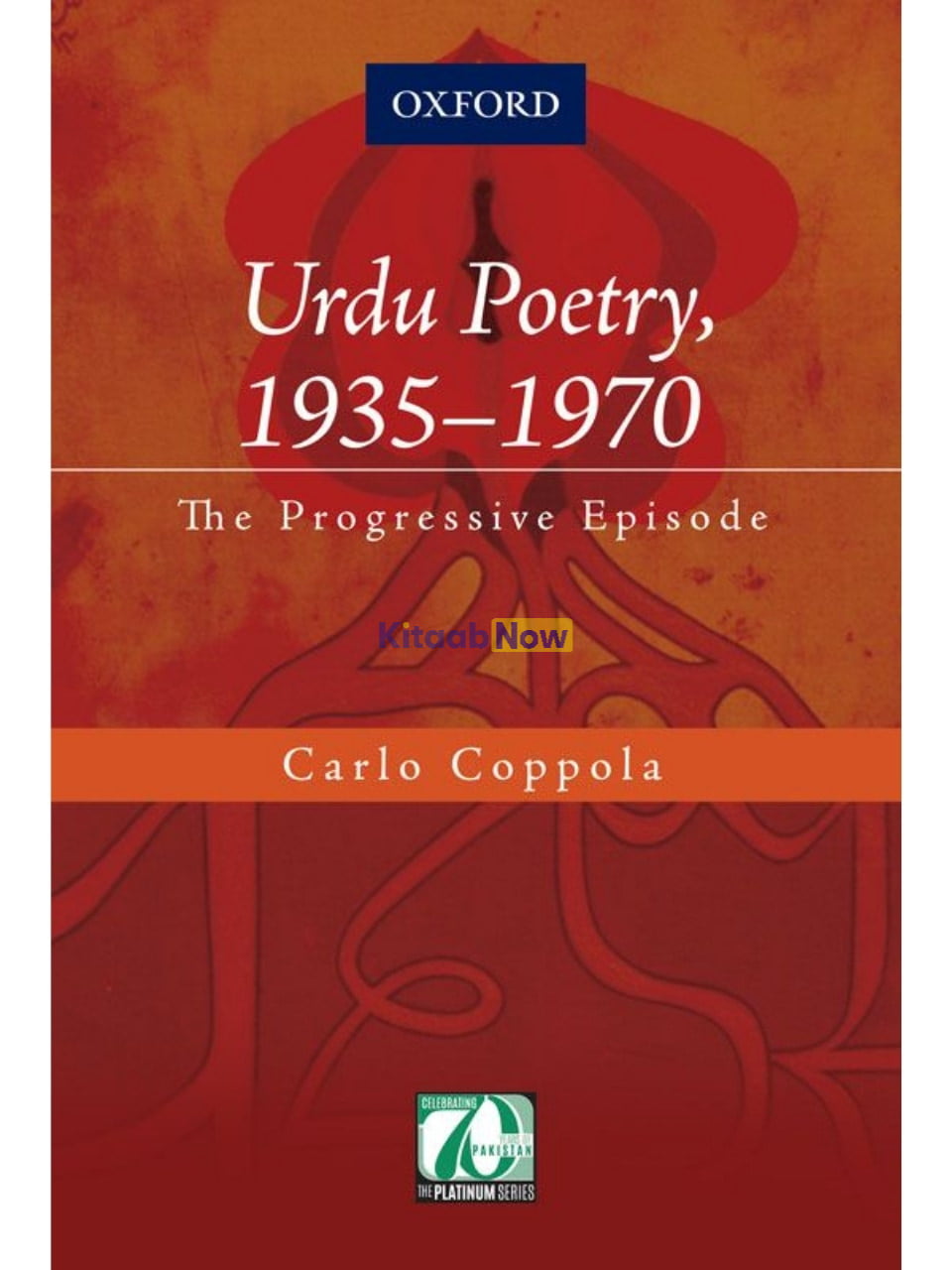
Urdu Poetry 1935–1970: The Progressive Episode
- Author: Carlo Coppola
- ISBN: 9780199403493
- Publisher: Oxford University Press
- Publication Date: May 31, 2018
- Format: Hardback – 700 pages
- Language: English
Out of stock
Description
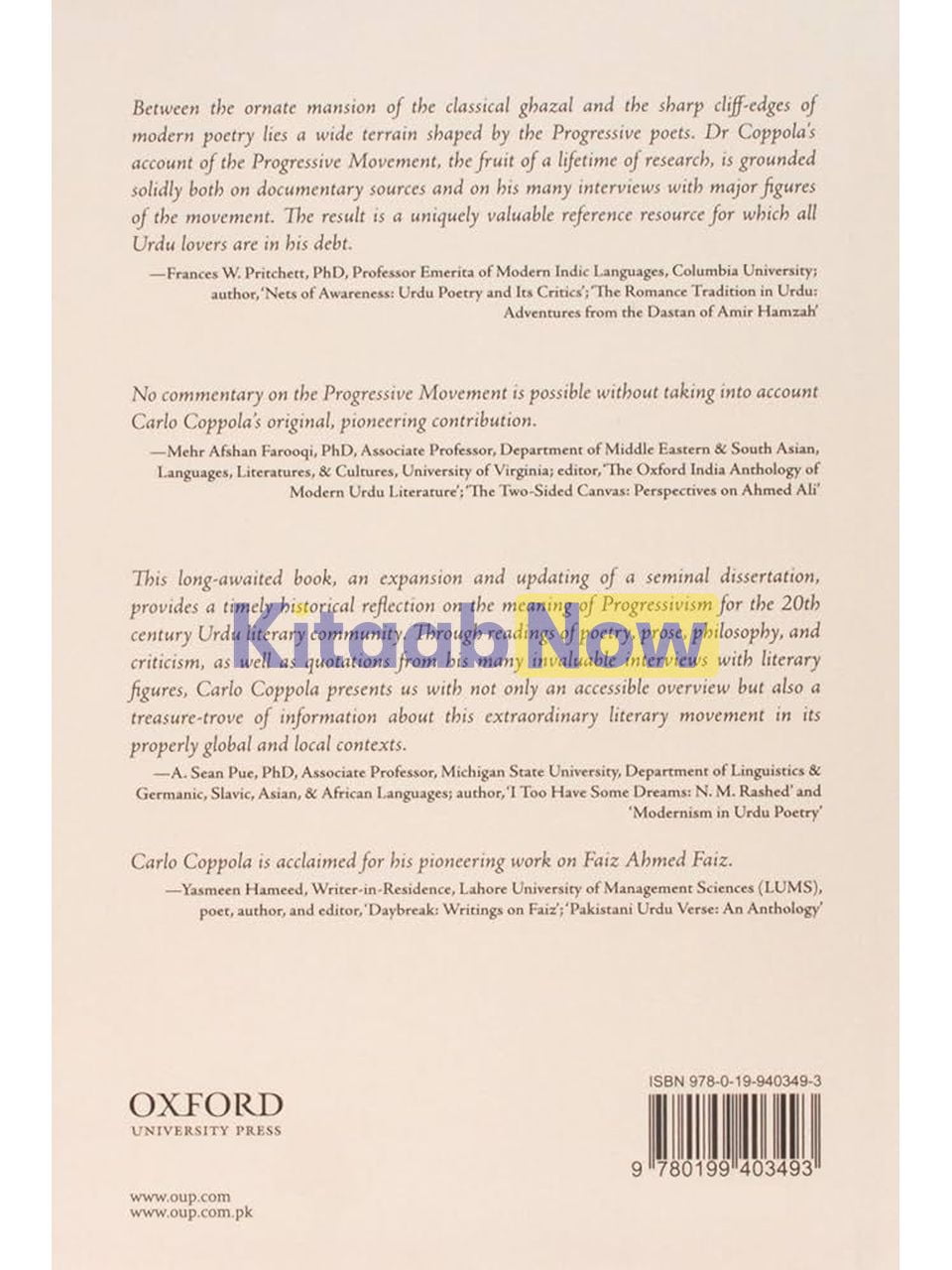
This book attempts to determine the nature and meaning of the term ‘progressivism’ and assess its significance in the larger context of Urdu literature and, ultimately, South Asian literature.
It investigates the emergence of the Progressive Movement in the subcontinent along with the indigenous and foreign influences: literary, historical, intellectual, and philosophical which set the stage for the Progressive Movement. Contrary to the belief held by some critics that the progressive movement was mostly if not entirely, derived from English and Russian sources and influences, this study indicates that strong indigenous elements contributed equally, if not more, to the movement.
Table of Contents
- Acknowledgements
- Preface
- Note on Transcription
- List of Abbreviations
- Chapter 1 The Urdu Background to the Progressive Movement
- Chapter 2 The Angare Group: The Enfants Terribles of Urdu Literature
- Chapter 3 The All-India Progressive Writers’ Association: The European Phase
- The Kremlin/Moscow
- London/Bloomsbury
- The Latin Quarter/Paris
- Chapter 4 The All-India Progressive Writers’ Association: The Indian Phase
- The Preliminary Setting: India, 1935-1936
- The First All-India Progressive Writers’ Association Meeting, Lucknow, 1936
- Chapter 5 The All-India Progressive Writers’ Association, 1937-1947: Years of Power
- The AIPWA before World War II, 1937-39
- The AIPWA and the War Years, 1939-45
- The AIPWA Between the War and Independence: 1945-47
- Chapter 6 The Progressive Writers’ Association in India and Pakistan, 1947-70: Years of Decline
- The AIPWA, 1947-53: Years of Rapid Decline
- The AIPWA, 1953-70: An organization in Search of Members
- The All-Pakistan Progressive Writers’ Association, 1947-58: ‘A Very Short and Chequered History’
- Chapter 7 Faiz Ahmed Faiz: The Progressive Poet as Aesthete
- Chapter 8 Asrarul Haq Majaz: The Progressive Poet as Romantic
- Chapter 9 Makhdum Mohiuddin: The Reluctant Progressive
- Chapter 10 Ali Sardar Jafri: The Progressive Poet and the Consistency of Commitment
- Chapter 11 Sahir Ludhianvi: The Progressive as Lyric Poet
- Chapter 12 Conclusions
- Appendices
- I. Communist Party Activities in India Prior to 1935
- II. Select Biographical Notes
- A Chronology of the Progressive Writers’ Movement
- Glossary of Literary and Historical Allusions
- Select Bibliography
- Index of Poems by Title
- Index of Poems by Author
- Index
Author Biography
Carlo Coppola is Professor Emeritus of Hindi-Urdu and linguistics at Oakland University, Rochester, Michigan, USA. An award-winning teacher and mentor, he has served as Director at the University’s Centre for International Programs. In 1963 he co-founded Mahfil, A Quarterly of South Asian Literature, later retitled as Journal of South Asian Literature. Up until 2002, the magazine served as a major pioneering outlet for South Asian literature translated into English.
Coppola’s translations of South Asian (mostly Urdu) poetry and fiction are numerous, often done in collaboration with authors. Besides publishing scores of literary articles, he is editor of three books: Marxist Influences and South Asian Literature, Anthology of Mohan Rakesh, and Critical Perspectives on Socialist Realism in Asian Literature. Also to his credit are publications of groundbreaking interviews of eminent literary figures including Faiz Ahmed Faiz, N. M. Rashed, Ismat Chughtai, Rajinder Singh Bedi, Amrita Pritam (Punjabi), Umashankar Joshi (Gujarati), G. Sankara Kurup (Malayalam), Khushwant Singh (English), and Mohan Rakesh (Hindi).
Carlo Coppola is now settled in Los Angeles. He is working as Senior Docent at one of the most distinguished museums, the Los Angeles County Museum of Art (LACMA), where he gives guided tours on collections of Islamic and South Asian art. He is also Adjunct Professor at the University of California Los Angeles (UCLA), where he teaches various courses on World Literature and Food History.
Additional information
| Weight | 1.045 kg |
|---|
Only logged in customers who have purchased this product may leave a review.
Related Products

Reviews
There are no reviews yet.