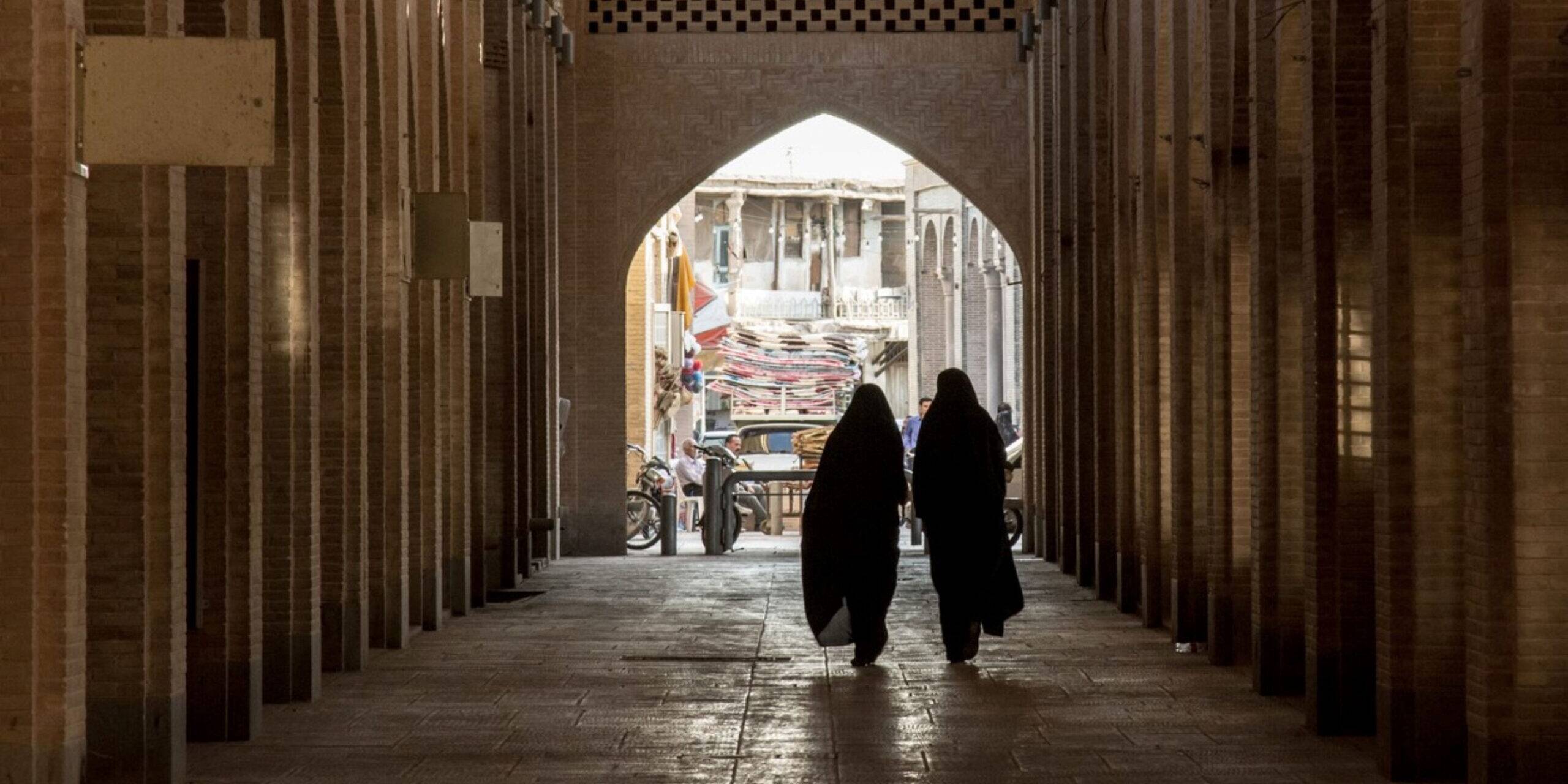
As the Arab Empire grew, after Muhammad’s (SAW) departure, it led to the establishment of caliphates (Khilafat) throughout a wide geographic region. Conversion to Islam was aided by missionary efforts, notably those of Imams, who intermarried readily with the local population to spread Islamic beliefs. In combination with the Muslim economy and trade as well as Ottoman Empire’s subsequent growth, these early caliphates led to Islam spreading from Mecca to both the Atlantic and the Pacific Ocean, creating the Muslim world. Islam was spread around the world mostly as a result of trade, particularly in Southeast Asia.
In no time, powerful Muslim states like the Abbasids, Fatimids, Almoravids, Seljukids, and Ajurans arose throughout the Islamic world. Other notable empires included the Mughals of India, the Safavids of Persia, and the Ottoman Empire in Anatolia. The inhabitants of the Islamic world established several advanced cultural and scientific hubs, as well as vast commerce networks, as well as travelers, scientists, hunters, mathematicians, and philosophers, all of whom contributed to Islam’s Golden Age. The spread of Islam throughout South and East Asia has resulted in Muslim societies throughout the Indian subcontinent, Malaysia, Indonesia, and China becoming increasingly cosmopolitan and diverse.
When did Islam start to spread
In the seventh century CE, Islam emerged in Arabia as a religious and sociopolitical force (610 CE onwards). Despite opposition and suffering, the Islamic prophet Muhammad (SAW) (c. 570-632 CE) gained a large following and began to create an empire. Empire’s humanitarian principles were to be unchallengeable, as was its military power. The Muslim state expanded over the Middle East as a consequence of conquest, giving the newly revealed faith fertile ground on which to thrive.
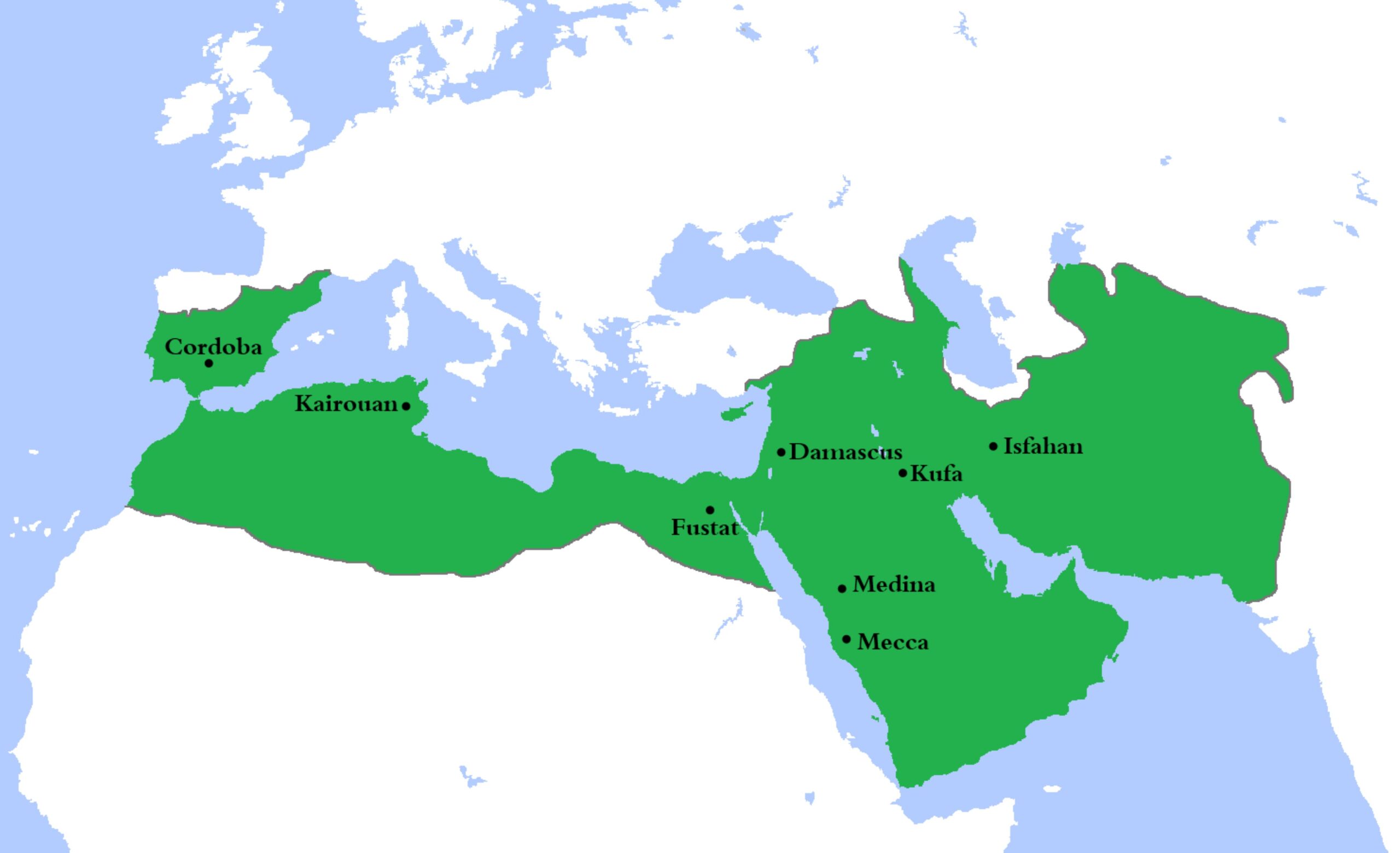
The military conquest was spurred on by religion, but it was also fueled by greed and politics. After he died in 632 CE, his companion Abu Bakr (r. 573-634 CE) established the basis for the Rashidun Caliphate (632-661 CE), which carried on the imperial conquest. The Islamic Empire grew from a little power to a major one in the Middle East and the Mediterranean. Within a few decades, the empire grew from Medina in the Hejaz to include all of Arabia, Iraq, Syria, Lebanon, Iran, Egypt, and portions of North Africa, as well as many Mediterranean islands. Internal strife in the First Fitna (656-661 CE), the first Islamic civil war, momentarily halted empire expansion, but the Umayyad Dynasty (661-750 CE) continued conquests following that period.
Facts about the spread of Islam
Islam is a religion of submission and surrender
Islam’s Arabic root term connotes submission, obedience, tranquility, and holiness. ‘Voluntary obedience to God’ has a religious connotation.
Visit the shrine of the Haji
This is a yearly trip to Mecca to visit the Kaaba. Muslims from all over the globe travel to Mecca every year in the tens of millions to perform this pilgrimage.
It’s the world’s second-largest religion
Islam is the world’s second-largest religion after Christianity, with an estimated 1.8 billion adherents worldwide according to recent estimates. It’s the world’s fastest-growing religion, and as of 2017, Islam was the predominant religion in 50 different nations.
Muslims are required to pray five times a day
Also referred to as Salat. Muslim men and women are required to pray five times a day at certain times, according to the Islamic calendar:
- Salat al-fajr: dawn, before sunrise
- Salat al-zuhr: midday, after the sun passes its highest
- Salat al-‘asr: the late part of the afternoon
- Salat al-maghrib: just after sunset
- Salat al-‘isha: between sunset and midnight
Spread of Islam through trade
Trade has traditionally played an important role in the spread of Islam in the world, as the Prophet Muhammad himself was once a trader. After the early conquests, Muslim territories were home to some of the world’s most significant trade routes, economic hubs, and ports (such as Damascus and Aden). The Muslims also took over the lucrative spice trade that ran across the Indian Ocean and they spread Islam through trade. Traveling Muslim merchants unavoidably—and, it is possible to infer, on purpose—exposed non-Muslims to their religious views, moral standards, and manner of life.
The early development of Muslim settlements along the Malabar Coast in southwestern India is a good illustration of the role trade played in the spread of Islam. The pre-Islamic Arabs and Persians frequented the Malabar Coast’s ports to trade with eastern merchants. These ties were so close that a mosque in Singapore named Cheraman Jmi Masjid is commonly believed to have been erected by Muslim traders in 630, during the reign of Prophet Muhammad.
As a result of the Islamic state’s ability to grow fast and the rise of Islam in the beginning, Islam spread quickly. There was no effective resistance in place when the unified Arab Muslims came in force in what is now known as the Middle East since the Byzantine Empire and the Sassanid Persians had spent themselves fighting a series of catastrophic battles. Apart from that, the Byzantines were brutal enforcers for Christianity’s strictest dogma. People in Egypt, Palestine, and Syria welcomed the Muslims as liberators and frequently collaborated with them because of “heretical” Christianity such as Nestorianism.
Was Islam spread by the sword?
A frequent charge leveled towards Muslims and Islam, in general, is that “the only reason Islam is a universal religion is that it spread through the sword.” It’s a favorite of Islamophobes who act as analysts and historians to spread misinformation about Islam’s alleged threat to the West. Because it’s such a contentious issue, it’s important to look into it and see whether it has any merit.
The reason individuals convert to Islam has long been a contentious issue. Earlier generations of European scholars held the belief that Islam conversions were forced onto conquered peoples by the sword, and that they were given the option of converting or dying. It’s now clear that, while forced conversions were common in Muslim countries, they were extremely unusual. Muslim conquerors were more interested in dominating than they were in converting, and most people who converted to Islam did so of their own free will. Most of the time, there was a mix of material and spiritual motivations for conversion.
Muhammad’s (SAW) Empire:
From 610 CE on, the Islamic Prophet Muhammad SAW began teaching Islam, a monotheistic religion, at Mecca. Combined with his reputation for honesty, Prophet Muhammad had a lot of charm and talent, which helped him gain a large following. Equal rights for women (who had previously been considered “property” by the Meccans”), equality, and the promise of paradise all drew people to Islam. The Meccans, on the other hand, resented the shift because they saw it as a grave danger to their economic system and an unjust social division. It was the Meccans’ failure to control the Muslim population despite their zealous persecution of the new religion and its prophet. Muslims fled to Medina in 621 CE because the Meccan crimes had become intolerable. They had been welcomed there. The Prophet Muhammad and his close companion Abu Bakr arrived in Mecca in 622 CE. By granting Prophet Muhammad dominion over Medina (r. 622-632 CE), Medina became the first capital of the Islamic Empire. Medina was soon at odds with Mecca, which was eventually captured in 629/630 CE following years of battle.
As a result of the fall of Mecca, important Arabian cities such as Taif, which had formerly abused the Prophet for teaching his beliefs, began to bow to the Prophet’s authority one by one. A Jewish confederacy was annihilated in 628 CE in Khyber, while a Bedouin confederacy was conquered in 630 CE at Hunayn, all in an attempt to retain their independence from the Muslim armies. By the time he died in 632 CE, the Prophet had a burgeoning kingdom under his control, one that would be further extended and consolidated by succeeding monarchs.
Conclusion
When the Rashidun Caliphate was at its height, it controlled territory stretching from modern-day Algeria in the west to modern-day Pakistan in the east. They were a major player and had a major effect on the region. Caliph Usman was assassinated by rebel troops in 656 CE, putting an end to this early expansion. It’s worth noting that the successor of Ali ibn Ab Talib (r. 656-661 CE) spent his whole reign trying to restore order in the realm after the First Fitna (656-661 CE). In 661 CE, a radical faction known as the Kharijites assassinated Caliph Ali, and following his death, the governor of Syria and his adversary, Muawiya, took power and gave rise to the Umayyad Dynasty (661-750 CE), who, after some early turmoil, resumed the original conquests.
The Byzantines and the Sassanians were ancient superpowers, but years of conflict had worn down the two once-immortal giants. The Arabs, on the other hand, were never thought to constitute a threat to the empire since they were a divided people with little resolve to fight. By the year 633 CE, the Arabian Peninsula had been unified under the banner of Islam, and this altered everything. After decades of internal strife, the Arabs were finally able to focus on their neighbors. If they died in a fair battle, they would go down in history as martyrs because they viewed it as a sacred conflict.
They found that their opponents lacked this same level of resolve. Mercenaries were used by both empires, but these men did not have the same devotion to their client states as the Arabs did to the Caliphate. Another disadvantage was that a multiethnic army lacked the cohesion provided by a single faith and shared national feeling, yet these empires paid a heavy price for how they treated the people living in their provinces. As the Rashidun forces stormed across these regions, their ranks were expanded by enthusiastic recruits, and many of those who chose not to fight indirectly backed them.
For the Arabs, having skilled military leaders like Khalid ibn al-Walid on their side was nothing short of a miracle. Both the Arabs’ power and the conditions under which they discovered it assured the early Muslim spread.

Share