
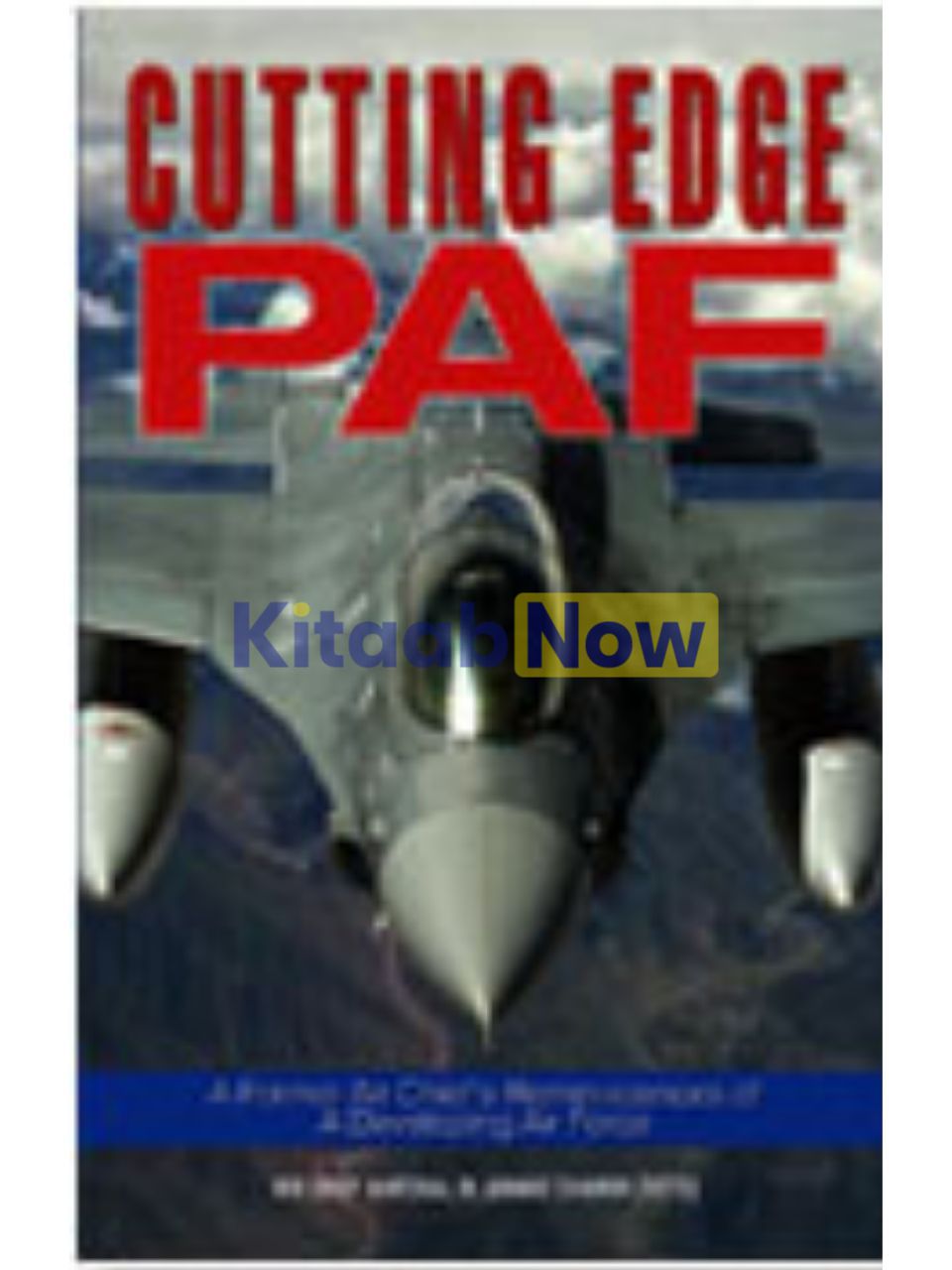
Cutting Edge PAF: A Former Air Chief’s Reminiscences of a Developing Air Force
- Author: Air Chief Marshal M. Anwar Shamim
- ISBN: 9789694025407
- Publisher: Vanguard Publications
- Format: Hardback – 351 pages
- Language: English
Description
“Cutting Edge” is Air Chief Marshal M Anwar Shamim’s account of experiences in the Pakistan Air Force (PAF). He writes from the vantage point of a former head of the service. The interesting aspect is that the account coincides with the emergence of Pakistan on world map as an independent entity. This makes the author’s story synonymous with the development of the nascent state. PAF is one national institution that can rightly claim an unblemished past, present and future. The author gives credit to the founding fathers for their visionary leadership and highlights the contributions of all key players who were instrumental in shaping the destiny of the aerial defenders. It is a story as much of equipment as it is of people; rather it presents a blending of the two. The author takes pride where pride is due but without any rancour or ill feeling. Herein we get to know ACM Shamim as a man and as a professional officer. Anecdotal in structure, the narrative is full of facts and we have a book available for consultation and study. It is a must-read for all.
Author Biography
Air Chief Marshal M Anwar Shamim graduated as a pilot from Point Cook, Australia in 1954. After his jet conversion on Vampires in Australia, he was posted to PAF’s first jet unit, No 11 Squardon, which he later went on to command in 1963. In 1964, he was given charge of PAF’s elite 33 Wing, which he commanded during the 1965 War. He led the famous raid on Amritsar’s radar, which earned him a Sitara-i-Jur’at. In 1968, he was sent to Jordon as Air Adviser to King Hussein. On return to Pakistan, he took over as Air Defense Sector Commander – South, in which capacity he controlled air defense operations in 1971 War. He had the privilege of commanding Sakesar, Korangi Creek and PAF’s largest, Masroor, Air Bases. He was appointed Assistant Chief of Air Staff in 1975. In 1978, he was selected to be the Chief of Air Staff, an appointment he held till 1985. He was instrumental in two important developments in the PAF that have helped it remain second to none: Introduction of Regional Commands to decentralise command and control and ensure better liaison with the Army and Navy field formations; secondly, the induction of F16s which redressed the imbalance against the traditional adversary India over the years.
Additional information
| Weight | 0.421 kg |
|---|
Only logged in customers who have purchased this product may leave a review.
Related Products





Reviews
There are no reviews yet.