

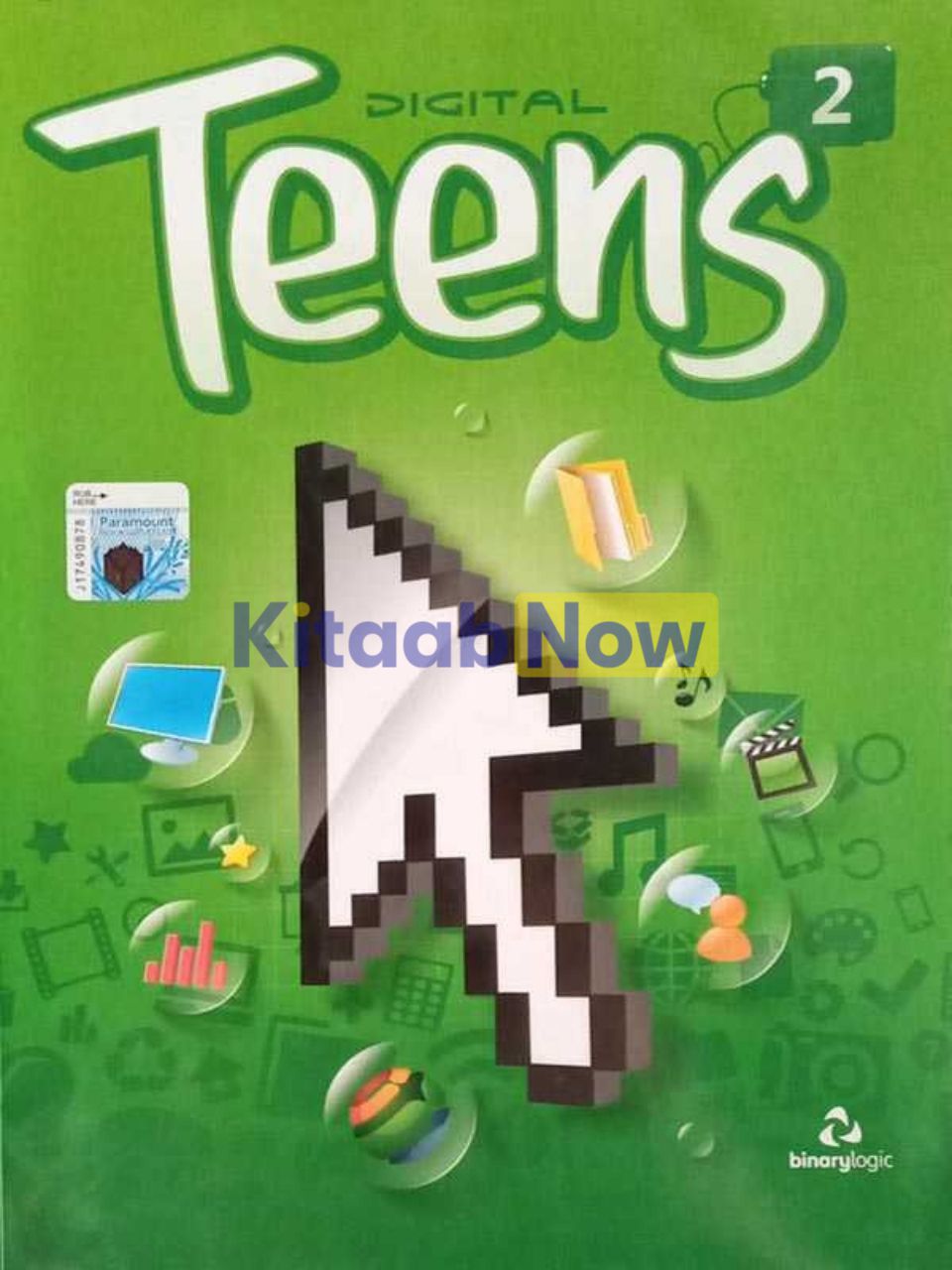
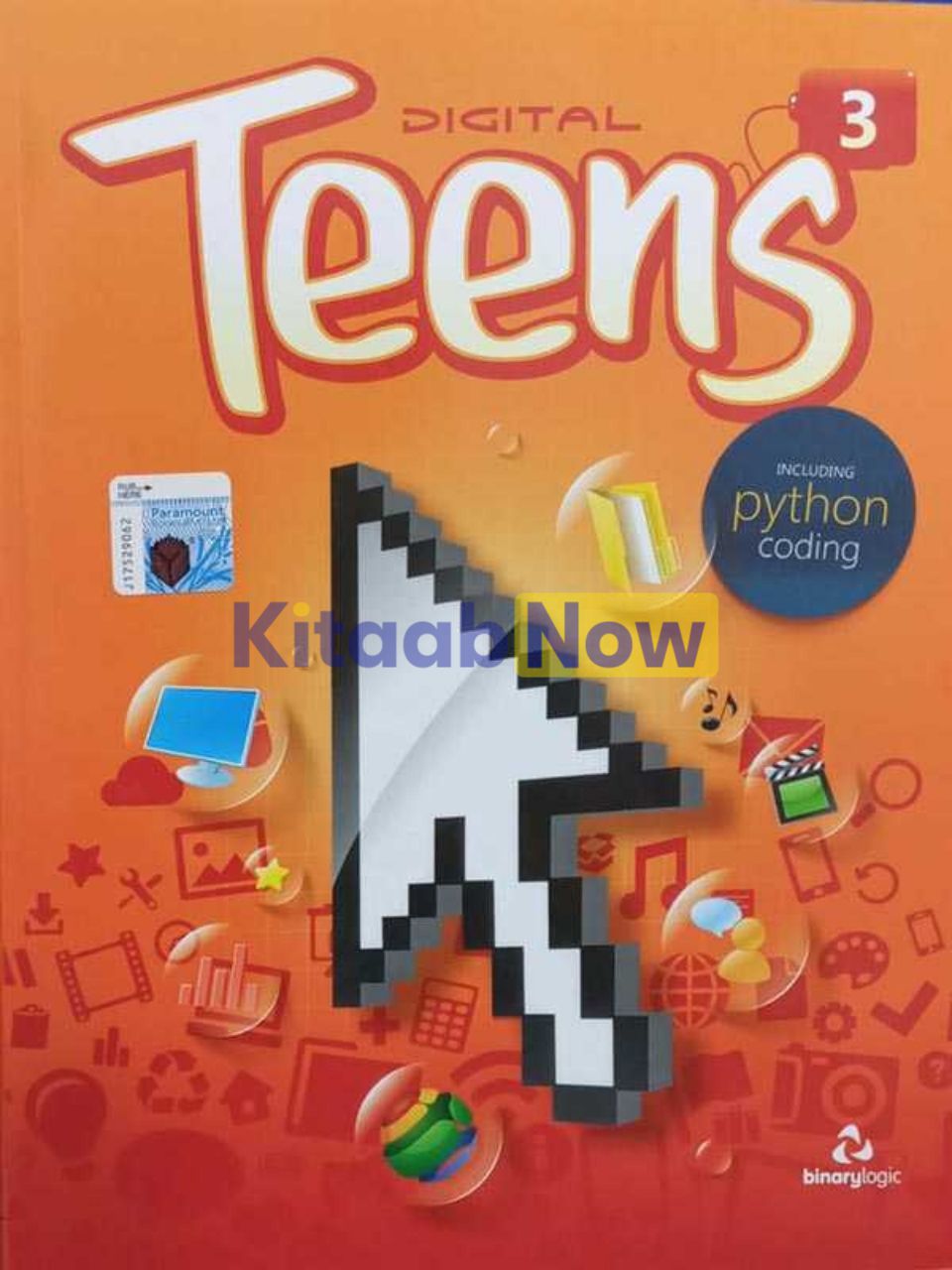
Digital Teens Book 1
- ISBN: 9789606982446
- Publisher: BinaryLogic
- Format: Paperback – 164 pages
- Language: English
Out of stock
Description
This highly exciting series adopts an innovative approach to presenting and practicing ICT skills.
Digital Teens is graded ICT series consisting of five books
Digital Teens follow the latest international standards of ICT teaching. The series take into consideration the competencies valued in ICT around the world. The curriculum is mapped against national standards and requirements in a number of countries. The skills learned reflect the performance standards demanded in an international context. Information and Communications Technology is now part of the educational experience of children in most parts of the world. Taught as a separate subject, as well as being embedded within the curriculum, ICT is increasingly regarded as a new literacy, alongside reading, writing and numeracy.
These books designed to introduce students to the key ICT applications they need to use in order to acquire that literacy and to help them understand the impact of technology on our daily lives. The curriculum provides a framework in which ICT competence and practical skills can be developed within an environment that is appropriate for the age of the students.
Spiral Curriculum Framework
Content curriculum and resources that are aligned with and support digital age learning. Following the spiral curriculum, students repeat the material at different grade levels, each time at a higher level of difficulty and in greater depth.
- Designed specifically for young learners and teenagers incorporating the latest developments in pedagogy.
- Provides interesting real-life scenarios and activities to engage and motivate students.
- Promotes key skills: collaboration, communication, teamwork, critical thinking, problem-solving and decision-making.
Key Features
- Follows latest Computing and ICT teaching standards & requirements.
- Each book has four or five modules. Each module provides a range of tasks and activities that help students to develop their Computing and ICT skills and allow teachers to monitor the students’ progress
- The “do you remember?” section focuses on important points which students need to revise.
- Presentation of ICT concepts in meaningful contexts and realistic situations.
- Clear learning objectives and functional skills.
- Clear explanations and illustrative contemporary examples.
- Comprehensive coverage of international ICT curricula and exams.
- The activities are based on school subjects taught in each grade
- Project-based learning
- The group-work activity consolidates skills previously taught and encourages students’ collaboration. Most group-work activities are cross-curricular.
- Fun, real-world scenarios and carefully graded activities to motivate students.
- New content continually updated according to changes in technology.
- Students learn how to work with many different platforms and tools.
- Clear step-by-step walkthroughs of the operating system and software applications.
- The “Other platforms” section at the end of each module shows some of the available alternatives. The online video tutorials guide the students through each task.
- Effective student and teacher support with digital resources on the series’ website.
- New vocabulary is organized in related topics.
Programming-Coding-Robotics
Apply coding skills to robotics for the new generation of kids and teenagers. Students learn how to code in:
- Logo, Small Basic, Scratch, Python, Visual Basic, HTML, MIT App Inventor
Programming helps students understand and apply the fundamental principles and concepts of computing and computer science, including logic, algorithms and data representation. Our educational material follows a spiral, project-based approach based on the age and school grade of the students. Programming is introduced at various stages and in various complexity both in primary and secondary grades with different programming tools and languages. Robotics labs are supported with resources for different educational robot kits and virtual platforms.
Developing 21st Century Skills
Digital Literacy is more than the ability to use a computer. Learning to collaborate with others and connect through technology are essential skills.
- Thinking: Creativity, critical thinking, problem-solving, decision-making and learning
- Working: Communication and collaboration
- Living: Digital citizenship, personal and social responsibility
Our curriculum for schools ensures that all students
- Are competent, confident, and creative users of information technology
- Can critically evaluate and apply information technology (including new and unfamiliar technologies) responsibly, collaboratively and effectively to solve problems
- Can analyze problems in computational terms, and can write computer programs in order to solve them
- Can understand and apply the fundamental principles of computer science, including logic, algorithms, data representation, and networks
- Can critically express the individual, cultural and societal impacts of technology, and know how to stay safe, exploit opportunities and manage risks
To accomplish these goals, the following topics are covered with an emphasis on skills needed to build a knowledge-based economy:
- The computer (hardware, peripherals, operating system, file system, security)
- Working on the Internet (web surfing/ searching, email, calendar and contact management, safe computing)
- Multimedia presentations (editing photos, sound, movie clip creation)
- Word processing (with mathematical equations, envelopes and labels)
- Spreadsheets (with charts and data exchange)
- Presentations (with presentation skills)
- Databases (working with various tools to organize information)
- Online communication (blogging, social media, video conferencing)
- Cloud computing and collaboration (online office suites, sharing documents, online meetings, presentation broadcasting, notes management and sharing, mind mapping)
- Digital citizenship (e-safety, privacy, ethics and intellectual property)
- Computer Science concepts (computer systems and networks)
- Introduction to programming – Computational thinking
- Introduction to robotics
- Designing and developing software applications
- Building websites (with online apps and later with HTML/CSS tools)
- Introduction to game development
- Modern technology skills (networking, storage & backup, simple IT troubleshooting, security, cloud storage)
- Project management and diagramming
- Image manipulation and 2D animation techniques
- Video editing and 3D animation techniques
About BinaryLogic
For 37 years, Binary Logic has worked at the forefront of technology. The founders of Binary Logic are educators who decided to incorporate technology early on, as they saw the need for new ways and methods to enrich students’ learning experience.
Additional information
| Weight | 0.480 kg |
|---|
Only logged in customers who have purchased this product may leave a review.
Related Products





Reviews
There are no reviews yet.