
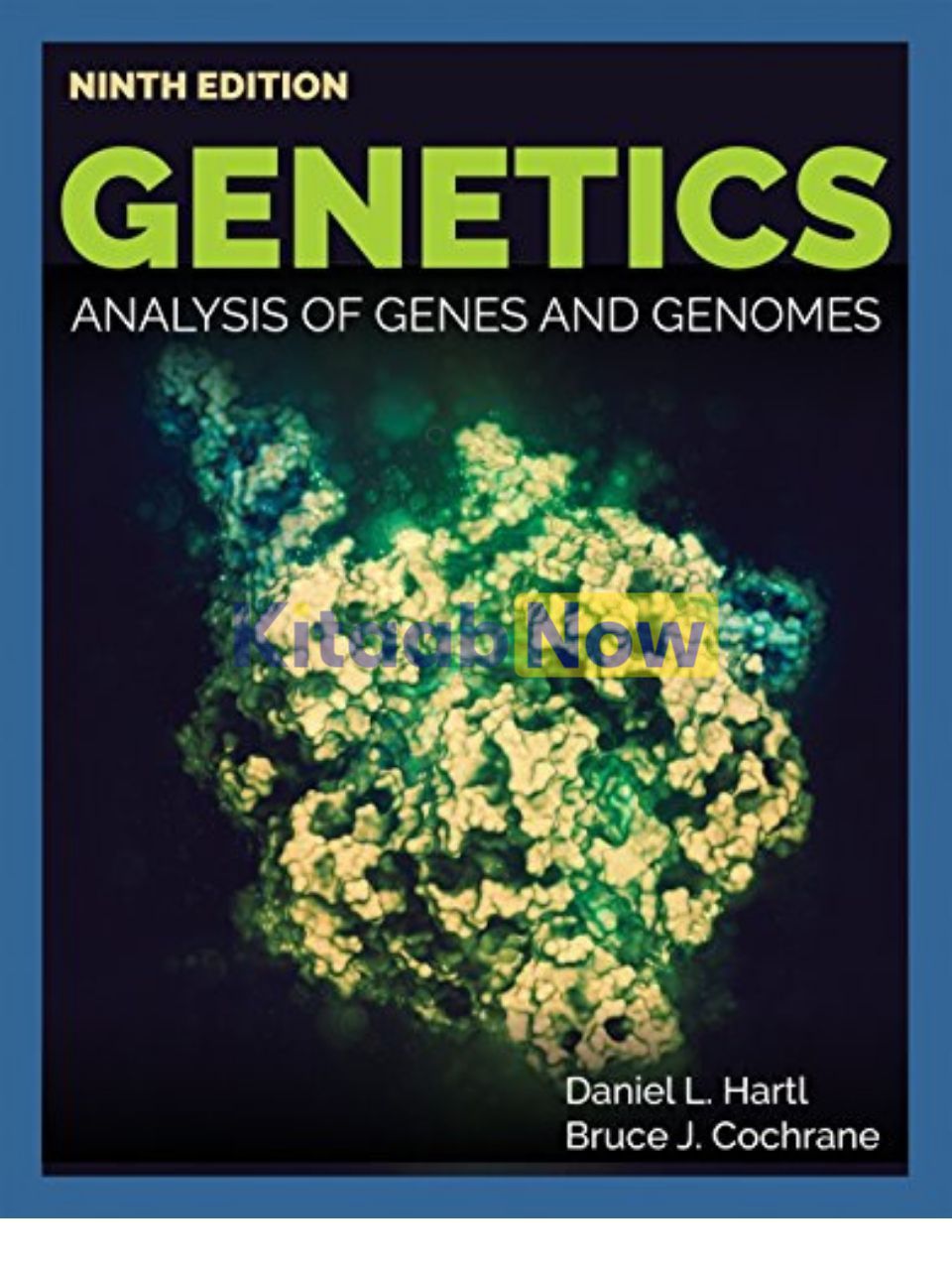
Genetics: Analysis of Genes and Genomes (9th Revised Edition)
- Authors: Daniel L. Hartl, Bruce Cochrane
- ISBN: 9781284122930
- Publisher: Jones and Bartlett Publishers
- Edition: 9th
- Publication Date: December 14, 2017
- Format: Hardback – 830 pages
- Language: English
Out of stock
Description
Genetics: Analysis of Genes and Genomes is a resource uniquely suited for learning and applying genetics to our world. Its DNA first presentation frames the discussion of genetics in modern terms, which provides the user the context to then understand its Mendelian history. Genetics continues to treat transmission genetics, molecular genetics, and evolutionary genetics as fully integrated subjects and provides students with an unprecedented understanding of the basic process of gene transmission, mutation, expression, and regulation. A new unit structure with self-contained chapters provides the flexibility to fit any course design, whether it be Mendel-early, Chromosome-early, or a Genome-first approach. The dynamism of genetics is also perfectly captured, as coverage of technological advances is woven together with ethical controversies.
Problem-solving is a core element to this experimental discipline, and the Ninth Edition is unparalleled in the tools it provides to unlock this fascinating subject. This rich resource allows students copious opportunities to practice and learn by using the clearly-presented mathematical concepts and exercises and chapter problems that encourage students to analyze and apply new skills.
Key Features
- New sections discuss Genome-Wide Association Scans, misconceptions about heritability, Illumina sequencing, Cancer Genomics, Wolbachia in arthropod species, molecular signals of selection, Regulatory RNAs in Development, and more
- New Cutting-Edge boxes highlight recent research and developments in the field, such as the use of CRISPR-Cas9 for gene repair in muscular dystrophy
- Roots of Discovery highlight seminal research papers in genetics
- Science Competencies help students identify key concepts and use them at a variety of learning levels including comprehension, application, analysis, and synthesis
- New stunning interior design featuring over 225 NEW and revised illustrations with descriptions that clarify difficult concepts, such as Chi-square Analysis, Pedigree Analysis, Epistasis, Molecular Biology Techniques, and Mutations on Gene Expression
- End-of-chapter questions and assessments reinforce major principles and encourage students to analyze and apply the newly learned concepts
- Animations that bring complex concepts to life
- Instructor Resources include a comprehensive Instructor’s Manual containing Chapter Summaries, Teaching Tips, and Homework & Project suggestions, Lecture Slides in PowerPoint format, an Image Bank with unlabeled versions of many illustrations for easy incorporation into course materials, a list of Web Links to useful and relevant web sites, a complete Test Bank, and Answer Keys.
- Each new print copy includes Navigate 2 Advantage Access that unlocks a comprehensive and interactive eBook with engaging animations, student practice activities and assessments, a full suite of instructor resources, and learning analytics reporting tools.
Table of Contents
- Unit I Defining and Working with GENES
- Chapter 1 Genes, Genomes and Genetic Analysis
- Chapter 2 DNA Structure and Genetic Variation
- Unit II Transmission Genetics
- Chapter 3 Transmission Genetics: The Principle of Segregation
- Chapter 4 The Chromosomal Basis of Inheritance
- Chapter 5 Genetic Linkage and Chromosome Mapping
- Chapter 6 Human Karyotypes and Chromosome Behavior
- Chapter 7 The Genetics of Complex Characters
- Chapter 8 Genetics of the Bacteria and their Viruses
- Unit III Organization and Replication of Chromosomes and DNA
- Chapter 9 Molecular Organization of Chromosomes and Genomes
- Chapter 10 DNA Replication and Sequencing
- Chapter 11 Mutation, Repair and Recombination
- Unit IV Gene Expression
- Chapter 12 Molecular Biology of Gene Expression
- Chapter 13 Molecular Mechanisms of Gene Regulation
- Chapter 14 Manipulating Genes and Genomes
- Chapter 15 Genetic Control of Development
- Chapter 16 The Genetics of Cancer
- Unit V Variation
- Chapter 17 Mitochondrial DNA and Extranuclear Inheritance
- Chapter 18 Genetics of Populations
- Chapter 19 Molecular and Human Evolutionary Genetics
Authors Biography
Daniel L. Hartl, PhD – Harvard University
Daniel L. Hartl is Higgins Professor of Biology at Harvard University, a Professor of Immunology and Infectious Diseases at the Harvard T. H. Chan School of Public Health, and a Senior Associate Member of the Broad Institute of M.I.T. and Harvard. He is a member of the National Academy of Sciences and the American Academy of Arts and Sciences. He received his B.S. degree and Ph.D. from the University of Wisconsin and carried out postdoctoral research at the University of California at Berkeley. His research interests include molecular genetics, genomics, molecular evolution, and population genetics
Bruce Cochrane, PhD – Miami University, Oxford, Ohio
Bruce Cochrane, PhD is a Professor of Biology at Miami University in Oxford, Ohio and has been an Associate Provost for Research and Scholarship also at Miami University. Prior he was a faculty member and administrator at the University of South Florida (USF) in Tampa, Florida. His professional background is in genetics, and as a faculty member he mentored over twenty masters and doctoral students. He was a member of the group that developed the ETD initiative at USF in 2000-2001. Dr. Cochrane received his bachelors degree in Biology from Cornell University and his Masters in Zoology and Ph. D. in Genetics from Indiana University.
Additional information
| Weight | 1.786 kg |
|---|
Only logged in customers who have purchased this product may leave a review.
Related Products




Reviews
There are no reviews yet.