
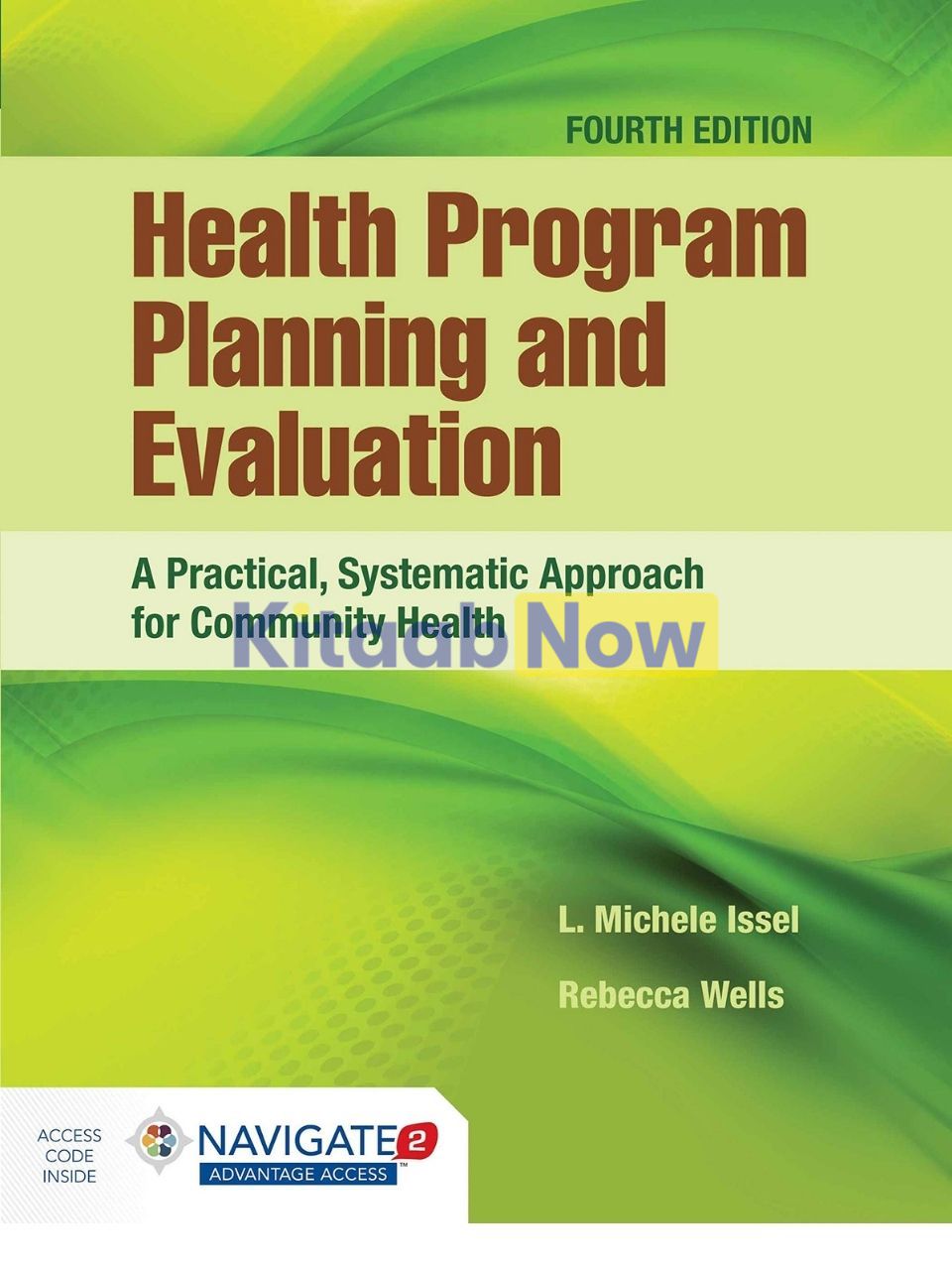
Health Program Planning And Evaluation (4th Edition)
- Authors: L. Michele Issel, Rebecca Wells
- ISBN: 9781284112115
- Publisher: Jones and Bartlett Publishers
- Edition: 4th
- Publication Date: August 17, 2017
- Format: Paperback – 428 pages
- Language: English
Description
Health Program Planning and Evaluation, Fourth Edition carefully walks the reader through the process for developing, implementing, and evaluating successful community health promotion programs. Featuring reader-friendly, accessible language and practical tools and concepts, this outstanding resource prepares students and professionals to become savvy consumers of evaluation reports and prudent users of evaluation consultants.
New to this Edition
- Introduction of the concept of root causes as social determinants.
- A comprehensive description of how each target setting option relates to the corresponding level of the health impact pyramid.
- More information on informatics and big data as related to program planning and monitoring
- A discussion of photos and video as modes of data collection.
- A reinforcement of informatics, photos and big data as useful in program evaluation
- Current terminology of first and second order coding of qualitative data.
Table of Contents
- Contents
- List of Figures
- List of Tables
- List of Exhibits
- Preface to the Fourth Edition
- Acknowledgments
- List of Acronyms
- Chapter 1 Context of Health Program Development and Evaluation
- History and Context
- Evaluation as a Profession
- Planning and Evaluation Cycle
- The Fuzzy Aspects of Planning
- Introduction to the Types of Evaluation
- The Public Health Pyramid
- The Town of Layetteville in Bowe County
- Across the Pyramid
- Discussion Questions
- Internet Resources
- References
- Chapter 2 Relevance of Diversity and Disparities to Health Programs
- Health Disparities
- Measurement
- Interventions
- Diversity Within Healthcare Organizations and Programs
- Stakeholders and Coalitions
- Across the Pyramid
- Discussion Questions
- Internet Resources
- References
- Chapter 3 Community Health Assessment for Program Planning
- Defining Community
- Types of Needs
- Types of Strengths
- Approaches to Planning
- Models for Planning Public Health Programs
- Perspectives on Assessment
- Types of Assessments
- Steps in Planning and Conducting the Assessment
- Anticipate Data-Related and Methodological Issues
- Across the Pyramid
- Discussion Questions
- Internet Resources
- References
- Chapter 4 Characterizing and Defining the Health Problem
- Collecting Data From Multiple Sources
- Collecting Descriptive Data
- Statistics for Describing Health Problems
- Stating the Health Problem
- Prioritizing Health Problems
- Across the Pyramid
- Discussion Questions and Activities
- Internet Resources
- References
- Chapter 5 Program Theory and Interventions Revealed
- Program Theory
- Interventions
- Path to Program Outcomes and Impacts
- Generating the Effect Theory
- Functions of Program Theory
- Across the Pyramid
- Discussion Questions and Activities
- Internet Resources
- References
- Chapter 6 Program Objectives and Setting Targets
- Program Goals and Objectives
- Using Data to Set Target Values
- Caveats to the Goal-Oriented Approach
- Across the Pyramid
- Discussion Questions and Activities
- Internet Resources
- References
- Chapter 7 Process Theory for Program Implementation
- Organizational Plan Inputs
- Organizational Plan Outputs
- Inputs to Service Utilization Plan
- Services Utilization Plan Outputs
- Alternative Plan Formats
- Across the Pyramid
- Discussion Questions and Activities
- Internet Resources
- References
- Chapter 8 Monitoring Implementation Through Budgets and Information Systems
- Budgets and Budgeting
- Budgeting as Part of Planning
- Budget as a Monitoring Tool
- Information Systems
- Across the Pyramid
- Discussion Questions and Activities
- Internet Resources
- References
- Chapter 9 Implementation Evaluation: Measuring Inputs and Outputs
- Assessing the Implementation
- Efficacy, Effectiveness, and Efficiency
- Data Collection Methods
- Quantifying Inputs to the Organizational Plan
- Quantifying Outputs of the Organizational Plan
- Quantifying Inputs to the Services Utilization Plan
- Quantifying Outputs of the Services Utilization Plan
- Across the Pyramid
- Discussion Questions and Activities
- Internet Resources
- References
- Chapter 10 Program Quality and Fidelity: Managerial and Contextual Considerations
- The Accountability Context
- Performance and Quality: Navigating the Interface
- Creating Change for Quality and Fidelity
- Formative Evaluations
- Across the Pyramid
- Discussion Questions
- Internet Resources
- References
- Chapter 11 Planning the Intervention Effect Evaluations
- Developing the Evaluation Questions
- Variables from the Program Effect Theory
- Measurement Considerations
- Threats to Data Quality
- Contextual Considerations in Planning the Evaluation
- Across the Pyramid
- Discussion Questions and Activities
- Internet Resources
- References
- Chapter 12 Choosing Designs for Effect Evaluations
- Evaluation Design Caveats
- Choosing the Evaluation Design
- Designs and Failures
- Across the Pyramid
- Discussion Questions
- Internet Resources
- References
- Chapter 13 Sampling Designs and Data Sources for Effect Evaluations
- Sampling Realities
- Sample Construction
- Sampling for Effect Evaluations
- Data Collection Methods
- Across the Pyramid
- Discussion Questions and Activities
- Internet Resources
- References
- Chapter 14 Quantitative Data Analysis and Interpretation
- Data Entry and Management
- Sample Description
- Thinking About Change
- Across Levels of Analysis
- Statistical Answers to the Questions
- Interpretation
- Across the Pyramid
- Discussion Questions and Activities
- Internet Resources
- References
- Chapter 15 Qualitative Methods for Planning and Evaluation
- Qualitative Methods Throughout the Planning and Evaluation Cycle
- Qualitative Methods
- Scientific Rigor
- Sampling for Qualitative Methods
- Analysis of Qualitative Data
- Presentation of Findings
- Across the Pyramid
- Discussion Questions and Activities
- Internet Resources
- References
- Chapter 16 Program Evaluators’ Responsibilities
- Ethical Responsibilities
- Responsible Spin of Data and Information
- Reporting Responsibly
- Responsible Contracts
- Responsible for Evaluation Quality
- Responsible for Dissemination
- Responsible for Current Practice
- Across the Pyramid
- Discussion Questions and Activities
- Internet Resources
- References
- Index
Author Biography
L. Michele Issel’s public health experience began as a public health nurse in California followed by directing Public Health Nursing in Jefferson County, Washington. She has consulted with federal, state, and city governments on performance measures, workforce readiness, and implementing evidence-based practice. She was Editor-in-Chief of Health Care Management Review for 15 years. She received her Master’s and PhD from the University of Washington School of Nursing, with a minor in health services research from the School of Public Health at University of Washington.
Rebecca Wells is Professor and Director, Center for Health Systems Research, Policy, and Practice at the University of Texas School of Public Health. Rebecca’s research and coaching focus on cooperation within and across safety net organizations. Her research has examined service integration in physical and behavioral health care, education, and social services. She has a master’s degree in health services administration and doctorate in health care policy from the University of Michigan.
Additional information
| Weight | 0.709 kg |
|---|
Only logged in customers who have purchased this product may leave a review.
Related Products






Reviews
There are no reviews yet.