
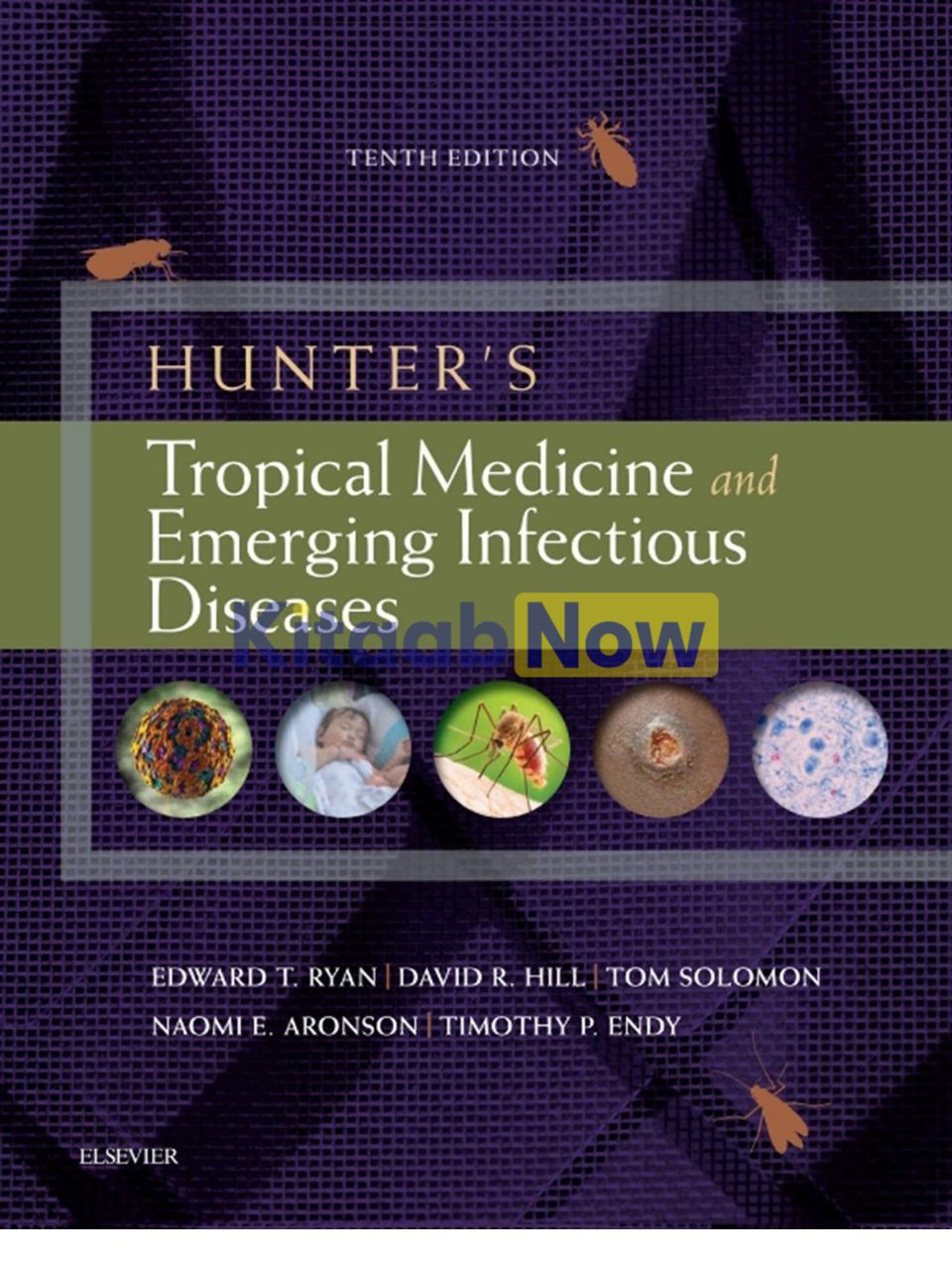
Hunter’s Tropical Medicine And Emerging Infectious Diseases (10th Edition)
- Authors: Edward Ryan ,David Hill , Tom Solomon , Naomi Aronson , Timothy Endy
- ISBN: 9780323555128
- Publisher: Elsevier Science Publishing
- Edition: 10th
- Publication Date: May 21, 2019
- Format: Hardback – 1264 pages
- Language: English
Description
New emerging diseases, new diagnostic modalities for resource-poor settings, new vaccine schedules . all significant, recent developments in the fast-changing field of tropical medicine. Hunter’s Tropical Medicine and Emerging Infectious Diseases, 10th Edition, keeps you up to date with everything from infectious diseases and environmental issues through poisoning and toxicology, animal injuries, and nutritional and micronutrient deficiencies that result from traveling to tropical or subtropical regions. This comprehensive resource provides authoritative clinical guidance, useful statistics, and chapters covering organs, skills, and services, as well as traditional pathogen-based content. You’ll get a full understanding of how to recognize and treat these unique health issues, no matter how widespread or difficult to control.
Key Features
- Includes important updates on malaria, leishmaniasis, tuberculosis and HIV, as well as coverage of Ebola, Zika virus, Chikungunya, and other emerging pathogens.
- Provides new vaccine schedules and information on implementation.
- Features five all-new chapters: Neglected Tropical Diseases: Public Health Control Programs and Mass Drug Administration; Health System and Health Care Delivery; Zika; Medical Entomology; and Vector Control – as well as 250 new images throughout.
- Presents the common characteristics and methods of transmission for each tropical disease, as well as the applicable diagnosis, treatment, control, and disease prevention techniques.
- Contains skills-based chapters such as dentistry, neonatal pediatrics and ICMI, and surgery in the tropics, and service-based chapters such as transfusion in resource-poor settings, microbiology, and imaging.
- Discusses maladies such as delusional parasitosis that are often seen in returning travelers, including those making international adoptions, transplant patients, medical tourists, and more.
- Enhanced eBook version included with purchase, which allows you to access all of the text, figures, and references from the book on a variety of devices.
Table of Contents
- Part 1 – CLINICAL PRACTICE IN THE TROPICS – all editors
- Section A: ORGAN-BASED CHAPTERS
- Tropical Lung Diseases
- Cardiovascular Diseases
- Gastrointestinal Diseases
- Hepatobiliary Diseases
- Hematologic Diseases
- Genitourinary Diseases
- Sexually Transmitted Infections
- Tropical Dermatology
- Ophthalmological Diseases
- Neurologic Diseases
- Psychiatric Diseases
- ENT
- Diseases of the Musculoskeletal System
- Section B: SKILLS-BASED CHAPTERS
- General Surgery in the Tropics
- Oral Health and Disease in the Tropics
- Maternal and Newborn Health
- Pediatrics in a Resource-constrained Setting
- Section C: SERVICE-BASED CHAPTERS
- Diagnostic Imaging in the Tropics
- Blood Transfusion in Resource-limited Settings
- Infection Control in the Tropics
- Microbiology
- Section D: TOPIC-BASED CHAPTERS
- Approach to the Patient with Diarrhea
- Cancer in the Tropics
- Heat-associated Illness
- Traditional Medicine
- Environmental Health Hazards in the Tropics
- Neglected Tropical Diseases: Public Health Control Programs and Mass Drug Administration
- Health Systems and Health Care Delivery
- The Health Care Response to Disasters, Complex Emergencies, and Population Displacement
- Section A: ORGAN-BASED CHAPTERS
- Part 2: Viral Diseases
- Introduction and General Principles
- Human Immunodeficiency Virus Infection
- HIV, Tuberculosis, Malaria and Streptococcus pneumoniae
- Viral Infections with Cutaneous Lesions
- Measles
- Poxviruses
- Nonpolio Enterovirus Mucocutaneous Infections
- Kaposi’s Sarcoma-associated Herpesvirus
- Viral Respiratory Infections
- Viral Gastroenteritis
- Rotavirus
- Norovirus
- Enteric Adenoviruses
- Astroviruses
- Sapovirus
- Viral Hepatitis (Hep A, B, C, D, E and Non A to E)
- Viral Febrile Illnesses and Emerging Pathogens
- Dengue and Dengue Hemorrhagic Fever
- Chikungunya Fever
- Zika
- O’nyong Nyong Fever
- Ross River Virus Disease
- Oropouche Virus
- Mayaro Virus
- Pathogenic Phleboviruses (old: Sandfly Fever)
- Sindbis Fever
- . Viral Hemorrhagic Fevers – INTRODUCTION
- Yellow Fever
- Lassa Fever
- South American Hemorrhagic Fevers
- Ebola and Marburg Virus Infections
- Crimean-Congo Hemorrhagic Fever
- Diseases Caused by Hantaviruses
- Rift Valley Fever
- . Viral CNS Infections
- Rabies & Related Viruses
- Enterovirus Infections That Cause Central Nervous System Disease (including Poliomyelitis)
- Venezuelan, Eastern and Western Equine Encephalitis
- Japanese Encephalitis
- West Nile Virus
- Saint Louis Encephalitis and Rocio Encephalitis
- Other Arboviral Encephalitides
- Prion Disease
- Human T-Lymphotropic Virus Type I and II Infection
- PART 3: BACTERIAL INFECTIONS
- Section A: Infections of the Eye and Throat
- Trachoma and Inclusion Conjunctivitis
- Group A Strepto coccus
- Diphtheria
- Section A: Infections of the Eye and Throat
- Section B: Respiratory Tract Infections
- Bacterial Pneumonia
- Tuberculosis
- Pertussis
- Section C: Gastrointestinal Tract Infections
- Helicobacter pylori Infection
- Escherichia coli Diarrhea
- Cholera and Other Vibrios
- Shigellosis
- Nontyphoid Salmonella Disease
- Campylobacter Infections
- Miscellaneous Bacterial Enteritides
- Yersinia Enterocolitica
- Clostridium Infections
- Aeromonas
- Section D: Sexually Transmitted Diseases
- Chlamydial Infections
- Lymphogranuloma Venereum
- Gonorrhea
- Chancroid
- Granuloma Inguinale
- Syphilis and the Endemic Treponematoses
- Section E: Infections Causing Neurologic Manisfestations
- Acute Bacterial Meningitis
- Tetanus
- Botulism
- Section F: Infections of Skin and Soft Tissues
- Bacterial skin and soft tissue infections in the Tropics
- Leprosy
- Buruli Ulcer
- Mycobacterium marinum Infection
- Anthrax
- Section G: Febrile Systemic Syndromes with or without Lymphadenopathy
- Epidemic Louse-borne Typhus
- Murine Typhus
- Scrub Typhus
- Tick-borne Spotted Fever Rickettsioses
- Rickettsialpox
- Q Fever
- Trench Fever
- Bartonellosis : Carrion’s Disease and other Bartonella Infections
- Typhoid and Paratyphoid (Enteric) Fever
- Brucellosis
- Melioidosis and Glanders
- Plague
- Tularemia
- Leptospirosis
- Relapsing Fever and Borrelioses
- Part 4 – The Mycoses
- General Principles
- Superficial Mycoses
- Subcutaneous Mycoses : General Principles
- Protothecosis
- Histoplasmosis
- Coccidioidomycosis
- Blastomycosis
- Paracoccidioidomycosis
- Cryptococcosis
- Penicilliosis Marneffei
- Pneumocystis Pneumonia
- Treatment of Systemic Mycoses
- Part 5 – Protozoal Infections
- General Principle
- Section A: Intestinal and Genital Infections
- Entamoeba histolytica (Amebiasis)
- Giardiasis
- Cryptosporidiosis
- Cyclosporiasis
- Cystoisospora belli (syn. Isospora belli )
- Miscellaneous Intestinal Protozoa
- Trichomoniasis
- Section B: Infections of the Blood and Reticuloendothelial System
- Malaria
- African Trypanosomiasis
- American Trypanosomiasis (Chagas disease)
- Leishmaniasis
- Babesiosis
- Section C: Tissue Infection
- Toxoplasmosis
- Pathogenic and Opportunistic Free-living Ameba Infections
- Sarcocystosis
- Microsporidiosis
- Part 6 – Helminthic Infections
- General Principles
- Section A: Intestinal Nematode Infections
- Nematodes Limited to the Intestinal Tract ( Enterobius vermicularis , Trichuris trichiura , Capillaria philippinensis and Trichostrongylus spp.)
- Intestinal Nematodes: Ascariasis
- Hookworm and Strongyloides Infections
- Section B: Filarial Infections
- Lymphatic Filariasis
- Loiasis
- Onchocerciasis
- Miscellaneous Filariae
- Section C: Other Tissue Nematode Infections
- Dracunculiasis
- Trichinellosis
- Toxocariasis
- Gnathostomiasis
- Eosinophilic Meningitis ( Angiostrongylus cantonensis , Parastrongylus cantonensis )
- Abdominal Angiostrongyliasis
- Cutaneous Larva Migrans
- Anisakidosis
- Section D: Trematodes Infections
- Schistosomiasis
- Intestinal Fluke Infections
- Liver Fluke Infections
- Paragonimiasis
- Section E: Cestode Infections
- Tapeworm Infections
- Larval Cestode Infections (Cysticercosis)
- Cystic Echinococcosis
- Alveolar Echinococcosis (Alveolar Hydatid Disease)
- Polycystic Echinococcosis (Polycystic Neotropical Disease)
- Sparganosis
- Coenuriasis
- Part 7 – Poisonous and Toxic Plants and Animals
- Animals hazardous to humans: Venomous Bites, Stings and Envenoming
- Injurious Arthropods
- Poisonous Plants and Aquatic Animals
- PENTASTOMIASIS
- BATS
- Part 8 – Nutritional Problems and Deficiency Diseases
- General Principles
- Protein-energy Malnutrition in Children
- Vitamin Deficiencies
- Mineral Deficiencies
- Part 9 – Vector Transmission of Diseases and Zoonoses
- Section A: Medical Entomology
- Introduction medical Entomology
- Section B: Diseases associated with Vectors (Arthropods in Disease Transmission)
- Diseases associated with Vectors (Arthropods in Disease Transmission)
- Section C: Vector Control
- Vector Control
- Section A: Medical Entomology
- Part 10 – The sick returning traveller
- General Principles
- Fever in the Returned Traveler
- Malaria in the Returned Traveler
- Screening of the Asymptomatic Long-term Traveler
- Persistent Diarrhea in the Returned Traveler
- Skin Lesions in Returning Travelers
- Eosinophilia in Migrants and Returned Travelers: A Practical Approach
- Immigrant Medicine
- International Adoption
- Medical Tourism
- Transplant Patients and Tropical Diseases
- Delusional Parasitosis
- Part 11 – Laboratory Diagnosis of Parasitic
- General Principles
- Preparation of Samples for Morphologic Diagnosis of Parasites in Stool and Urine Specimens
- Examination of Blood, Other Body Fluids, Tissues, and Sputum
- Part 12: Drugs used in Tropical Medicine
- Albendazole
- Artemisinin
- Benznidazole
- Dapsone
- DEC
- Eflornithine
- Ivermectin
- Mebendazole
- Miltefosine
- Nifurtimox
- Nitazoxanide
- Pentamidine
- Pentavalent Antimony
- Praziquantel
Author Biography
Edward T Ryan, Director, Tropical & Geographic Medicine Center, Massachusetts General Hospital; Associate Professor of Medicine, Harvard Medical School
David R Hill, MD DTM&H FRCP FFTM FASTM, Professor of Medical Sciences, Director of Global Public Health, Frank H. Netter MD, School of Medicine, Quinnipiac University, Hamden, CT, USA
Tom Solomon; Timothy P Endy, Chief Infectious Disease,Division of Infectious Disease, Department of Medicine,State University of New York, Upstate Medical University,Syracuse,NY
Naomi Aronson , Director, Infectious Diseases Division Medicine,Uniformed Services University of the Health Sciences,Bethesda,MD
Additional information
| Weight | 3601.52 kg |
|---|
Only logged in customers who have purchased this product may leave a review.
Related Products



Reviews
There are no reviews yet.