
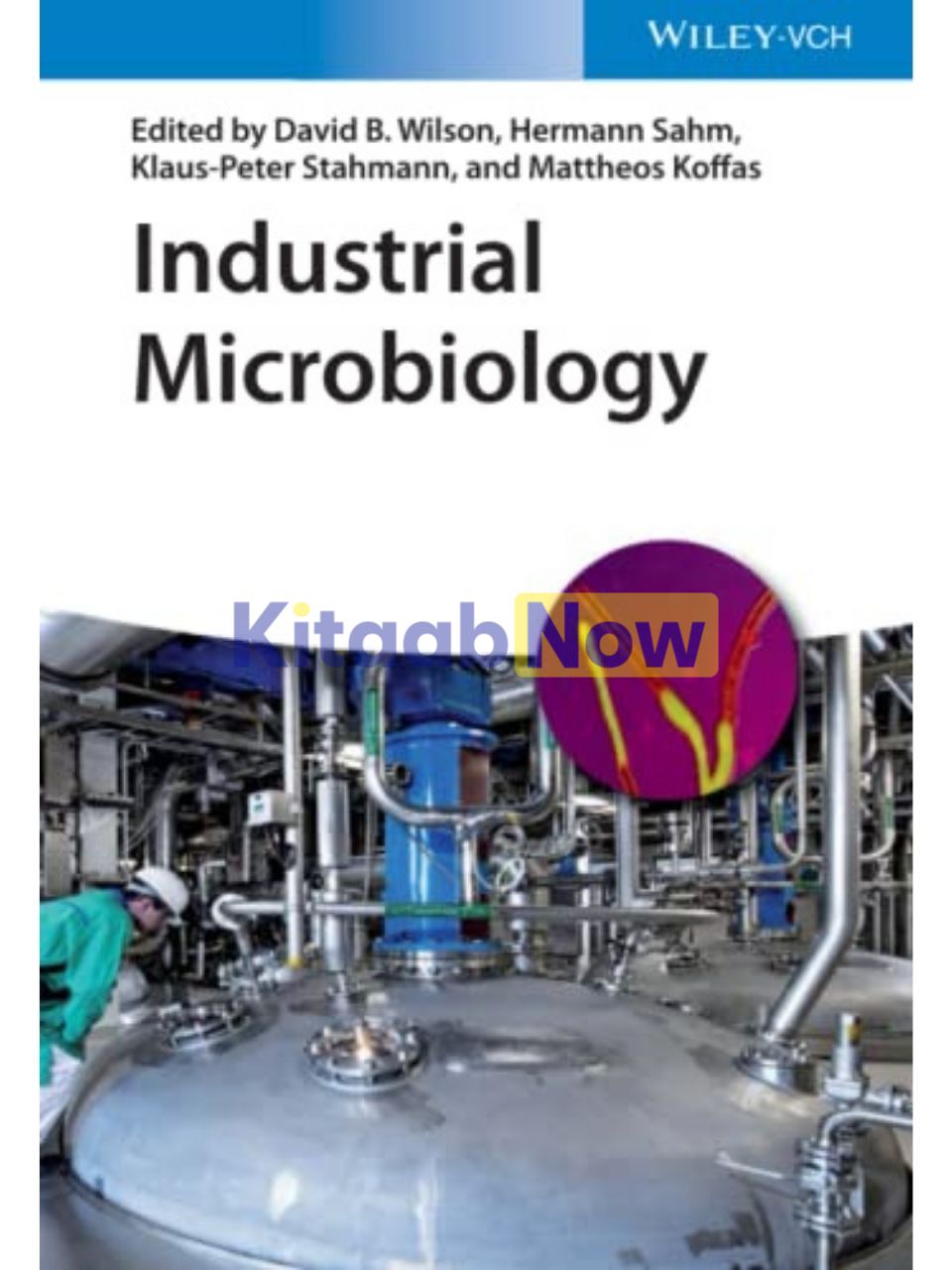
Industrial Microbiology
- Edited by: David B. Wilson, Hermann Sahm, Klaus-Peter Stahmann, Mattheos Koffas
- ISBN: 9783527340354
- Publisher: Wiley Publishing
- Publication Date: March 09, 2020
- Format: Paperback – 424 pages
- Language: English
Out of stock
Description
Focusing on current and future uses of microbes as production organisms, this practice-oriented textbook complements traditional texts on microbiology and biotechnology.
The editors have brought together leading researchers and professionals from the entire field of industrial microbiology and together they adopt a modern approach to a well-known subject. Following a brief introduction to the technology of microbial processes, the twelve most important application areas for microbial technology are described, from crude bulk chemicals to such highly refined biomolecules as enzymes and antibodies, to the use of microbes in the leaching of minerals and for the treatment of municipal and industrial waste. In line with their application-oriented topic, the authors focus on the “translation” of basic research into industrial processes and cite numerous successful examples. The result is a first-hand account of the state of the industry and the future potential for microbes in industrial processes.
Interested students of biotechnology, bioengineering, microbiology and related disciplines will find this a highly useful and much consulted companion, while instructors can use the case studies and examples to add value to their teaching.
Table of Contents
- Preface xvii
- Historical Overview and Future Perspective 1
Bernhard Eikmanns, Marcella Eikmanns, and Christopher J. Paddon - Use of Fermentation Procedures Before the Discovery of Microorganisms (Neolithic Era = New Stone Age Until 1850) 1
- Investigation of Microorganisms and Beginning of Industrial Microbiology (1850 Until 1940) 7
- Development of New Products and Procedures: Antibiotics and Other Biomolecules (From 1940) 11
- Genetic Engineering is Introduced into Industrial Microbiology (From Roughly 1980) 15
- Future Perspectives: Synthetic Microbiology 18
- References 20
- Further Reading 21
- 2 Bioprocess Engineering 23
Michael R. Ladisch, Eduardo Ximenes, Nathan Mosier, Abigail S. Engelberth, Kevin Solomon, and Robert Binkley - Introduction 23
- Role of Bioreactors 25
- Basic Bioreactor Configurations 26
- Types of Growth Media 27
- Nonstructured Models 28
- Nonstructured Growth Models 28
- Unstructured Models 29
- Biotechnical Processes 30
- Modeling Fermentations 32
- Metabolic Pathways 39
- Manipulation of Metabolic Pathways 40
- Future of Pathway Design 42
- Oxygen Transport 43
- Aerobic versus Anaerobic Conditions 43
- kLa – Volumetric Mass Transfer Coefficient 44
- Heat Generating Aerobic Processes 46
- Product Recovery 49
- Basics 49
- In Situ Product Recovery (ISPR) 49
- Modeling and Simulation of Reactor Behavior 51
- Basic Approaches and Software 51
- Numerical Simulation of Bioreactor Function 51
- Contamination of Bioreactors 52
- Scale-up 53
- References 54
- Further Reading 57
- Food 59
Gülhan Ünlü and Barbara Nielsen - Fermented Foods 59
- Food Preservation 59
- Flavor and Texture 60
- Health Benefits 60
- Economic Impact 62
- Microorganisms and Metabolism 62
- Fermentation Processes 64
- Starter Cultures 65
- Yeast Fermentations – Industrial Application of Saccharomyces Species 65
- Grain Fermentation for Ethanol Production – Beer 66
- Grain Fermentation for CO2 Production – Bread 69
- Yeast Preparation 69
- Fruit Fermentation –Wines and Ciders 71
- Vinegar – Incomplete Ethanol Oxidation by Acetic Acid Bacteria Such as Gluconobacter oxydans 75
- Substrates: Wine, Cider, and Malt 75
- Distilled (White) Vinegar 77
- Balsamic and Other Specialty Vinegars 77
- Bacterial and Mixed Fermentations – Industrial Application of Lactic Acid Bacteria, with or without Yeast or Molds 78
- Milk – Cultured Milks – Buttermilk, Yogurt, Kefir, and Cheese 78
- Bacteriophage Contamination – Death of a Culture 81
- Meats – Sausages, Fish Sauces, and Pastes 82
- Vegetables – Sauerkrauts and Pickles, Olives 83
- Grains and Legumes – Soy Sauce, Miso, Natto, and Tempeh 86
- Cocoa and Coffee 87
- Fungi as Food 88
- Mushrooms 88
- Single-Cell Protein – Fusarium venenatum 90
- Conclusions and Outlook 91
- References 92
- Further Reading 92
- Technical Alcohols and Ketones 95
Peter Dürre - Introduction 95
- Ethanol Synthesis by Saccharomyces cerevisiae and Clostridium autoethanogenum 97
- Application 97
- Metabolic Pathways and Regulation 97
- Production Strains 98
- Production Processes 98
- Ethanol – Fuel of the Future? 100
- Alternative Substrates for Ethanol Fermentation by Cellulolytic Bacteria and Clostridium autoethanogenum 100
- Propanediol Synthesis by Escherichia coli 101
- Application 101
- Metabolic Pathways and Regulation 102
- Production Strains 102
- Production Processes 104
- Butanol and Isobutanol Synthesis by Clostridia and Yeast 105
- History of Acetone–Butanol–Ethanol (ABE) Fermentation by Clostridium acetobutylicum and C. beijerinckii 105
- Application 106
- Metabolic Pathways and Regulation 107
- Production Strains 110
- Production Processes 110
- Product Toxicity 113
- Acetone Synthesis by Solventogenic Clostridia 113
- Application 113
- Metabolic Pathways and Regulation 113
- Production Strains 114
- Production Processes 114
- Outlook 115
- Further Reading 115
- Organic Acids 117
Michael Sauer and Diethard Mattanovich - Introduction 117
- Citric Acid 119
- Economic Impact and Applications 120
- Biochemistry of Citric Acid Accumulation 120
- Industrial Production by the Filamentous Fungus Aspergillus niger 122
- Yarrowia lipolytica: A Yeast as an Alternative Production Platform 123
- Lactic Acid 124
- Economic Impact and Applications 124
- Anaerobic Bacterial Metabolism Generating Lactic Acid 125
- Lactic Acid Production by Bacteria 125
- Lactic Acid Production by Yeasts 126
- Gluconic Acid 127
- Economic Impact and Applications 127
- Extracellular Biotransformation of Glucose to Gluconic Acid by Aspergillus niger 128
- Production of Gluconic Acid by Bacteria 129
- Succinic Acid 129
- Economic Impact and Applications 130
- Pilot Plants for Anaerobic or Aerobic Microbes 130
- Itaconic Acid 132
- Economic Impact and Applications 132
- Decarboxylation as a Driver in Itaconic Acid Accumulation 132
- Production Process by Aspergillus terreus 132
- Metabolic Engineering for Itaconic Acid Production 132
- Downstream Options for Organic Acids 134
- Perspectives 135
- Targeting Acrylic Acid – Microbes Can Replace Chemical Process Engineering 136
- Lignocellulose-Based Biorefineries 136
- Further Reading 137
- Amino Acids 139
Lothar Eggeling - Introduction 139
- Importance and Areas of Application 139
- Amino Acids in the Feed Industry 140
- Economic Significance 141
- Production of Amino Acids 142
- Conventional Development of Production Strains 142
- Advanced Development of Production Strains 144
- Glutamate Synthesis by Corynebacterium glutamicum 145
- Synthesis Pathway and Regulation 145
- Production Process 148
- Lysine 148
- Synthesis Pathway and Regulation 148
- Production Strains 150
- Production Process 152
- Threonine Synthesis by Escherichia coli 153
- Synthesis Pathway and Regulation 153
- Production Strains 154
- Production Process 155
- Phenylalanine 155
- Synthesis Pathway and Regulation 155
- Production Strains 156
- Production Process 157
- Outlook 158
- Further Reading 159
- Vitamins, Nucleotides, and Carotenoids 161
Klaus-Peter Stahmann and Hans-Peter Hohmann - Application and Economic Impact 161
- lAscorbic Acid (Vitamin C) 163
- Biochemical Significance, Application, and Biosynthesis 163
- Regioselective Oxidation with Bacteria in the Production Process 164
- Riboflavin (Vitamin B2) 166
- Significance as a Precursor for Coenzymes and as a Pigment 166
- Biosynthesis by Fungi and Bacteria 167
- Production by Ashbya gossypii 168
- Production by Bacillus subtilis 171
- Downstream Processing and Environmental Compatibility 173
- Cobalamin (Vitamin B12) 174
- Physiological Relevance 174
- Biosynthesis 176
- Production with Pseudomonas denitrificans 176
- Purine Nucleotides 178
- Impact as Flavor Enhancer 178
- Development of Production Strains 178
- Production of Inosine or Guanosine with Subsequent Phosphorylation 179
- β-Carotene 180
- Physiological Impact and Application 180
- Production with Blakeslea trispora 181
- Perspectives 181
- Further Reading 183
- Antibiotics and Pharmacologically Active Compounds 185
Lei Fang, Guojian Zhang, and Blaine A. Pfeifer - Microbial Substances Active Against Infectious Disease Agents or Affecting Human Cells 185
- Distribution and Impacts 185
- Diversity of Antibiotics Produced by Bacteria and Fungi 189
- β-Lactams 190
- History, Effect, and Application 190
- β-Lactam Biosynthesis 190
- Penicillin Production by Penicillium chrysogenum 193
- Cephalosporin Production by Acremonium chrysogenum 193
- Lipopeptides 193
- History, Effect, and Application 193
- Lipopeptide Biosynthesis 194
- Daptomycin Production by Streptomyces roseosporus 194
- Cyclosporine Production by Tolypocladium inflatum 194
- Macrolides 197
- History, Effect, and Application 197
- Macrolide Biosynthesis 197
- Erythromycin Production by Saccharopolyspora erythraea 197
- Tetracyclines 200
- History, Effect, and Application 200
- Tetracycline Biosynthesis 200
- Tetracycline Production by Streptomyces rimosus 201
- Aminoglycosides 201
- History, Effect, and Application 201
- Aminoglycoside Biosynthesis 201
- Tobramycin Production by Streptomyces tenebrarius 203
- Claviceps Alkaloids 203
- History, Effect, and Application 203
- Alkaloid Biosynthesis 203
- Ergotamine Production by Claviceps purpurea 203
- Perspectives 203
- Antibiotic Resistance 203
- New Research Model for Compound Identification 206
- Future Opportunities 207
- Further Reading 211
- Pharmaceutical Proteins 213
Heinrich Decker, Susanne Dilsen, and Jan Weber - History, Main Areas of Application, and Economic Importance 213
- Industrial Expression Systems, Cultivation and Protein Isolation, and Legal Framework 215
- Development of Production Strains 215
- Isolation of Pharmaceutical Proteins 221
- Regulatory Requirements for the Production of Pharmaceutical Proteins 222
- Insulins 223
- Application and Structures 223
- Manufacturing Processes by Escherichia coli and Saccharomyces cerevisiae 225
- Production of a Fusion Protein in E. coli 226
- Production of a Precursor Protein, the So-Called Mini Proinsulin with the Host Strain S. cerevisiae 228
- Somatropin 230
- Application 230
- Manufacturing Process 231
- Interferons – Application and Manufacturing 232Human Granulocyte Colony-Stimulating Factor 234
- Application 234
- Manufacturing Process 235
- Vaccines 235
- Application 235
- Manufacturing Procedure Using the Example of GardasilTM 236
- Manufacturing Process Based on the Example of a Hepatitis B Vaccine 237
- Antibody Fragments 238
- Enzymes 239
- Peptides 240
- View – Future Economic Importance 240
- Further Reading 242
- Enzymes 243
David B.Wilson, Maxim Kostylev, Karl-Heinz Maurer, Marina Schramm, Wolfgang Kronemeyer, and Klaus-Peter Stahmann - Fields of Application and Economic Impacts 243
- Enzymes are Biocatalysts 243
- Advantages and Limitations of Using Enzymatic Versus Chemical Methods 244
- Brief History of Enzyme Used for the Industrial Production of Valuable Products 245
- Diverse Ways That Enzymes are Used in Industry 246
- Enzyme Discovery and Improvement 250
- Screening for New Enzymes and Optimization of Enzymes by Protein Engineering 250
- Classical Development of Production Strains 251
- Genetic Engineering of Producer Strains 253
- Production Process for Bacterial or Fungal Enzymes 255
- Polysaccharide-Hydrolyzing Enzymes 255
- Starch-Cleaving Enzymes Produced by Bacillus and Aspergillus Species 257
- Cellulose-Cleaving Enzymes: A Domain of Trichoderma reesei 259
- Production Strains 261
- Enzymes Used as Cleaning Agents 263
- Subtilisin-Like Protease 264
- Bacillus sp. Production Strains and Production Process 265
- Feed Supplements – Phytases 266
- Fields of Applications of Phytase 267
- Phytase in the Animals Intestine 267
- Production of a Bacterial Phytase in Aspergillus niger 269
- Enzymes for Chemical and Pharmaceutical Industry 271
- Examples for Enzymatic Chemical Production 271
- Production of (S)-Profens by Fungal Lipase 271
- Enzymes as Highly Selective Tools for Research and Diagnostics 272
- Microbial Enzymes for Analysis and Engineering of Nucleic Acids 272
- Specific Enzymes for Quantitative Metabolite Assays 275
- Perspectives 276
- l-DOPA by Tyrosine Phenol Lyase 276
- Activation of Alkanes 276
- Enzyme Cascades 276
- References 277
- Further Reading 277
- Microbial Polysaccharides 279
Volker Sieber, Jochen Schmid, and Gerd Hublik - Introduction 279
- Heteropolysaccharides 282
- Xanthan: A Product of the Bacterium Xanthomonas campestris 282
- Introduction 282
- Regulatory Status 282
- Structure 282
- Biosynthesis 284
- Industrial Production of Xanthan 286
- Physicochemical Properties 287
- Applications 289
- Sphingans: Polysaccharides from Sphingomonas sp. 291
- Hyaluronic Acid: A High-Value Polysaccharide for Cosmetic Applications 293
- Alginate: Alternatives to Plant-Based Products by Pseudomonas and Azotobacter sp. 294
- Succinoglycan: Acidic Polysaccharide from Rhizobium sp. 294
- Homopolysaccharides 295
- α-Glucans 296
- Pullulan 296
- Dextran 296
- β-Glucans 297
- Linear β-glucans like cellulose and curdlan 297
- Branched β-Glucans Like Scleroglucan and Schizophyllan 297
- Fructosylpolymers like Levan 298
- Perspectives 298
- Further Reading 299
- Steroids 301
Shuvendu Das and Sridhar Gopishetty - Fields of Applications and Economic Importance 301
- Advantages of Biotransformations During Production of Steroids 303
- Development of Production Strains and Production Processes 305
- Applied Types of Biotransformation 307
- Synthesis of Steroids in Organic – Aqueous Biphasic System 310
- Side-chain Degradation of Phytosterols by Mycobacterium to Gain Steroid Intermediates 311
- Biotransformation of Cholesterol to Gain Key Steroid Intermediates 313
- 11-Hydroxylation by Fungi During Synthesis of Corticosteroids 313
- Δ1-Dehydrogenation by Arthrobacter for the Production of Prednisolone 316
- 17-Keto Reduction by Saccharomyces in Testosterone Production 317
- Double-Bond Isomerization of Steroids 318
- Perspectives 319
- References 320
- Further Reading 321
- Bioleaching 323
Sören Bellenberg, Mario Vera Véliz, and Wolfgang Sand - Acidophilic Microorganisms Dissolve Metals from Sulfide Ores 323
- Brief Overview on the Diversity of Acidophilic Mineral-Oxidizing Microorganisms 325
- Natural and Man-Made Habitats of Mineral-oxidizing Microorganisms 325
- Biological Catalysis of Metal Sulfide Oxidation 328
- Importance of Biofilm Formation and Extracellular Polymeric Substances for Bioleaching by Acidithiobacillus ferrooxidans and Leptospirillum ferrooxidans 330
- Bioleaching of Copper, Nickel, Zinc, and Cobalt 334
- Economic Impact 334
- Heap, Dump, or Stirred-tank Bioleaching of Copper, Nickel, Zinc, and Cobalt 337
- Gold 342
- Economic Impact 343
- Unlocking Gold by Biooxidation of the Mineral Matrix 343
- Uranium 346
- Economic Impact 346
- In Situ Biomining of Uranium 346
- Perspectives 347
- Urban Mining – Processing of Electronic Waste and Industrial Residues 347
- Microbial Iron Reduction for Dissolution of Mineral Oxides 348
- Biomining Goes Underground – In Situ Leaching as a Green Mining Technology? 348
- References 351
- Further Reading 351
- Wastewater Treatment Processes 353
Claudia Gallert and Josef Winter - Introduction 354
- Historical Development of Sewage Treatment 354
- Resources from Wastewater Treatment 357
- Wastewater and Storm Water Drainage 358
- Wastewater Characterization and Processes for Effective Wastewater Treatment 358
- Suspended or Immobilized Bacteria as Biocatalysts for Effective Sewage Treatment 360
- Biological Basics of Carbon, Nitrogen, and Phosphorus Removal from Sewage 362
- Aerobic and Anaerobic Degradation of Carbon Compounds 362
- Mass and Energy Balance 366
- Fundamentals of Nitrification 368
- Elimination of Nitrate by Denitrification 371
- New Nitrogen Elimination Processes 371
- Microbial Phosphate Elimination 372
- Wastewater Treatment Processes 374
- Typical Process Sequence in Municipal Sewage Treatment Plants 374
- Activated Sludge Process 376
- Trickling Filters 378
- Technical Options for Denitrification 379
- Biological Phosphate Elimination 381
- Sewage Sludge Treatment 382
- Aerobic and Anaerobic Sewage Sludge Treatment 382
- Sanitation and Quality Assurance of Sewage Sludge 384
- Advanced Wastewater Treatment 384
- Elimination of Micropollutants 385
- Wastewater Disinfection 385
- uture Perspectives 386
- References 386
- Further Reading 388
- Index 389
Authors Biography
David Wilson, PhD, was a Professor of Biochemistry, Molecular and Cell Biology at Cornell University in Ithaca (USA).
Hermann Sahm, PhD, is Emeritus Professor of Biotechnology at the University of Düsseldorf (Germany).
Peter Stahmann, PhD, is Professor for Technical Microbiology at Brandenburg University of Technology Cottbus-Senftenberg in Senftenberg (Germany).
Mattheos Koffas, PhD, is Professor of Biology at Rensselaer Polytechnic Institute in Troy (USA).
Additional information
| Weight | 0.810 kg |
|---|
Only logged in customers who have purchased this product may leave a review.
Related Products


Reviews
There are no reviews yet.