
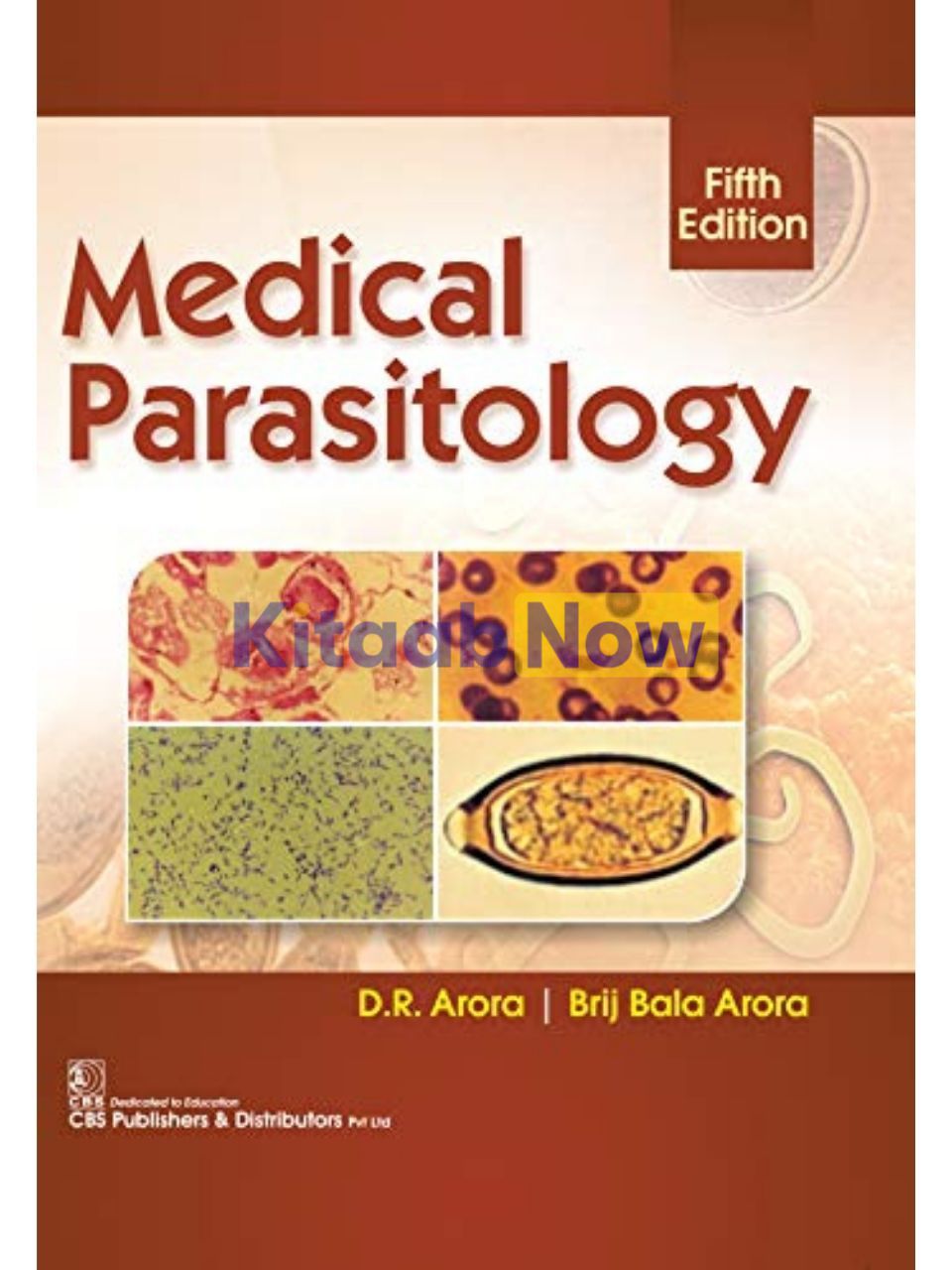
Medical Parasitology (5th Revised Edition)
- Author: D.R. Arora
- ISBN: 9789386827555
- Publisher: CBS Publishers & Distributors
- Edition: 5th
- Publication Date: March 30, 2018
- Format: Paperback – 296 pages
- Language: English
Out of stock
Description
Focusing on current and future uses of microbes as production organisms, this practice-oriented textbook complements traditional texts on microbiology and biotechnology.
The editors have brought together leading researchers and professionals from the entire field of industrial microbiology and together they adopt a modern approach to a well-known subject. Following a brief introduction to the technology of microbial processes, the twelve most important application areas for microbial technology are described, from crude bulk chemicals to such highly refined biomolecules as enzymes and antibodies, to the use of microbes in the leaching of minerals and for the treatment of municipal and industrial waste. In line with their application-oriented topic, the authors focus on the “translation” of basic research into industrial processes and cite numerous successful examples. The result is a first-hand account of the state of the industry and the future potential for microbes in industrial processes.
Interested students of biotechnology, bioengineering, microbiology and related disciplines will find this a highly useful and much consulted companion, while instructors can use the case studies and examples to add value to their teaching.
Key Features
- All chapters have been thoroughly revised, without making it bulky
- Classification of parasites and treatment of parasitic infections have been updated
- New Multiple Choice Questions (MCQs) have been added
- New parasitic figures have been added
- Clear, colored and uncomplicated diagrams are given throughout the text
- Pictures of gross and histopathological sections are also given
- Includes well-illustrated life cycles and pathologic lesions
- Chapter- overview of Parasitology at the end serves
- Ready reckoner to revise medical parasitology
- Basis to identify the weak topics in understanding the subject
- Diagrammatic representation of relative sizes and morphology of protozoa and helmentic eggs at the end provides good visual impact for subject understanding
Table of Contents
- Preface
- Historical Overview and Future Perspective
- Use of Fermentation Procedures Before the Discovery of Microorganisms (Neolithic Era = New Stone Age Until 1850)
- Investigation of Microorganisms and Beginning of Industrial Microbiology (1850 Until 1940)
- Development of New Products and Procedures: Antibiotics and Other Biomolecules (From 1940)
- Genetic Engineering Is Introduced into Industrial Microbiology (From Roughly 1980)
- Future Perspectives: Synthetic Microbiology
- References
- Further Reading
- Bioprocess Engineering
- Introduction
- Nonstructured Models
- Oxygen Transport
- Heat Generating Aerobic Processes
- Product Recovery
- Modeling and Simulation of Reactor Behavior
- Scale‐up
- References
- Further Reading
- Food
- Fermented Foods
- Microorganisms and Metabolism
- Yeast Fermentations – Industrial Application of Saccharomyces Species
- Vinegar – Incomplete Ethanol Oxidation by Acetic Acid Bacteria Such as Gluconobacter oxydans
- Bacterial and Mixed Fermentations – Industrial Application of Lactic Acid Bacteria, With or Without Yeast or Molds
- Fungi as Food
- Conclusions and Outlook
- References
- Further Reading
- Technical Alcohols and Ketones
- Introduction
- Ethanol Synthesis by Saccharomyces cerevisiae and Clostridium autoethanogenum
- 1,3‐Propanediol Synthesis by Escherichia coli
- Butanol and Isobutanol Synthesis by Clostridia and Yeast
- Acetone Synthesis by Solventogenic Clostridia
- Outlook
- Further Reading
- Organic Acids
- Introduction
- Citric Acid
- Lactic Acid
- Gluconic Acid
- Succinic Acid
- Itaconic Acid
- Downstream Options for Organic Acids
- Perspectives
- Further Reading
- Amino Acids
- Introduction
- Production of Amino Acids
- L‐Glutamate Synthesis by Corynebacterium glutamicum
- L‐Lysine
- L‐Threonine Synthesis by Escherichia coli
- L‐Phenylalanine
- Outlook
- Further Reading
- Vitamins, Nucleotides, and Carotenoids
- Application and Economic Impact
- L‐Ascorbic Acid (Vitamin C)
- Riboflavin (Vitamin B2)
- Cobalamin (Vitamin B12)
- Purine Nucleotides
- β‐Carotene
- Perspectives
- Further Reading
- 8 Antibiotics and Pharmacologically Active Compounds
- Microbial Substances Active Against Infectious Disease Agents or Affecting Human Cells
- β‐Lactams
- Lipopeptides
- Macrolides
- Tetracyclines
- Aminoglycosides
- Claviceps Alkaloids
- Perspectives
- Further Reading
- Pharmaceutical Proteins
- History, Main Areas of Application, and Economic Importance
- Industrial Expression Systems, Cultivation and Protein Isolation, and Legal Framework
- Insulins
- Somatropin
- Interferons – Application and Manufacturing
- Human Granulocyte Colony‐Stimulating Factor
- Vaccines
- Antibody Fragments
- Enzymes
- Peptides
- View – Future Economic Importance
- Further Reading
- Enzymes
- Fields of Application and Economic Impacts
- Enzyme Discovery and Improvement
- Production Process for Bacterial or Fungal Enzymes
- Polysaccharide‐Hydrolyzing Enzymes
- Enzymes Used as Cleaning Agents
- Feed Supplements – Phytases
- Enzymes for Chemical and Pharmaceutical Industry
- Enzymes as Highly Selective Tools for Research and Diagnostics
- Perspectives
- References
- Further Reading
- Microbial Polysaccharides
- Introduction
- Heteropolysaccharides
- Homopolysaccharides
- Perspectives
- Further Reading
- Steroids
- Fields of Applications and Economic Importance
- Advantages of Biotransformations During Production of Steroids
- Development of Production Strains and Production Processes
- Applied Types of Biotransformation
- Synthesis of Steroids in Organic – Aqueous Biphasic System
- Side‐chain Degradation of Phytosterols by Mycobacterium to Gain Steroid Intermediates
- Biotransformation of Cholesterol to Gain Key Steroid Intermediates
- 11‐Hydroxylation by Fungi During Synthesis of Corticosteroids
- Δ1‐Dehydrogenation by Arthrobacter for the Production of Prednisolone
- 17‐Keto Reduction by Saccharomyces in Testosterone Production
- Double‐Bond Isomerization of Steroids
- Perspectives
- References
- Further Reading
- Bioleaching
- Acidophilic Microorganisms Dissolve Metals from Sulfide Ores
- Bioleaching of Copper, Nickel, Zinc, and Cobalt
- Gold
- Uranium
- Perspectives
- References
- Further Reading
- Wastewater Treatment Processes
- Introduction
- Biological Basics of Carbon, Nitrogen, and Phosphorus Removal from Sewage
- Wastewater Treatment Processes
- Advanced Wastewater Treatment
- Future Perspectives
- References
- Further Reading
- Index
- End User License Agreement
Additional information
| Weight | 0.790 kg |
|---|
Only logged in customers who have purchased this product may leave a review.
Related Products



Reviews
There are no reviews yet.