
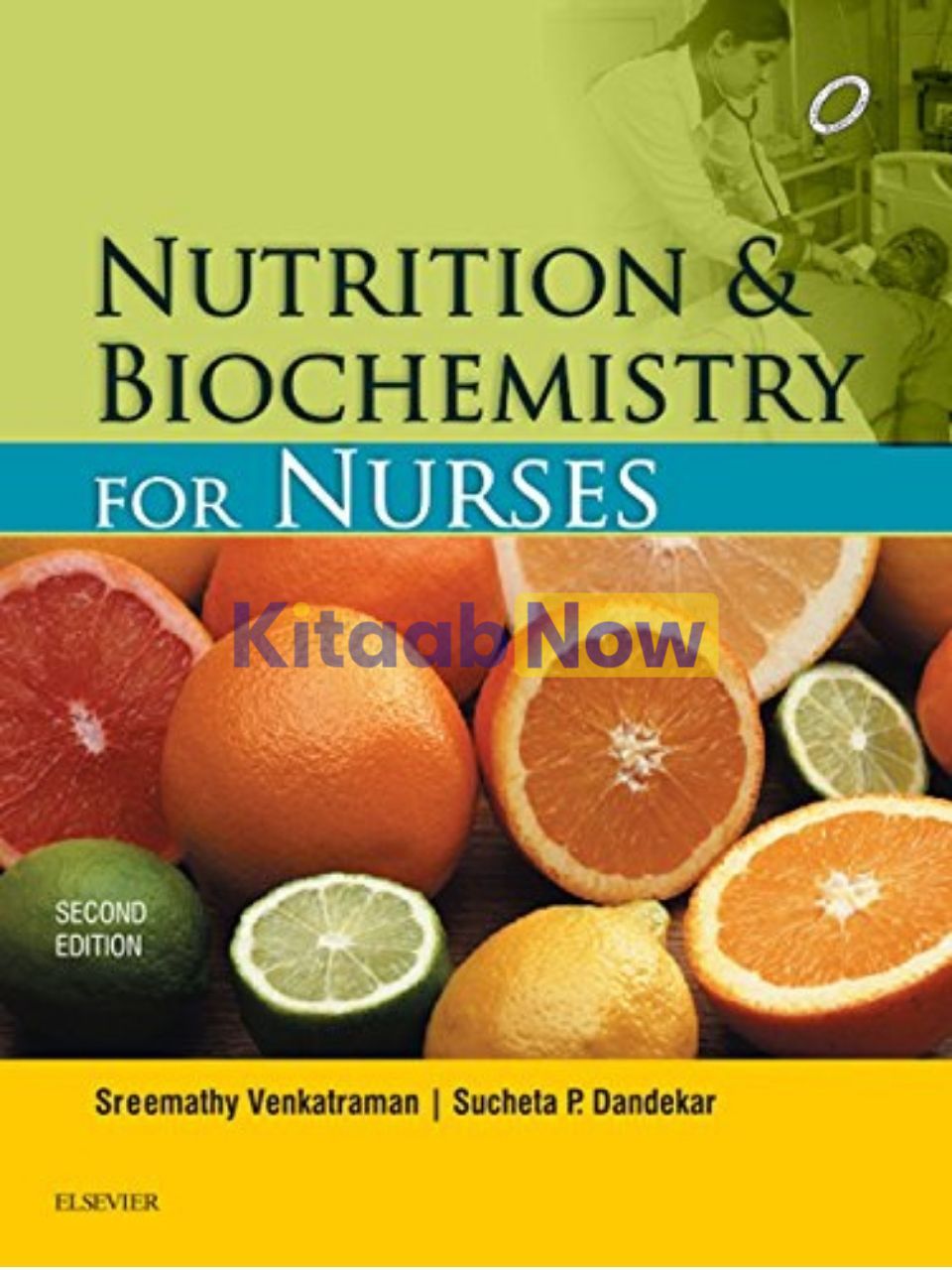
Nutrition and Biochemistry for Nurses (2nd Edition)
Rs. 2,775
- Authors: Venkatraman Shreemathy, Suchita P Dandekar
- ISBN: 9788131235850
- Publisher: Elsevier Science Publishing
- Edition: 2nd
- Publication Date: August 10, 2015
- Format: Paperback – 480 pages
- Language: English
Out of stock
Share
Description
Nutrition and Biochemistry for Nurses has been designed to meet the requirements of B.Sc. Nursing students. The text has been written keeping in view the curriculum framed by the Nursing Council of India. Besides nursing students, it will also be useful to dental, physiotherapy, occupational therapy and pharmacy students.
Key Features
- Comprehensive and Exhaustive Coverage
- Text presented in short sentences, sometimes fragments, in the form of bulleted points
- Easy-to-read simple language used for ease of comprehension
- Numerous graphics, tables, diagrams and pictures provided wherever needed
- Applied aspects of topics, e.g. recommended dietary allowances (RDAs), cookery rules and preservation of nutrients, balanced diet and role of nurse in nutritional programmes, etc., in nutrition and various investigations in biochemistry provided in sufficient detail
- Chapter in a Nutshell, short summary, appended in the end of every chapter to help the learner quickly revise the chapter’s content
- Exam-oriented exercises provided to help students prepare themselves on the lines of the exam they are going to appear at
- Clinical Applications Boxes—a feature provided to help students comprehend the importance of biochemical information in diagnosis and treatment of clinical problems
What’s New in the Second Edition
- Recent developments in food standards
- Ready reckoner of nutritive values of common foods
- Several chapters revised to provide information on recent trends in clinical biochemistry
- Several chapters revised for better clarity of concepts
Table of Contents
- Preface to the second edition
- Preface to the first edition
- Dedications
- 1. Nutrition
- 1. Introduction
- Terminologies
- History of nutrition
- National nutritional policy
- Role of nutrition in maintaining health
- Roles of individual nutrients
- Nutritional problems in India
- Role of food and its medicinal value
- Factors that affect food and nutrition
- Food standards
- Classification of foods
- Elements of nutrition
- Recommended dietary allowances (RDAs)
- Basal metabolic rate
- Chapter in a nutshell
- Exercises
- Answers
- 2. Carbohydrates
- Definition
- Classification
- Simple sugars
- Complex carbohydrates
- Calorific value
- Functions of carbohydrates
- Digestion, absorption and storage
- Metabolism of carbohydrates
- Deficiency of carbohydrates
- Overconsumption
- Chapter in a nutshell
- Exercises
- Answers
- 3. Lipids
- Definition
- Characteristics or properties
- Classification of lipids
- Fatty acids
- Hydrogenation
- Rancidity
- Functions of fats
- Sources
- Fat in food and its link to health
- Digestion and absorption
- Storage of fats
- Recommended dietary allowances
- Metabolism
- Deficiency
- Overconsumption
- Chapter in a nutshell
- Exercises
- Answers
- 4. Proteins
- Amino acids
- Properties of protein
- Classification of proteins
- Sources of proteins
- Digestion, absorption and transportation
- Note for vegetarians
- Quality of proteins
- Recommended dietary allowances (RDAs)
- Digestion of proteins
- Metabolism of proteins
- Deficiencies
- Protein–energy malnutrition (PEM)
- Overconsumption
- Chapter in a nutshell
- Exercises
- Answers
- 5. Energy
- Introduction
- Unit of energy
- Energy value of food
- Energy requirements for different categories of people
- Energy requirements of Indians
- Measurements of energy
- Calculation of energy requirement for an individual
- Energy balance
- Obesity
- Chapter in a nutshell
- Exercises
- Answers
- 6. Vitamins
- Properties of vitamins
- Classification of vitamins
- Vitamin deficiencies
- Causes of vitamin deficiency
- Water-soluble vitamins
- Properties of water-soluble vitamins
- Fat-soluble vitamins
- Properties of fat-soluble vitamins
- Recommended allowances for vitamin A
- Recommended allowances of B-complex vitamins for Indians
- Increase in micronutrient deficiency in population and its link to malnutrition
- Hypervitaminosis
- Chapter in a nutshell
- Exercises
- Answers
- 7. Minerals
- Definition
- Properties
- Major minerals
- Chapter in a nutshell
- Exercises
- Answers
- 8. Water and electrolyte balance
- Functions of water
- Water distribution in the body
- Daily requirement
- Sources of water
- Water loss
- Dehydration
- Regulation of water in the body
- Electrolytes
- Functions of electrolytes
- Composition of body fluids
- Electrolyte balance
- Chapter in a nutshell
- Exercises
- Answers
- 9. Cookery rules and preservation of nutrients
- Definition of cooking
- Benefits of cooking
- Methods of cooking
- Preservation of nutrients
- Safe food handling and toxicity
- Toxicity in foods
- Food storage
- Food preservation
- Food additives
- Indian regulations
- Chapter in a nutshell
- Exercises
- Answers
- 10. Balanced diet
- Definition
- Principles of a balanced diet
- Elements of a balanced diet
- Dietary guidelines
- Balanced diets
- Nutrition through the life cycle
- Nutrition during pregnancy
- Nutrition for the newborn/infant
- Nutrition during childhood
- Nutrition during adolescence
- Nutrition during adulthood
- Seniors—special attention to menu planning
- Recommended dietary allowances (RDAs)
- Exchange lists
- Food guide pyramid
- Therapeutic diets
- Budgeting of food
- Chapter in a nutshell
- Exercises
- Answers
- 11. Role of nurse in nutritional programmes
- Assessment of nutritional status
- Assessment of nutritional status in a hospital setting
- Nutrition education and role of nurse in nutrition education
- Role of nurse in nutrition education
- National programmes related to nutrition
- Agencies working towards food and nutrition
- National agencies
- Chapter in a nutshell
- Exercises
- Answers
- 2. Biochemistry
- 12. Introduction to biochemistry
- Biochemistry and disease
- Role of biochemistry in nursing
- 13. Cell
- Cell and its structure
- Prokaryotes and eukaryotes
- Microscopy
- Chapter in a nutshell
- Exercises
- Answers
- 14. Cell membrane: Structure, composition and functions
- Structure of the cell membrane
- Constituents of the cell membrane
- Fluid mosaic model of cell membrane
- Transport across the cell membrane
- Transport mechanisms
- Cytoskeleton
- Chapter in a nutshell
- Exercises
- Answers
- 15. Carbohydrates and biological oxidation
- Definition
- Classification
- Monosaccharides
- Disaccharides
- Polysaccharides
- Carbohydrate metabolism
- Investigations and interpretations
- Electron transport chain and phosphorylation
- Chapter in a nutshell
- Exercises
- Answers
- 16. Lipids
- Definition and properties
- Classification of lipids
- Fatty acids (FAs)
- Eicosanoids
- Fatty acid metabolism
- Triacylglycerols (TAGs/TGs)
- TAG metabolism
- Steroids
- Cholesterol metabolism
- Lipoproteins
- Lipoprotein metabolism
- Adipose tissue metabolism
- Investigations and interpretations
- Chapter in a nutshell
- Exercises
- 17. Proteins, nucleic acids and protein synthesis
- Definition
- General nature of amino acids
- Classification of amino acids
- Uncommon amino acids
- Properties of amino acids
- Peptides
- Classification of proteins
- Structure of proteins
- Properties of proteins
- Sequencing of proteins
- Plasma proteins
- Metabolism of proteins
- Fate of amino acid nitrogen
- Fate of ammonia
- Transcarboxylation
- Decarboxylation
- Transamidation
- Transmethylation
- Metabolism of nitrogen
- Haem and chlorophyll
- Nucleic acids
- Protein biosynthesis
- Separation techniques
- Chapter in a nutshell
- Exercises
- Answers
- 18. Enzymes
- Enzymes, coenzymes and cofactors
- Catalytic site and mechanism of action
- Classification of enzymes
- Specificity
- Factors affecting enzyme activity
- Michaelis–menten equation
- Enzyme inhibition
- Allosterism
- Isoenzymes
- Regulation of enzymes
- Clinical enzymology
- Chapter in a nutshell
- Exercises
- Answers
- 19. Iron metabolism
- Iron
- Haemoglobin
- Chapter in a nutshell
- Exercises
- Answers
- 20. Vitamins
- Water-soluble vitamins
- Fat-soluble vitamins
- Chapter in a nutshell
- Exercises
- Answers
- 21. Mineral metabolism
- Sodium
- Potassium
- Chloride
- Calcium
- Phosphorus
- Magnesium
- Sulphur
- Iron
- Iodine
- Zinc
- Copper
- Molybdenum
- Fluorine
- Selenium
- Cobalt
- Chromium
- Manganese
- Chapter in a nutshell
- Exercises
- Answers
- 22. Acid–base balance
- Importance of acid–base balance
- Buffer systems
- Disorders of acid–base homeostasis
- Investigations and interpretations
- Chapter in a nutshell
- Exercises
- Answers
- 23. Water and electrolyte balance
- Body water (body fluid compartments)
- Water balance
- Dehydration
- Chapter in a nutshell
- Exercises
- Answers
- 24. Organ function tests
- Liver function tests
- Renal function tests
- Gastric function tests
- Pancreatic function tests
- Cerebrospinal fluid (CSF) analysis
- Chapter in a nutshell
- Exercises
- Answers
- 25. Immunochemistry, free radicals and specialized proteins
- Immunochemistry
- Antigens
- Adaptive immunity
- Mononuclear phagocytes—macrophages
- Cell cytokines
- Immunization
- Human leukocyte antigen typing
- Free radicals
- Defence against free oxygen species
- Investigations and interpretations
- Chapter in a nutshell
- Exercises
- Answers
- Glossary
- Abbreviations
- Index
Only logged in customers who have purchased this product may leave a review.
Related Products




Reviews
There are no reviews yet.